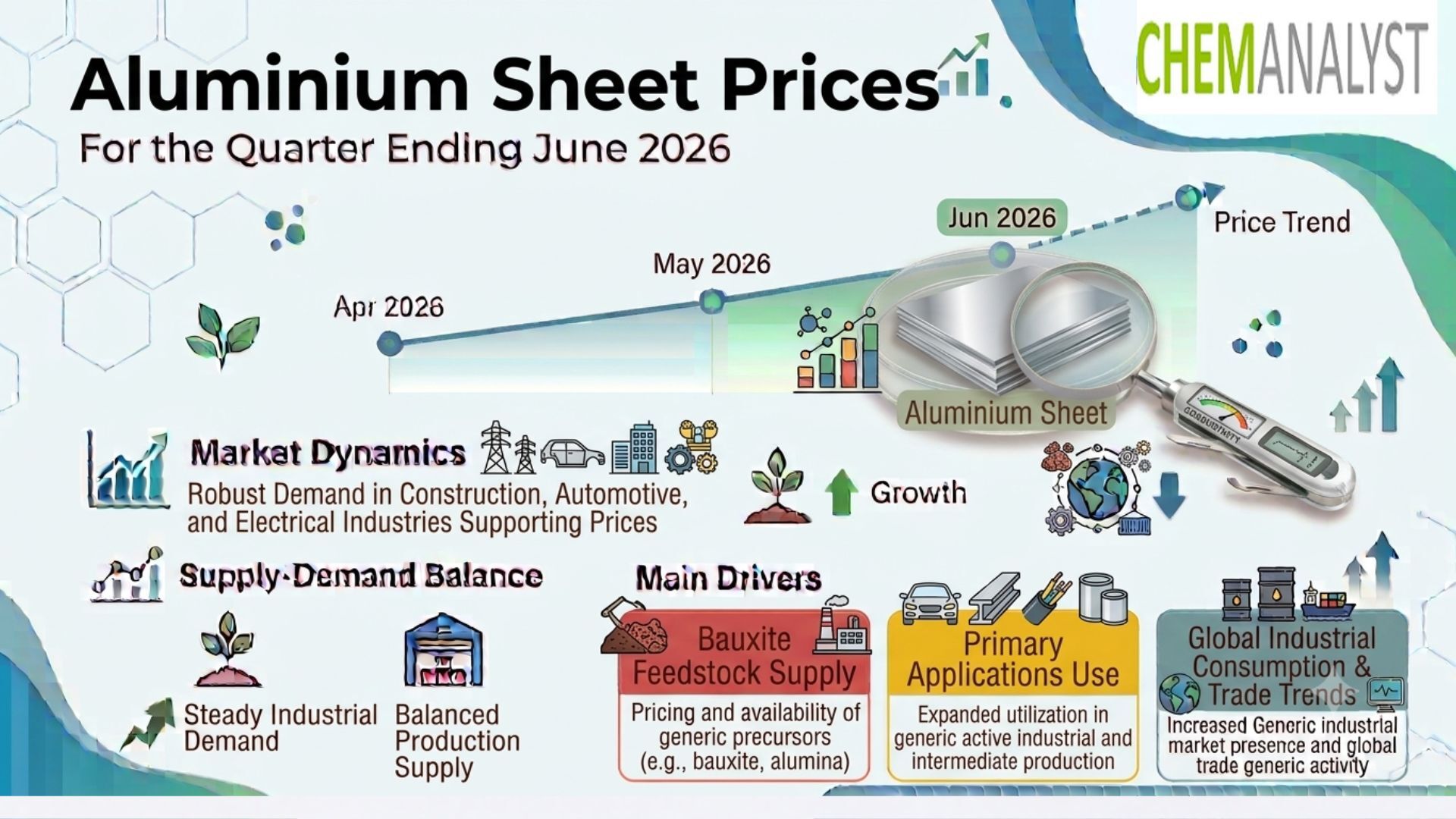
According to ChemAnalyst, the global Aluminium Sheet Prices market recorded a broadly firm trend during the second quarter of 2026, with prices increasing across North America, Asia Pacific, Europe and the Middle East and Africa. Import activity, stronger import allocations, export performance, feedstock costs, energy surcharges and tightening availability were among the key factors influencing regional price movements.
Aluminium sheets are widely used across construction, automotive, transportation, packaging, electrical equipment, machinery, aerospace and industrial fabrication. As a downstream aluminium product, its pricing is influenced by the cost of primary aluminium, feedstock availability, conversion expenses, energy costs, freight rates, trade flows and regional supply-demand fundamentals.
During Q2 2026, the Aluminium Sheet Price Trend demonstrated considerable regional variation. The United States experienced a significant increase driven by imports, while Malaysia, South Korea and Thailand also registered quarter-over-quarter gains. Germany recorded the strongest increase among the markets covered, reflecting higher feedstock costs and energy surcharges. In the United Arab Emirates, tightening imports supported another notable increase in the Aluminium Sheet Price Index.
Aluminium Sheet Prices in North America
USA Aluminium Sheet Price Trend
In the United States, the Aluminium Sheet Price Index rose by 9.4% quarter-over-quarter in Q2 2026, driven by imports. The increase highlights the important role of international supply in determining aluminium sheet pricing in the U.S. market.
The average Aluminium Sheet price for the quarter was approximately USD 7087/MT on CFR basis.
Import activity remained a significant factor for U.S. buyers during the quarter. Imported material can influence domestic pricing by changing available supply, replacement costs and competitive offers. When import costs increase or imported volumes affect the balance between domestic and international supply, market participants can adjust their pricing expectations accordingly.
The 9.4% quarterly increase therefore reflected stronger import-related pricing dynamics rather than a purely domestic market movement.
Import Dynamics Support Higher Aluminium Sheet Prices
The U.S. Aluminium Sheet market remains closely connected to global aluminium trade. Import volumes, international offers, freight expenses and delivered costs can all influence procurement decisions.
For manufacturers and distributors, higher CFR prices increase the effective cost of securing material from overseas suppliers. This can affect downstream industries that rely on aluminium sheets for fabrication and manufacturing.
The Q2 2026 movement demonstrates the importance of tracking international trade flows when evaluating the Aluminium Sheet Price Trend in North America.
Get Real Time Online for Aluminium Sheet Prices: https://www.chemanalyst.com/Pricing-data/aluminium-sheet-1493
Aluminium Sheet Prices in APAC
Malaysia Aluminium Sheet Price Trend
In Malaysia, the Aluminium Sheet Price Index rose by 2.83% quarter-over-quarter in Q2 2026, reflecting stronger average import totals.
The average Aluminium Sheet price for the quarter was approximately USD 3655.67/MT excluding local duties.
The increase indicates that import activity remained an important factor in the Malaysian market. Stronger average import totals can affect local availability and purchasing costs, particularly when buyers depend on international sources to meet their material requirements.
Although the quarterly increase was relatively moderate compared with some other regions, it still reflected a firmer pricing environment during Q2 2026.
South Korea Aluminium Sheet Price Trend
In South Korea, the Aluminium Sheet Price Index rose by 0.20% quarter-over-quarter, reflecting export strength.
The increase was marginal, indicating that the South Korean market remained relatively balanced despite positive export-related factors. Export performance provided support to the market, but the limited price increase suggests that stronger export enquiries were not sufficient to generate significant upward momentum.
At the same time, Aluminium Sheet Spot Price softened as export enquiries slowed and traders offered competitive discounts abroad.
This combination created a mixed market environment. While export strength supported the quarterly index, softer spot pricing later in the period reflected weakening enquiries and increased competition among traders.
Thailand Aluminium Sheet Price Trend
In Thailand, the Aluminium Sheet Price Index rose by 3.209% quarter-over-quarter, reflecting stronger import allocations.
Import allocations influenced availability and purchasing conditions in the Thai market during Q2 2026. Stronger allocations supported the quarterly index, but the spot market experienced some weakness toward the end of the quarter.
The Aluminium Sheet Spot Price eased in June as abundant Chinese and Indian offers depressed premiums. The availability of competitive overseas material placed pressure on regional premiums and limited further price increases.
This demonstrates how international competition can quickly influence local aluminium sheet pricing. Even when quarterly import allocations are stronger, abundant offers from major supplying countries can place downward pressure on spot premiums.
Aluminium Sheet Prices in Europe
Germany Aluminium Sheet Price Trend
Germany recorded one of the strongest price increases among the markets covered in Q2 2026. The Aluminium Sheet Price Index rose by 21.6861% quarter-over-quarter, driven by higher feedstock.
The average Aluminium Sheet price for the quarter was approximately USD 17099.33/MT, after energy surcharges.
The significant increase highlights the impact of feedstock and energy-related costs on European aluminium sheet pricing. Feedstock represents a critical component of the overall cost structure, while energy surcharges can further increase the delivered cost of finished aluminium products.
For German buyers, higher production and energy-related costs translated into a significantly firmer pricing environment during the quarter.
Higher Feedstock Costs Influence European Pricing
The German market demonstrates how cost-side factors can have a strong influence on the Aluminium Sheet Price Trend. When feedstock costs increase, manufacturers and processors face higher expenses throughout the production chain.
Energy costs can amplify these pressures, particularly for metal processing and manufacturing operations that require significant energy inputs. The inclusion of energy surcharges in the average Q2 2026 price further illustrates their influence on final market assessments.
The 21.6861% quarter-over-quarter increase therefore represented a combination of higher feedstock expenses and additional energy-related costs.
Aluminium Sheet Prices in MEA
UAE Aluminium Sheet Price Trend
In the United Arab Emirates, the Aluminium Sheet Price Index rose by 8.06% quarter-over-quarter, driven by tightening imports.
The average Aluminium Sheet price for the quarter was approximately USD 3850.33/MT on CFR basis delivered.
Tightening imports reduced the availability of material and supported higher prices. In import-oriented markets such as the UAE, changes in international supply can quickly influence domestic procurement costs.
When import availability becomes tighter, buyers may need to compete more actively for available material, particularly if downstream consumption remains stable. This can strengthen supplier pricing power and increase delivered costs.
Tightening Imports Support UAE Prices
The Q2 2026 increase in the UAE illustrates the importance of import availability in Middle Eastern aluminium markets. Buyers need to monitor international supplier offers, shipping schedules, freight costs and regional inventory levels to anticipate changes in delivered Aluminium Sheet prices.
The 8.06% quarter-over-quarter increase indicates that tightening imports had a meaningful impact on market conditions during the quarter.
Book A Demo for Aluminium Sheet Price: https://www.chemanalyst.com/ChemAnalyst/PricingForm?Product=Aluminium%20Sheet
Key Factors Influencing Aluminium Sheet Prices in Q2 2026
Several factors shaped the global Aluminium Sheet Price Analysis during Q2 2026.
1. Import Activity
Imports were a major factor in the United States and Malaysia. Changes in import volumes and average import totals influenced regional availability and pricing.
2. Feedstock Costs
Higher feedstock costs were the primary driver of the significant price increase recorded in Germany. Rising input expenses can quickly translate into higher aluminium sheet production and processing costs.
3. Energy Surcharges
Energy surcharges contributed to the elevated German average price of USD 17099.33/MT. Energy remains an important component of metal processing economics.
4. Export Strength
South Korea's 0.20% quarterly increase was associated with export strength. However, slower export enquiries and competitive discounts later softened spot pricing.
5. International Competition
Thailand experienced downward pressure on spot premiums in June because abundant Chinese and Indian offers increased competitive supply.
6. Tightening Imports
The UAE recorded an 8.06% quarter-over-quarter increase as tightening imports supported higher prices and increased competition for available material.
Example: How International Trade Affects Aluminium Sheet Prices
Consider a market that depends heavily on imported aluminium sheets. If international supply becomes tighter, buyers may face higher replacement costs and longer procurement lead times. Suppliers can consequently raise offers as available material becomes more limited.
In contrast, if large volumes of competitively priced material become available from major exporting countries, buyers have greater negotiating power. Suppliers may need to reduce premiums or offer discounts to maintain sales.
The Q2 2026 developments in Thailand and the UAE provide useful examples. Thailand saw spot prices ease because abundant Chinese and Indian offers depressed premiums, while the UAE experienced higher prices because tightening imports supported the market.
Impact on Aluminium Sheet Procurement and Supply Chains
The Q2 2026 Aluminium Sheet Prices environment highlights the importance of proactive procurement planning for manufacturers, distributors, fabricators and construction-related businesses.
Buyers in the United States needed to account for import-driven price movements, while Malaysian buyers had to monitor stronger average import totals. In Thailand, international offers from China and India created opportunities for competitive sourcing, particularly as spot premiums weakened in June.
German buyers faced a more challenging cost environment because higher feedstock costs and energy surcharges contributed to a substantial increase in the Aluminium Sheet Price Index.
In the UAE, tightening imports emphasized the importance of securing supply in advance and maintaining strong relationships with reliable suppliers.
Companies can manage price exposure by monitoring international aluminium markets, comparing supplier quotations, evaluating freight costs and balancing spot purchases with contractual procurement.
Regional Aluminium Sheet Price Comparison
The Q2 2026 Aluminium Sheet Market Analysis shows considerable regional variation.
North America: The U.S. Aluminium Sheet Price Index increased by 9.4% quarter-over-quarter, with the average price at approximately USD 7087/MT CFR.
APAC: Malaysia recorded a 2.83% quarter-over-quarter increase, with an average price of approximately USD 3655.67/MT excluding local duties. South Korea recorded a 0.20% increase, while Thailand registered a 3.209% increase.
Europe: Germany recorded the strongest increase, with the Aluminium Sheet Price Index rising 21.6861% quarter-over-quarter. The average price reached approximately USD 17099.33/MT after energy surcharges.
MEA: The UAE recorded an 8.06% quarter-over-quarter increase, with the average price approximately USD 3850.33/MT CFR basis delivered.
The wide range of regional movements demonstrates that Aluminium Sheet prices are strongly influenced by local import conditions, feedstock economics, export performance and supply availability.
Aluminium Sheet Prices Outlook
The Aluminium Sheet Price Outlook will depend on several interconnected factors, including global aluminium availability, feedstock costs, import flows, energy expenses, export demand and regional inventories.
In the United States, import activity will remain an important factor in determining future pricing. Any changes in international supply or import costs could influence CFR assessments.
In APAC, markets such as Thailand and South Korea will remain sensitive to export enquiries and competitive offers from major suppliers. The availability of Chinese and Indian material could continue influencing regional spot premiums.
Germany's future price direction will remain closely linked to feedstock and energy costs. Sustained cost pressure could keep European Aluminium Sheet prices elevated.
In the UAE, the future market direction will depend heavily on import availability and regional supply conditions. Tightening imports could continue supporting prices if supply remains constrained.
Conclusion
The global Aluminium Sheet Prices market recorded a broadly firm performance during Q2 2026, although the intensity of price increases varied significantly by region.
The U.S. Aluminium Sheet Price Index rose 9.4% quarter-over-quarter, with prices averaging approximately USD 7087/MT CFR. Malaysia recorded a 2.83% increase, while South Korea and Thailand registered increases of 0.20% and 3.209%, respectively.
Germany experienced the strongest increase, with the Aluminium Sheet Price Index rising 21.6861% quarter-over-quarter, driven by higher feedstock costs and energy surcharges. The average price reached approximately USD 17099.33/MT.
In the UAE, the Aluminium Sheet Price Index increased by 8.06% quarter-over-quarter as tightening imports supported higher prices, with the average price reaching approximately USD 3850.33/MT CFR basis delivered.
Overall, Q2 2026 demonstrated the importance of monitoring international trade, feedstock costs, energy expenses, import availability and regional demand when assessing the Aluminium Sheet Price Trend. Procurement teams and downstream manufacturers can benefit from closely tracking these indicators to manage costs, optimize purchasing strategies and strengthen supply chain planning.
ChemAnalsyt
Call +1 3322586602
420 Lexington Avenue, Suite 300, New York, NY, United States, 10170
Website: https://www.chemanalyst.com/
Email: sales@chemanalyst.com
この記事をシェア





