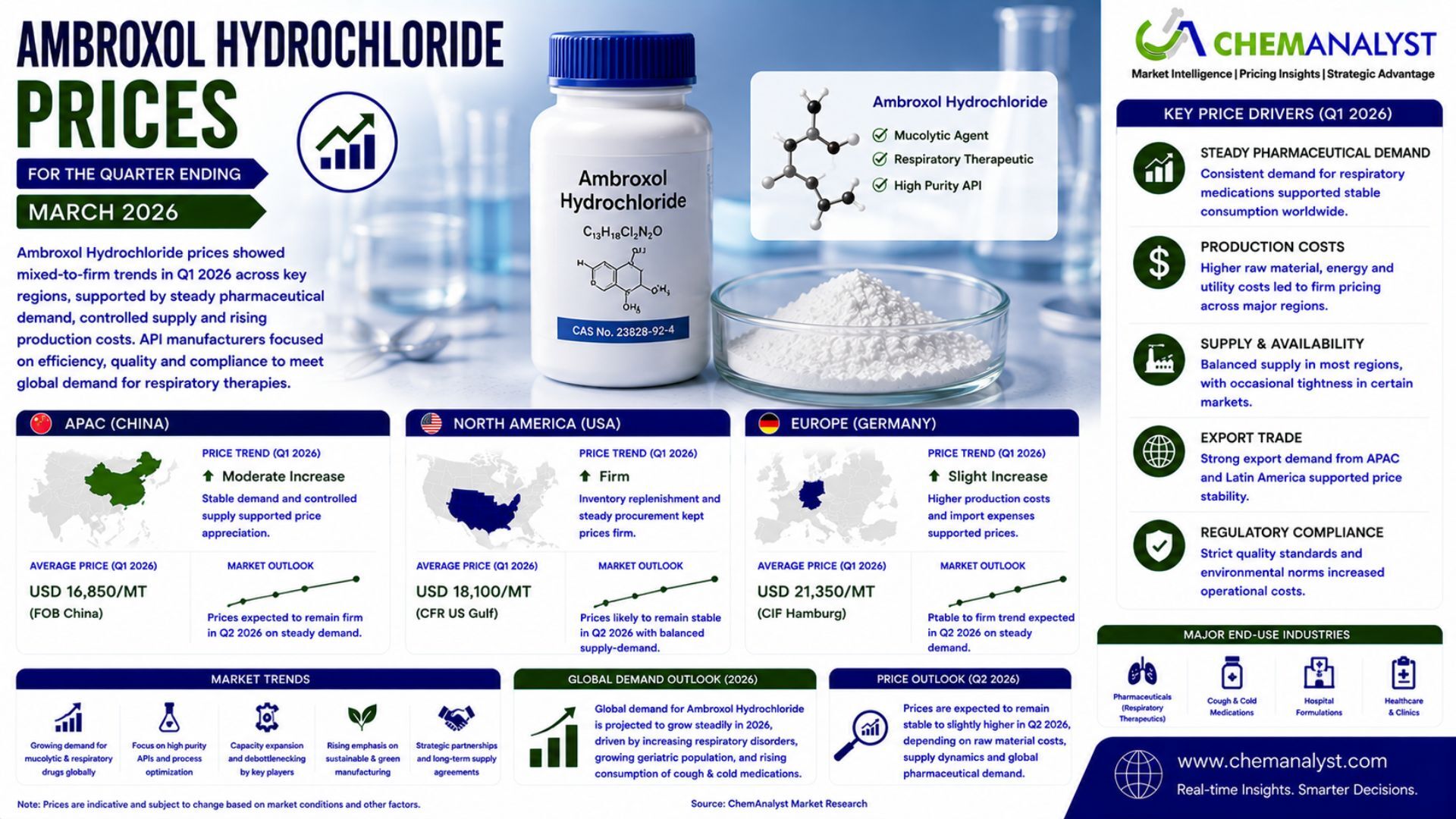
According to ChemAnalyst, the Ambroxol Hydrochloride Prices market recorded an upward movement across major global regions during the second quarter of 2026, as rising production expenses and higher producer input costs placed pressure on pricing. Ambroxol Hydrochloride, a widely used pharmaceutical active ingredient associated with respiratory medicines, remained influenced by developments in manufacturing costs, energy prices, feedstock expenses and broader inflationary conditions.
During Q2 2026, the Ambroxol Hydrochloride Price Index increased across North America, Asia-Pacific (APAC) and Europe. Although the underlying market conditions varied by region, higher production costs emerged as a common factor supporting the price trajectory. In the United States, the market was affected by elevated producer and consumer inflation, while China experienced stronger producer input costs. In Germany, higher manufacturing expenses and increasing producer prices contributed to the quarter-over-quarter increase.
The market environment during the quarter highlighted the importance of monitoring upstream costs when evaluating Ambroxol Hydrochloride Prices. Pharmaceutical manufacturers and buyers faced an environment in which increasing operating expenses could influence procurement strategies and production economics.
Ambroxol Hydrochloride Prices in North America
In North America, the United States recorded a quarter-over-quarter increase in the Ambroxol Hydrochloride Price Index during Q2 2026. The rise was primarily associated with increasing inflationary pressures and higher costs across the manufacturing environment.
Producer inflation in the United States reached 6.5% in May 2026, while consumer inflation stood at 4.2% during the same month. These inflationary indicators reflected broader cost pressures within the economy and contributed to an environment of increasing expenses for producers and downstream pharmaceutical businesses.
For Ambroxol Hydrochloride manufacturers, elevated producer costs can have a direct influence on overall production economics. Higher expenses associated with energy, raw materials, feedstocks, utilities and other manufacturing inputs can increase the cost base required to produce pharmaceutical ingredients. As these expenses rise, producers may adjust selling prices to preserve operating margins.
The increase in Ambroxol Hydrochloride Prices in the United States during Q2 2026 therefore reflected not only market-specific conditions but also the wider inflationary environment. Rising consumer inflation also indicated continued cost pressures within the downstream market, potentially affecting purchasing decisions and pharmaceutical supply chains.
Impact of Production Costs on the US Ambroxol Hydrochloride Market
Production costs became an important pricing factor in the North American market during Q2 2026. Ambroxol Hydrochloride production expenses increased as energy and feedstock prices moved higher.
Energy represents a significant component of industrial manufacturing costs, particularly for facilities requiring controlled processing, heating, cooling, purification and other energy-intensive operations. When energy prices rise, the additional expenses can eventually filter through the supply chain and influence the cost of pharmaceutical intermediates and active pharmaceutical ingredients.
Feedstock prices also played an important role. Increased costs for essential raw materials can raise the variable cost of production, particularly when manufacturers are unable to offset these expenses through efficiency improvements or procurement agreements.
Consequently, the increase in US Ambroxol Hydrochloride Prices during the quarter can be viewed within the broader context of rising input expenses. Buyers continued to monitor supplier pricing and production conditions as manufacturers adjusted to the changing cost environment.
Get Real Time Online for Ambroxol Hydrochloride Prices: https://www.chemanalyst.com/ChemAnalyst/PricingForm?Product=Ambroxol%20Hydrochloride
Ambroxol Hydrochloride Prices in APAC
The Asia-Pacific region also experienced an increase in the Ambroxol Hydrochloride Price Index during Q2 2026. China, one of the key manufacturing centers within the global pharmaceutical and chemical supply chain, recorded higher Ambroxol Hydrochloride prices during the quarter.
The upward movement in China was influenced by rising producer input costs. Manufacturing expenses increased as producers faced greater pressure from upstream costs, contributing to a firmer pricing environment for Ambroxol Hydrochloride.
China's manufacturing sector continued to experience higher input costs during the quarter, with the Producer Price Index (PPI) increasing by 4.1% in June 2026. This increase provided an important indication of the broader cost environment facing producers.
For Ambroxol Hydrochloride manufacturers, an increase in producer prices can affect procurement costs for raw materials, utilities, processing inputs, packaging, transportation and other manufacturing requirements. As these expenses accumulate, producers may seek higher prices to maintain commercially viable production levels.
China's Rising Producer Costs and Ambroxol Hydrochloride Prices
The relationship between producer input costs and Ambroxol Hydrochloride prices was particularly important in China during Q2 2026. Higher production expenses reduced the ability of manufacturers to maintain previous price levels without affecting margins.
The 4.1% rise in China's PPI in June 2026 reflected increasing producer-side cost pressures. Since pharmaceutical ingredient manufacturing relies on a network of upstream chemical and industrial inputs, changes in producer prices can have implications for the overall cost structure.
Higher feedstock and energy expenses can also influence manufacturers' operating decisions. Producers may respond by adjusting production schedules, renegotiating procurement arrangements, or revising offers to reflect changes in manufacturing costs.
This environment contributed to a firmer Ambroxol Hydrochloride Price Index in China during the quarter. For buyers, the development reinforced the need to monitor upstream price movements alongside direct pharmaceutical market demand when assessing future procurement costs.
Ambroxol Hydrochloride Prices in Europe
Europe followed a similar upward trend during Q2 2026, with Germany reporting a quarter-over-quarter increase in the Ambroxol Hydrochloride Price Index.
The increase was driven primarily by higher production costs. German manufacturers faced a more expensive operating environment during the quarter, with rising producer prices contributing to greater pressure on manufacturing economics.
Germany's PPI increased by 2.2% in May 2026, reflecting a rise in producer-side costs. While the increase was different in magnitude from the movements recorded in the United States and China, it still contributed to higher manufacturing expenses for producers.
For the Ambroxol Hydrochloride market, increasing production costs can influence producer quotations and purchasing decisions throughout the pharmaceutical supply chain. Manufacturers operating under higher cost structures may need to revise prices to account for changes in raw materials, energy, utilities, labor and other operating expenses.
Book A Demo for Ambroxol Hydrochloride Price: https://www.chemanalyst.com/ChemAnalyst/PricingForm?Product=Ambroxol%20Hydrochloride
Production Cost Pressures in Germany
The German Ambroxol Hydrochloride market was shaped by the broader increase in production expenses during Q2 2026. As producer costs climbed, manufacturers faced greater pressure to manage margins while maintaining consistent pharmaceutical ingredient supply.
Germany's pharmaceutical and chemical manufacturing sectors are closely connected to energy and industrial input markets. Consequently, fluctuations in production costs can have a meaningful impact on the economics of active pharmaceutical ingredient manufacturing.
The 2.2% PPI increase in May 2026 served as an important indicator of this environment. Higher producer prices can raise the cost of manufactured goods and industrial inputs, eventually influencing prices further along the supply chain.
The quarter-over-quarter increase in German Ambroxol Hydrochloride Prices therefore reflected the combined impact of elevated production costs and broader producer-side inflationary pressures.
Global Factors Influencing Ambroxol Hydrochloride Prices in Q2 2026
Across North America, APAC and Europe, several common factors influenced the direction of Ambroxol Hydrochloride prices during Q2 2026.
Energy costs remained a significant consideration for manufacturers. Higher energy expenses increase operating costs and can affect the economics of pharmaceutical production.
Feedstock prices also influenced market conditions. When raw material costs rise, manufacturers generally face higher variable production expenses, which can contribute to increased selling prices.
Producer inflation was another major factor. The US recorded a 6.5% producer inflation rate in May, China reported a 4.1% PPI increase in June and Germany registered a 2.2% PPI increase in May. These developments demonstrated that producers in different regions were operating under varying degrees of cost pressure.
Consumer inflation also remained relevant in the United States. The 4.2% consumer inflation rate in May 2026 indicated continued price pressure within the downstream economy and contributed to the broader economic environment surrounding pharmaceutical procurement.
Demand and Supply Considerations
While production costs were the principal factor behind the increase in Ambroxol Hydrochloride Prices during Q2 2026, market participants also needed to consider the balance between supply and demand.
Ambroxol Hydrochloride is used in pharmaceutical formulations associated with respiratory health, making its market connected to the broader demand for respiratory medicines. Consistent pharmaceutical manufacturing requirements can support ongoing demand for active pharmaceutical ingredients.
At the same time, manufacturers must balance production requirements against input costs. If raw material and energy expenses increase significantly, suppliers may face pressure to revise quotations even when underlying demand remains relatively stable.
Therefore, the Q2 2026 price increase should be understood as part of a broader interaction between manufacturing economics, producer inflation and pharmaceutical supply-chain requirements.
Regional Comparison of Ambroxol Hydrochloride Prices
The Q2 2026 market demonstrated a broadly consistent upward direction across the three major regions.
In North America, the US Ambroxol Hydrochloride Price Index increased quarter-over-quarter amid 6.5% producer inflation and 4.2% consumer inflation in May 2026. Rising energy and feedstock costs further increased production expenses.
In APAC, China's Ambroxol Hydrochloride Price Index also increased, supported by higher producer input costs. The 4.1% PPI increase in June 2026 highlighted the cost pressures affecting manufacturers.
In Europe, Germany experienced a quarter-over-quarter increase in the Ambroxol Hydrochloride Price Index. Higher production costs and a 2.2% PPI increase in May 2026 contributed to the upward movement.
Although the intensity of inflation varied among the regions, higher production costs represented the common underlying theme.
Ambroxol Hydrochloride Price Outlook
Looking beyond Q2 2026, the direction of Ambroxol Hydrochloride Prices is likely to remain closely connected to developments in energy costs, feedstock prices, producer inflation and pharmaceutical manufacturing expenses.
If upstream costs remain elevated, producers could continue facing pressure to maintain higher selling prices. Conversely, any stabilization in energy and feedstock markets could ease production expenses and reduce upward pressure on Ambroxol Hydrochloride prices.
Market participants will also continue monitoring producer price trends in major manufacturing economies. Changes in the US, Chinese and European cost environments can influence international pharmaceutical supply chains and procurement strategies.
For buyers, manufacturers, distributors and pharmaceutical companies, tracking these indicators can provide greater visibility into potential changes in Ambroxol Hydrochloride procurement costs.
Conclusion
The Ambroxol Hydrochloride Prices market moved higher across North America, APAC and Europe during Q2 2026. In the United States, higher producer and consumer inflation, combined with rising energy and feedstock expenses, supported the quarter-over-quarter increase in the price index. In China, rising producer input costs and a 4.1% PPI increase in June contributed to higher prices. Meanwhile, Germany experienced an increase amid rising production costs and a 2.2% PPI increase in May.
Overall, Q2 2026 demonstrated how closely Ambroxol Hydrochloride pricing remained linked to upstream production economics. Energy, feedstock and producer inflation trends emerged as key indicators for understanding market movements. Going forward, continued monitoring of these factors will be essential for businesses seeking to assess procurement conditions, manage costs and anticipate developments in the global Ambroxol Hydrochloride market.
ChemAnalsyt
Call +1 3322586602
420 Lexington Avenue, Suite 300, New York, NY, United States, 10170
Website: https://www.chemanalyst.com/
Email: sales@chemanalyst.com
この記事をシェア





