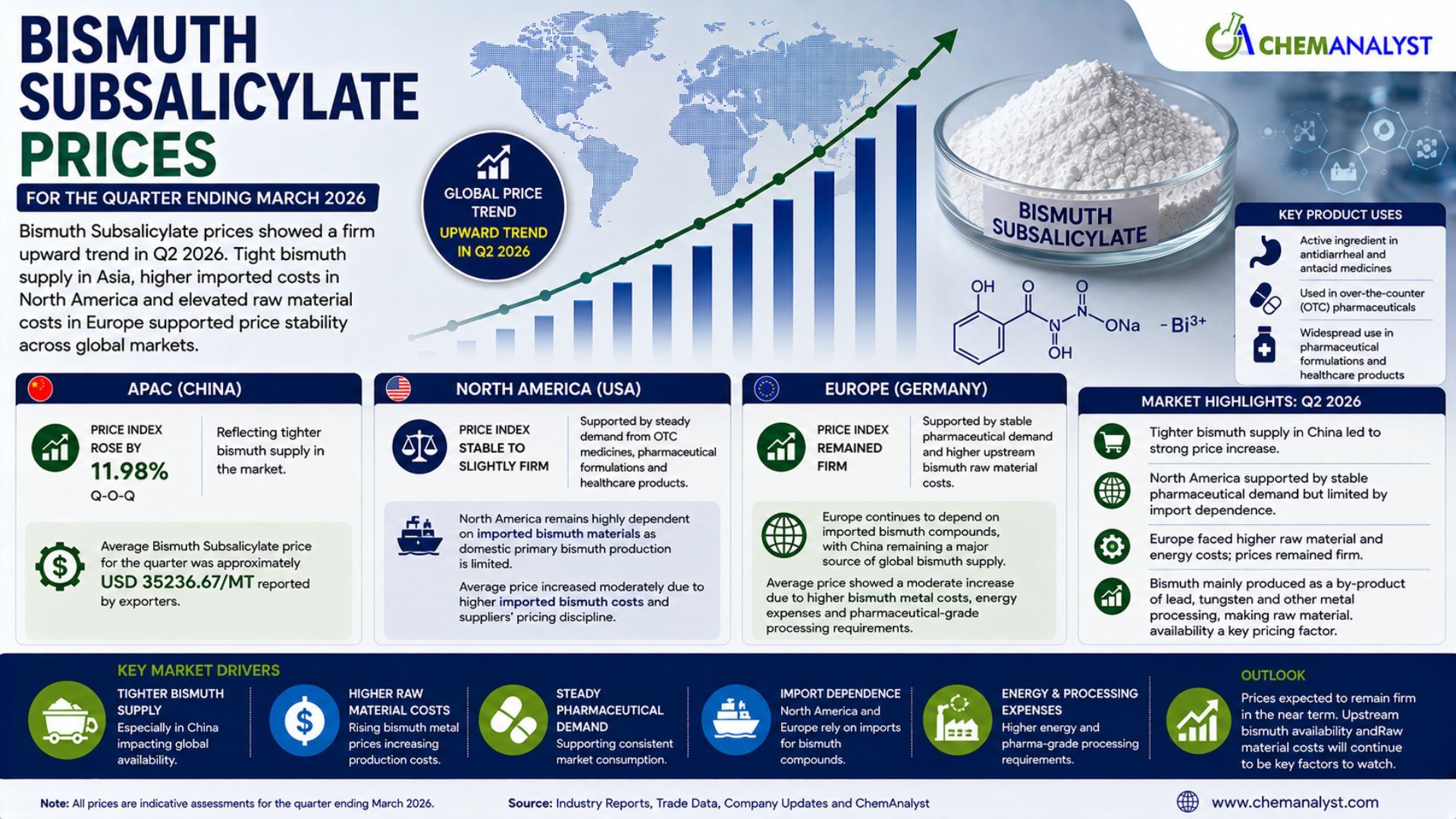
According to ChemAnalyst, the global Bismuth Subsalicylate Prices market remained firm during the quarter ending June 2026, with regional markets influenced by bismuth availability, upstream raw material costs, pharmaceutical demand and processing expenses. The strongest movement was observed in China, where the Bismuth Subsalicylate Price Index increased by 11.98% quarter-over-quarter, reflecting tighter bismuth supply.
In China, the average Bismuth Subsalicylate price reached approximately USD 35236.67/MT, as reported by exporters. The substantial quarterly increase highlighted the impact of constrained bismuth availability on downstream compound pricing.
North America experienced a stable-to-slightly-firm market during Q2 2026. Demand from over-the-counter medicines, pharmaceutical formulations and healthcare products remained steady. The region also remained highly dependent on imported bismuth materials because domestic primary bismuth production is limited. Higher imported bismuth costs therefore contributed to a moderate increase in the average Bismuth Subsalicylate Price.
In Europe, prices remained firm, supported by stable pharmaceutical demand and higher upstream bismuth raw material costs. The region continued to depend on imported bismuth compounds, with China remaining an important source of global bismuth supply.
Overall, the Q2 2026 Bismuth Subsalicylate Price Trend reflected a combination of tighter upstream availability, higher bismuth costs, stable downstream pharmaceutical demand and elevated processing requirements.
Bismuth Subsalicylate Prices in APAC
The APAC market recorded the most pronounced increase in Bismuth Subsalicylate prices during Q2 2026.
In China, the Bismuth Subsalicylate Price Index rose by 11.98% quarter-over-quarter, primarily reflecting tighter bismuth supply. The reduction in upstream availability created stronger pricing pressure for downstream bismuth compounds.
The average Bismuth Subsalicylate price for the quarter was approximately USD 35236.67/MT, based on exporter assessments. This price level reflected the firmer market environment and the impact of constrained bismuth availability on supplier offers.
Bismuth Subsalicylate is part of the broader pharmaceutical and healthcare materials supply chain. Consequently, changes in upstream bismuth availability can influence downstream production economics.
The Q2 2026 increase demonstrated the sensitivity of Bismuth Subsalicylate pricing to changes in its upstream raw material market. When bismuth supply becomes tighter, manufacturers and exporters may face increased procurement costs, which can subsequently translate into higher selling prices.
Get Real Time Online for Bismuth Subsalicylate Prices: https://www.chemanalyst.com/Pricing-data/bismuth-subsalicylate-2517
Bismuth Subsalicylate Price Trend in China
The Bismuth Subsalicylate Price Trend in China was strongly bullish during Q2 2026.
The 11.98% quarter-over-quarter increase represented the clearest regional price movement among the markets assessed. Tighter bismuth supply was the primary factor behind this increase.
The average price of USD 35236.67/MT reported by exporters provided a key reference for the Chinese market during the quarter.
China's importance in the global bismuth supply chain also makes developments in its upstream market relevant to international buyers. Changes in bismuth availability can influence exporter pricing and the cost structure of downstream bismuth compounds.
Going forward, the availability of bismuth feedstock will remain an important factor for assessing the direction of Chinese Bismuth Subsalicylate prices.
Bismuth Subsalicylate Prices in North America
The North American Bismuth Subsalicylate Prices market remained stable to slightly firm during Q2 2026.
Steady demand from over-the-counter medicines, pharmaceutical formulations and healthcare products supported market stability throughout the quarter. Consistent procurement requirements helped maintain a firm demand environment for Bismuth Subsalicylate.
Another important factor was North America's dependence on imported bismuth materials. Domestic primary bismuth production remains limited, making international supply conditions particularly relevant to regional pricing.
As upstream bismuth costs increased, suppliers faced higher material expenses. The average Bismuth Subsalicylate Price consequently increased moderately during the quarter as suppliers maintained pricing discipline amid stable pharmaceutical demand.
The North American market therefore reflected a balance between consistent downstream demand and higher imported raw material costs.
Bismuth Subsalicylate Demand in North America
Demand remained one of the important stabilizing factors in the North American market.
Bismuth Subsalicylate continued to see demand from over-the-counter medicines, pharmaceutical formulations and healthcare products. Stable procurement from these downstream sectors provided support to the market during Q2 2026.
The combination of steady demand and higher imported bismuth costs created a stable-to-firm price environment.
Because North America relies significantly on imported bismuth materials, changes in international bismuth prices can have a direct impact on the regional cost structure. Suppliers therefore maintained pricing discipline as raw material expenses increased.
Bismuth Subsalicylate Production Costs in North America
Production and supply costs increased moderately in North America during Q2 2026.
Higher imported bismuth costs were a key factor affecting supplier economics. Limited domestic primary bismuth production meant that regional buyers remained exposed to international raw material conditions.
When upstream material costs increase, downstream manufacturers and suppliers can face pressure to adjust their offers. This was reflected in the moderate increase in the average Bismuth Subsalicylate Price during the quarter.
The market therefore remained supported by both stable pharmaceutical demand and elevated upstream procurement costs.
Bismuth Subsalicylate Prices in Europe
The European Bismuth Subsalicylate Price Trend remained firm during Q2 2026.
Stable pharmaceutical demand provided a supportive foundation for the regional market, while higher upstream bismuth raw material costs added upward pressure to prices.
Europe continued to depend on imported bismuth compounds, making international supply conditions a significant consideration for regional buyers and suppliers. China remained a major source of global bismuth supply, increasing the importance of developments in the Chinese market.
The average Bismuth Subsalicylate Price increased moderately during the quarter as suppliers adjusted their offers in response to higher bismuth metal costs, energy expenses and pharmaceutical-grade processing requirements.
Book A Demo for Bismuth Subsalicylate Price: https://www.chemanalyst.com/ChemAnalyst/PricingForm?Product=Bismuth%20Subsalicylate
Bismuth Subsalicylate Raw Material Supply in Europe
Upstream bismuth availability remained an important factor for the European market.
Bismuth is mainly produced as a by-product of lead, tungsten and other metal processing, meaning its availability is closely connected to broader metal-processing activities. This production structure makes raw material availability an important variable in determining bismuth pricing.
When upstream bismuth supply becomes tighter, downstream manufacturers can face higher procurement costs. These increases can eventually affect the pricing of bismuth compounds such as Bismuth Subsalicylate.
Europe's reliance on imported bismuth compounds further increases the importance of international supply conditions. Therefore, developments in major exporting markets can influence European supplier offers and procurement costs.
Bismuth Subsalicylate Production Costs in Europe
European production costs remained under upward pressure during Q2 2026.
Higher bismuth metal costs, increased energy expenses and pharmaceutical-grade processing requirements contributed to the moderate increase in Bismuth Subsalicylate prices.
Pharmaceutical-grade products can require controlled processing and quality requirements, which can add to manufacturing expenses. When these costs increase alongside higher upstream raw material prices, suppliers may revise their offers to maintain margins.
The European market therefore remained firm despite the absence of a sharp price increase comparable to the movement observed in China.
Key Factors Influencing Bismuth Subsalicylate Prices
Several factors shaped the global Bismuth Subsalicylate Price Trend during Q2 2026.
Tighter Bismuth Supply
Tighter bismuth availability was the primary factor behind China's 11.98% quarter-over-quarter increase in the Bismuth Subsalicylate Price Index.
Upstream Bismuth Costs
Higher bismuth metal and raw material costs increased supplier expenses in North America and Europe.
Pharmaceutical Demand
Stable demand from pharmaceutical formulations, over-the-counter medicines and healthcare products supported prices, particularly in North America and Europe.
Import Dependency
North America and Europe remained dependent on imported bismuth materials and compounds, increasing their exposure to international supply and pricing conditions.
Energy and Processing Expenses
European suppliers faced higher energy expenses and pharmaceutical-grade processing costs, contributing to moderately higher prices.
Bismuth Production Structure
Because bismuth is mainly produced as a by-product of lead, tungsten and other metal processing, changes in broader metal production can influence bismuth availability.
Bismuth Subsalicylate Market Demand Analysis
The Bismuth Subsalicylate demand outlook remained stable across the major markets during Q2 2026.
North American demand was supported by procurement from over-the-counter medicines, pharmaceutical formulations and healthcare products. This steady demand helped prevent significant downward pressure on prices.
European pharmaceutical demand also remained stable, providing support to the regional market despite higher upstream costs.
In China, the dominant market driver identified during Q2 2026 was tighter bismuth supply rather than a specific change in downstream demand. Nevertheless, the increase in the Price Index demonstrated that upstream availability had a strong influence on downstream pricing.
The interaction between pharmaceutical demand and raw material availability will remain important for future market developments.
Bismuth Subsalicylate Supply Analysis
Supply conditions played a central role in determining the direction of the global market.
China experienced tighter bismuth supply, which resulted in the strongest quarterly price increase among the assessed regions. With the average price reaching USD 35236.67/MT, exporter offers reflected the firm upstream environment.
North America remained dependent on imported bismuth materials, limiting the region's ability to remain fully insulated from international supply conditions.
Europe similarly relied on imported bismuth compounds, with China remaining a major source of global supply.
The structure of the bismuth supply chain therefore remains an important consideration for buyers assessing future Bismuth Subsalicylate procurement costs.
Regional Bismuth Subsalicylate Price Comparison
The global market showed different degrees of price movement across regions during Q2 2026.
APAC: China recorded the strongest increase, with the Bismuth Subsalicylate Price Index rising 11.98% quarter-over-quarter. The average price was approximately USD 35236.67/MT, driven by tighter bismuth supply.
North America: The market remained stable to slightly firm. Steady pharmaceutical demand and higher imported bismuth costs supported a moderate increase in the average price.
Europe: Prices remained firm and increased moderately as higher bismuth metal costs, energy expenses and pharmaceutical-grade processing requirements influenced supplier offers.
This regional comparison highlights the importance of upstream bismuth availability and international trade flows in shaping downstream pricing.
Bismuth Subsalicylate Market Outlook
The Bismuth Subsalicylate market outlook remains firm following the developments observed during Q2 2026.
In China, future prices will depend heavily on bismuth supply conditions. The 11.98% quarter-over-quarter increase demonstrated how quickly tighter upstream availability can influence downstream prices.
In North America, stable pharmaceutical demand combined with import dependence could continue supporting a firm market. Changes in imported bismuth costs will remain important for regional suppliers.
In Europe, the market outlook will depend on upstream bismuth costs, energy expenses, processing requirements and imported supply availability.
Overall, the balance between raw material availability and pharmaceutical demand will remain central to future price movements.
Bismuth Subsalicylate Price Forecast
The Bismuth Subsalicylate Price Forecast points toward a potentially firm market if upstream bismuth supply remains constrained.
China's Q2 2026 increase provides evidence of the market's sensitivity to changes in bismuth availability. Continued supply tightness could maintain upward pressure on exporter offers.
In North America, stable pharmaceutical demand and import dependence could keep prices supported if imported bismuth costs remain elevated.
In Europe, higher upstream bismuth costs, energy expenses and pharmaceutical-grade processing requirements could continue influencing supplier pricing.
However, any improvement in bismuth availability could reduce raw material pressure and moderate downstream price growth. Consequently, monitoring bismuth supply, international trade flows, pharmaceutical demand and processing costs will be essential for evaluating the future price direction.
Bismuth Subsalicylate Price Trend: Key Takeaways
The Q2 2026 Bismuth Subsalicylate Price Trend was characterized by firm market conditions across the major regions.
China's Bismuth Subsalicylate Price Index increased 11.98% quarter-over-quarter.
The average Chinese price reached approximately USD 35236.67/MT based on exporter assessments.
Tighter bismuth supply was the principal driver of the increase in China.
North American prices remained stable to slightly firm amid steady pharmaceutical demand.
Higher imported bismuth costs supported a moderate increase in North American prices.
European prices remained firm amid stable pharmaceutical demand and higher upstream bismuth costs.
Energy expenses and pharmaceutical-grade processing requirements added to European production costs.
Import dependency remained an important factor in both North American and European markets.
Conclusion
The global Bismuth Subsalicylate Prices market remained firm during the quarter ending June 2026, with China recording the strongest price movement among the major regions.
In APAC, China's Bismuth Subsalicylate Price Index rose by 11.98% quarter-over-quarter, reflecting tighter bismuth supply. The average price reached approximately USD 35236.67/MT, as reported by exporters.
In North America, the market remained stable to slightly firm. Steady demand from over-the-counter medicines, pharmaceutical formulations and healthcare products provided support, while the region's dependence on imported bismuth materials exposed suppliers to higher international raw material costs.
In Europe, prices remained firm due to stable pharmaceutical demand and higher upstream bismuth costs. Dependence on imported bismuth compounds, higher energy expenses and pharmaceutical-grade processing requirements contributed to moderately higher average prices.
Overall, the Q2 2026 Bismuth Subsalicylate Price Trend was shaped by the interaction of bismuth supply, raw material costs, pharmaceutical demand, import dependency, energy expenses and processing requirements. Going forward, changes in bismuth availability will remain particularly important, while stable pharmaceutical demand could continue providing a supportive foundation for the market.
ChemAnalsyt
Call +1 3322586602
420 Lexington Avenue, Suite 300, New York, NY, United States, 10170
Website: https://www.chemanalyst.com/
Email: sales@chemanalyst.com
この記事をシェア





