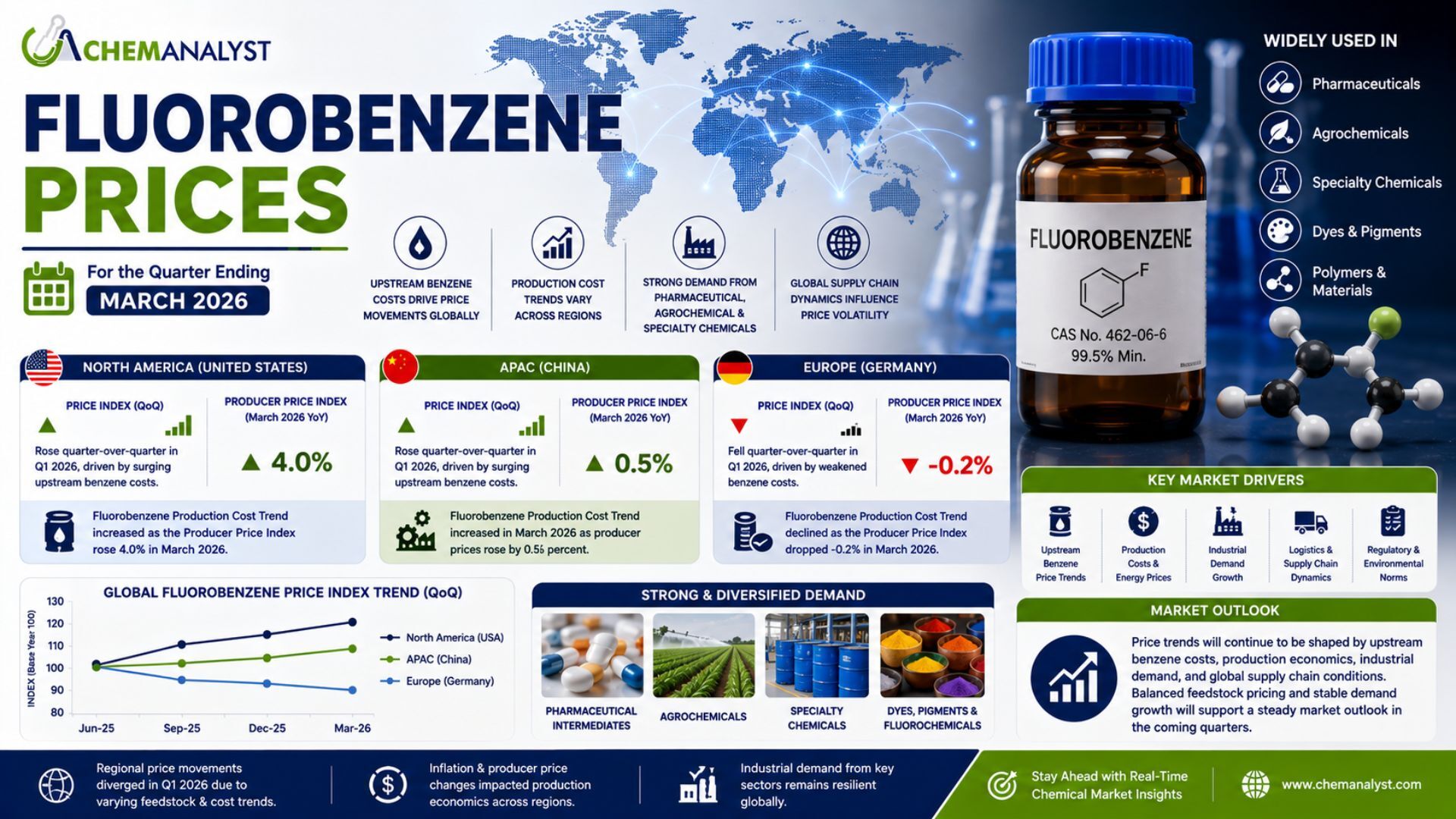
According to ChemAnalyst, the global Fluorobenzene prices presented a mixed regional performance during the quarter ending March 2026, reflecting fluctuations in upstream benzene costs, production expenses, industrial demand and regional manufacturing activity. While North America and Asia-Pacific witnessed quarter-over-quarter price increases supported by rising feedstock costs, Europe recorded a decline due to weakening benzene prices and softer production cost trends.
Fluorobenzene is an important fluorinated aromatic compound widely used as an intermediate in the production of pharmaceuticals, agrochemicals, specialty chemicals, dyes, polymers and advanced organic synthesis. As a key chemical intermediate, its pricing is heavily influenced by benzene prices, fluorination costs, manufacturing expenses, regulatory requirements, logistics and downstream demand from pharmaceutical and specialty chemical industries.
During the first quarter of 2026, the United States and China experienced increases in the Fluorobenzene Price Index, largely driven by surging upstream benzene costs and rising production expenses. In contrast, Germany recorded a decline in prices as lower benzene costs and easing producer prices reduced manufacturing costs. Overall, feedstock economics remained the dominant factor shaping the global Fluorobenzene market throughout the quarter.
Fluorobenzene Prices in North America
The North American Fluorobenzene market maintained a positive pricing trend during the first quarter of 2026.
In the United States, the Fluorobenzene Price Index increased quarter-over-quarter, primarily driven by rising upstream benzene costs that significantly increased raw material expenses for manufacturers.
The Fluorobenzene Production Cost Trend strengthened further during March 2026 as the Producer Price Index (PPI) increased 4.0% year-over-year, highlighting ongoing inflation across the manufacturing sector.
Key market drivers included:
Higher upstream benzene prices
Rising production costs
Inflationary manufacturing environment
Stable downstream demand
Increased operating expenses
Although production costs continued to rise, manufacturers maintained adequate supply through efficient production scheduling and disciplined inventory management.
United States Fluorobenzene Market Analysis
The United States remains a major producer and consumer of specialty chemical intermediates used across pharmaceutical, agrochemical and industrial manufacturing sectors.
Throughout Q1 2026, procurement activity remained healthy as pharmaceutical manufacturers and specialty chemical producers continued purchasing Fluorobenzene for downstream synthesis.
Demand remained stable across:
Pharmaceutical manufacturing
Agrochemical production
Specialty chemical companies
Organic synthesis laboratories
Industrial chemical processors
Manufacturers focused on several strategic priorities.
Feedstock Procurement
Long-term sourcing agreements helped reduce exposure to volatile benzene prices.
Production Optimization
Continuous manufacturing improvements enhanced efficiency while minimizing production losses.
Inventory Management
Balanced inventory planning supported uninterrupted customer deliveries despite rising costs.
Supply Chain Resilience
Manufacturers strengthened supplier relationships and logistics coordination to improve operational reliability.
These initiatives contributed to stable market conditions throughout the quarter.
Get Real Time Online for Fluorobenzene Prices: https://www.chemanalyst.com/Pricing-data/fluorobenzene-2329
Fluorobenzene Prices in APAC
The Asia-Pacific Fluorobenzene market also experienced positive pricing momentum during Q1 2026.
In China, the Fluorobenzene Price Index increased quarter-over-quarter as surging upstream benzene prices raised manufacturing costs for fluorinated chemical intermediates.
The Fluorobenzene Production Cost Trend strengthened during March 2026 as producer prices increased by 0.5%, reflecting gradually rising factory-gate expenses across China's chemical manufacturing sector.
Major market drivers included:
Rising upstream benzene costs
Higher manufacturing expenses
Stable industrial demand
Balanced production levels
Healthy export activity
These conditions supported higher Fluorobenzene prices despite relatively stable supply availability.
Book A Demo for Fluorobenzene Price: https://www.chemanalyst.com/ChemAnalyst/PricingForm?Product=Fluorobenzene
China Fluorobenzene Market Overview
China remains one of the world's largest producers of fluorinated chemical intermediates, supplying domestic manufacturers and international export markets.
During the first quarter of 2026, manufacturers encountered increasing raw material costs while maintaining steady production to satisfy domestic and export demand.
Demand remained consistent from:
Pharmaceutical API manufacturers
Agrochemical producers
Specialty chemical companies
Export customers
Fine chemical manufacturers
Manufacturers implemented several operational initiatives.
Feedstock Management
Strategic procurement programs helped manage fluctuating benzene prices.
Manufacturing Efficiency
Process optimization reduced production costs while improving operational productivity.
Export Planning
Manufacturers balanced export commitments with domestic customer requirements.
Inventory Optimization
Careful inventory management ensured reliable product availability despite higher feedstock expenses.
These strategies supported market stability throughout the quarter.
Fluorobenzene Prices in Europe
The European Fluorobenzene market followed a different pricing trend during the quarter ending March 2026.
In Germany, the Fluorobenzene Price Index declined quarter-over-quarter, primarily due to weakening upstream benzene costs that reduced manufacturing expenses.
The Fluorobenzene Production Cost Trend also weakened as the Producer Price Index (PPI) declined 0.2% during March 2026, indicating easing industrial production costs.
Major market influences included:
Lower benzene feedstock prices
Reduced production costs
Softer manufacturing expenses
Stable downstream demand
Balanced regional supply
These factors contributed to a relatively softer pricing environment across the European market.
Germany Fluorobenzene Market Assessment
Germany remains one of Europe's largest specialty chemical manufacturing centers and plays a significant role in supplying fluorinated intermediates to pharmaceutical and industrial sectors.
Throughout Q1 2026, producers benefited from declining feedstock costs, allowing manufacturing expenses to ease compared with previous quarters.
Demand remained relatively stable from:
Pharmaceutical manufacturers
Specialty chemical producers
Agrochemical companies
Fine chemical manufacturers
Research and development laboratories
Manufacturers focused on several operational priorities.
Cost Optimization
Lower feedstock expenses allowed producers to improve manufacturing efficiency and maintain competitive pricing.
Procurement Planning
Strategic purchasing helped capitalize on favorable benzene market conditions.
Production Stability
Facilities maintained consistent operating schedules to ensure uninterrupted product availability.
Supply Chain Coordination
Efficient logistics planning strengthened delivery performance across European markets.
These initiatives supported balanced market conditions despite lower prices.
Factors Influencing Fluorobenzene Prices
Several interconnected factors continue influencing global Fluorobenzene pricing.
Benzene Feedstock Costs
Benzene remains the most important raw material affecting Fluorobenzene production economics.
Production Costs
Labor, utilities, fluorination processes, maintenance, transportation and packaging significantly impact manufacturing expenses.
Pharmaceutical Demand
Growing pharmaceutical production continues supporting long-term demand for Fluorobenzene intermediates.
Agrochemical Consumption
Crop protection chemical manufacturing remains an important downstream demand segment.
Inflation and Producer Prices
Changes in producer price indices directly influence regional manufacturing costs.
Supply Chain Efficiency
Reliable procurement, production planning and logistics help stabilize market conditions and product availability.
Fluorobenzene Market Trends
Several long-term developments continue shaping the global Fluorobenzene market.
The pharmaceutical industry's continued expansion is increasing demand for fluorinated intermediates used in the synthesis of advanced active pharmaceutical ingredients. Similarly, ongoing growth in agrochemical manufacturing is supporting consumption of fluorinated compounds for crop protection products.
Manufacturers are investing in modern fluorination technologies, energy-efficient production processes and digital manufacturing systems to improve operational efficiency and product quality.
Global chemical companies are also strengthening supply chain resilience through strategic sourcing, inventory optimization and supplier diversification to better manage feedstock price volatility.
Growing research into specialty fluorinated compounds for high-performance materials and advanced chemical applications is expected to provide additional long-term growth opportunities.
Fluorobenzene Price Forecast
The Fluorobenzene Price Forecast remains mixed across major regions.
North America is expected to maintain relatively firm pricing if upstream benzene costs remain elevated and production expenses continue increasing.
China may also experience pricing support as long as feedstock prices remain firm and export demand remains healthy.
Europe could continue witnessing moderate price fluctuations depending on benzene market conditions, manufacturing activity and regional industrial demand.
Overall, feedstock pricing, production costs, pharmaceutical demand and supply chain efficiency are expected to remain the principal drivers of Fluorobenzene prices during the remainder of 2026.
Future Outlook
The global Fluorobenzene market is expected to maintain steady long-term growth as pharmaceutical manufacturing, agrochemical production and specialty chemical industries continue expanding worldwide. Increasing demand for fluorinated intermediates in advanced organic synthesis, drug development and crop protection formulations will continue supporting market growth.
Manufacturers are expected to prioritize operational efficiency, strategic feedstock procurement, resilient supply chains and sustainable production technologies to navigate evolving market conditions. While North America and Asia-Pacific will remain highly sensitive to benzene price movements, Europe is expected to benefit from efficient manufacturing practices and flexible procurement strategies.
As investments in pharmaceutical innovation, specialty chemicals and advanced manufacturing technologies continue increasing globally, Fluorobenzene prices are expected to remain influenced by upstream benzene costs, production economics, industrial demand and ongoing improvements in global chemical supply chains throughout 2026.
About Us:
Welcome to ChemAnalyst, a next–generation platform for chemical and petrochemical intelligence where innovation meets practical insight. Recognized as “Product Innovator of the Year 2023” and ranked among the “Top 100 Digital Procurement Solutions Companies,” we lead the digital transformation of the global chemical sector. Our online platform helps companies handle price volatility with structured analysis, real-time pricing, and reliable news and deal updates from across the world. Tracking over 500 chemical prices in more than 40 countries becomes simple and efficient with us.
ChemAnalsyt
Call +1 3322586602
420 Lexington Avenue, Suite 300, New York, NY, United States, 10170
Website: https://www.chemanalyst.com/
Email: sales@chemanalyst.com
この記事をシェア