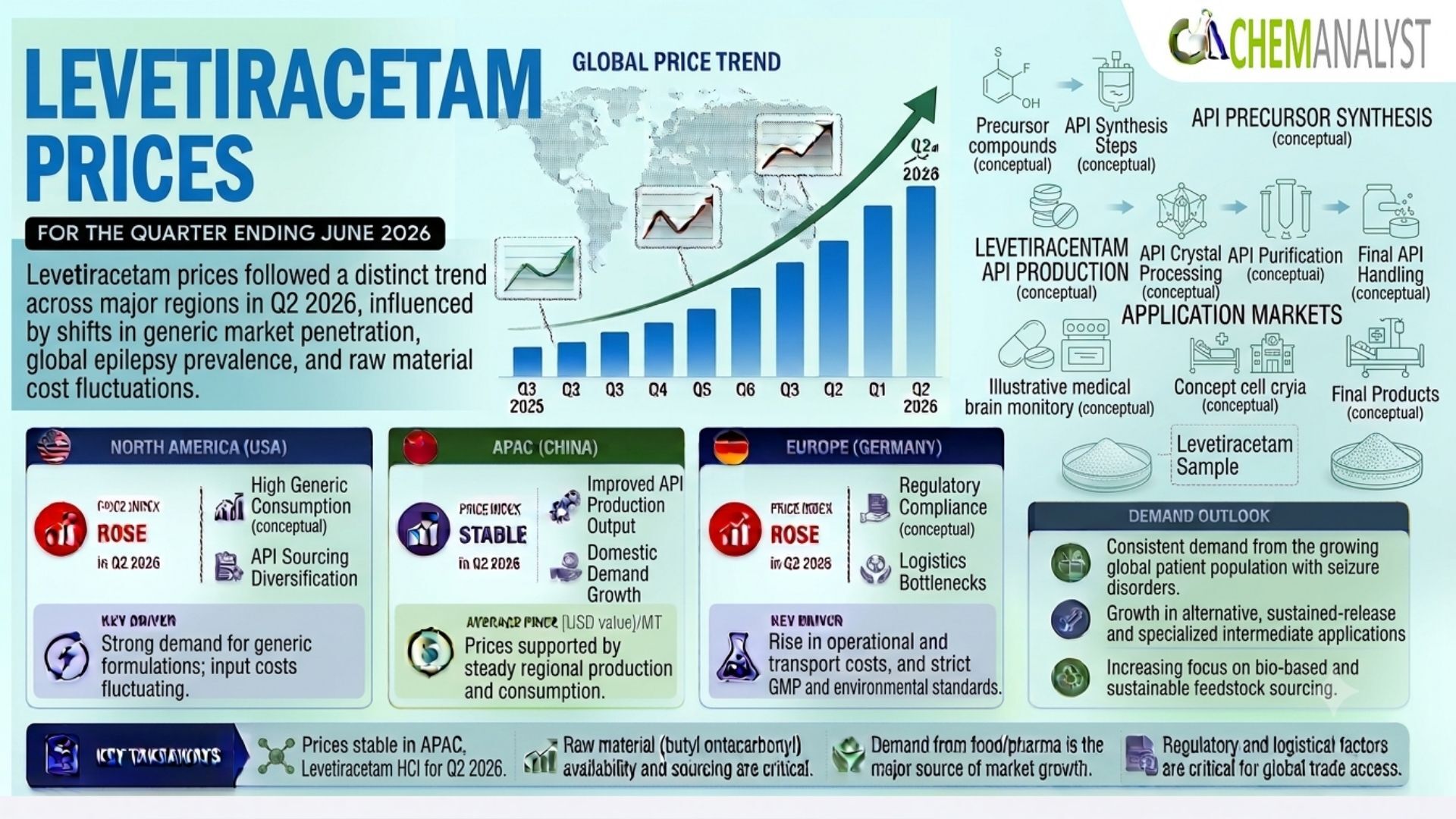
According to ChemAnalyst, the global Levetiracetam Prices market experienced a firm upward movement during the second quarter of 2026, with major pharmaceutical markets across North America, APAC and Europe recording notable quarter-over-quarter increases. The market was influenced by rising freight expenses, stronger export bookings, higher feedstock costs, customs-related supply constraints and increasing import costs.
Levetiracetam is an active pharmaceutical ingredient (API) widely used in medicines for the treatment and management of seizures. As a pharmaceutical intermediate and API, its pricing is influenced by raw-material availability, production expenses, pharmaceutical demand, inventory levels, international freight, customs procedures and regional procurement activity.
During Q2 2026, the United States recorded a 12.33% quarter-over-quarter increase in the Levetiracetam Price Index, while China experienced a 12.14% increase. India followed with a 7.49% quarter-over-quarter rise and Germany registered a 12.22% increase.
The broad-based increase across these markets indicates that Levetiracetam prices were significantly affected by logistics and supply-chain conditions during the quarter. While the precise drivers differed between regions, freight, export activity, feedstock costs, customs delays and import expenses collectively contributed to the firm market environment.
Levetiracetam Prices in North America
In the United States, the Levetiracetam Price Index rose by 12.33% quarter-over-quarter in Q2 2026, driven primarily by recent increases in freight costs.
The average Levetiracetam price for the quarter was approximately USD 32072.33/MT, reflecting import parity and logistics-driven cost components. The movement indicates that transportation expenses played an important role in determining the delivered cost of the API in the US market.
Freight is a particularly important component of imported pharmaceutical ingredients because the final procurement cost can include international transportation, insurance, handling and other logistics-related expenses. When freight rates rise, importers and pharmaceutical manufacturers can experience higher landed costs even when the underlying API production cost remains relatively stable.
During Q2 2026, the increase in freight costs provided upward pressure on US Levetiracetam prices. Import parity further amplified the effect because US buyers sourcing material internationally need to consider the complete delivered cost rather than only the producer's base quotation.
The 12.33% quarterly increase therefore reflects a substantial movement in the US market. For pharmaceutical manufacturers, higher landed costs can influence purchasing decisions, inventory planning and contract negotiations.
The market's upward trajectory also highlights the importance of logistics management in pharmaceutical API procurement. Buyers may respond to higher freight expenses by optimizing shipment sizes, adjusting procurement schedules, or securing supplies earlier to reduce exposure to further transportation-cost increases.
Overall, the US Levetiracetam market remained firm during Q2 2026, with logistics acting as a major contributor to the increase in prices.
Get Real Time Online for Levetiracetam Prices: https://www.chemanalyst.com/Pricing-data/levetiracetam-1641
Levetiracetam Prices in APAC
The Asia-Pacific market also recorded significant price appreciation during Q2 2026. In China, the Levetiracetam Price Index rose by 12.14% quarter-over-quarter, reflecting stronger export bookings overall.
The average Levetiracetam price in China reached USD 31900/MT, based on Shanghai FOB assessments.
Stronger export bookings provided support to Chinese Levetiracetam prices by improving demand visibility for producers and exporters. When export orders increase, suppliers may prioritize confirmed shipments and maintain firmer quotations, particularly when available inventories are limited.
The Shanghai FOB assessment also reflects the importance of China's export-oriented market structure. FOB pricing captures the value of the material at the point of shipment before the buyer assumes the subsequent international freight and destination-related costs.
The 12.14% quarter-over-quarter increase demonstrates the strength of the market during Q2 2026. Export activity provided a significant demand-side foundation for higher pricing.
For international buyers, stronger Chinese export bookings can affect procurement strategies because increased supplier order books may reduce flexibility in securing prompt shipments. Buyers may therefore need to plan requirements further in advance when export demand strengthens.
China's position as an important pharmaceutical manufacturing and exporting hub also means that developments in its domestic production and export markets can influence pricing conditions across other regions.
Levetiracetam Prices in India
India experienced a comparatively moderate but still significant increase in Levetiracetam prices during Q2 2026.
The Levetiracetam Price Index in India rose by 7.49% quarter-over-quarter, driven by higher feedstock costs. Increasing feedstock expenses raised the underlying production-cost structure and contributed to higher market prices.
Feedstock costs are an important component of API manufacturing economics. When the prices of chemical inputs and intermediates increase, manufacturers can experience margin pressure unless they are able to pass a portion of the additional expense to downstream buyers.
In addition to feedstock-related cost pressure, the Levetiracetam Spot Price firmed in June as customs delays tightened intermediate supplies and reduced prompt availability.
Customs delays can create temporary supply disruptions even when overall production capacity remains sufficient. When intermediate materials are delayed during import or clearance procedures, manufacturers may face difficulties obtaining the inputs required for timely production. This can reduce the availability of material for immediate delivery.
The combination of higher feedstock costs and tighter prompt availability created a supportive environment for Indian Levetiracetam prices.
However, the 7.49% increase remained lower than the quarterly movements recorded in the United States, China and Germany. This difference demonstrates the influence of regional market structures and the varying intensity of cost and supply-chain pressures.
For Indian pharmaceutical manufacturers and procurement teams, prompt availability became particularly important during June. Buyers requiring immediate supplies may have faced greater pressure compared with those able to plan procurement requirements in advance.
Levetiracetam Prices in Europe
The European market also recorded a substantial increase during Q2 2026. In Germany, the Levetiracetam Price Index rose by 12.22% quarter-over-quarter, driven by higher import costs.
The average Levetiracetam price for the quarter was approximately USD 32047/MT based on CFR Hamburg data.
CFR pricing incorporates the cost and freight component up to the specified destination port, making it particularly relevant for evaluating the delivered economics of imported pharmaceutical ingredients.
Higher import costs contributed significantly to the German price increase during Q2 2026. When imported APIs become more expensive to bring into the European market, buyers can face higher procurement costs even if the production-side quotation remains comparatively unchanged.
The 12.22% quarter-over-quarter increase placed Germany among the markets experiencing the strongest price appreciation during the quarter. The movement was closely aligned with the broader global increase in Levetiracetam prices.
For pharmaceutical manufacturers, higher import costs can influence inventory decisions and purchasing schedules. Buyers may seek to optimize procurement by negotiating longer-term supply arrangements or adjusting purchase timing according to anticipated logistics conditions.
The German market's performance also demonstrates the significance of delivered pricing in Europe. Pharmaceutical buyers generally need to account for transportation and import-related expenses when comparing international suppliers.
Book A Demo for Levetiracetam Price: https://www.chemanalyst.com/ChemAnalyst/PricingForm?Product=Levetiracetam
Key Factors Influencing Levetiracetam Prices in Q2 2026
Several market factors contributed to the global increase in Levetiracetam prices during Q2 2026.
Rising Freight Costs
Freight increases were the primary driver behind the US price movement. Higher transportation expenses raised import parity and contributed to a higher delivered cost for buyers.
Stronger Export Bookings
China experienced stronger export bookings, supporting a 12.14% quarter-over-quarter increase in the Levetiracetam Price Index. Strong export activity improved demand visibility and supported firmer supplier quotations.
Feedstock Costs
Higher feedstock costs influenced the Indian market. Increased input expenses raised production costs and encouraged cost pass-through to buyers.
Customs Delays
Customs delays in India reduced the availability of pharmaceutical intermediates in the prompt market. This tightening of supply supported a firmer Levetiracetam Spot Price during June.
Import Costs
Germany's Levetiracetam market was affected by higher import costs. The resulting increase in delivered expenses contributed to the 12.22% quarterly rise in the German Price Index.
Levetiracetam Price Trend Analysis for Q2 2026
The Q2 2026 market showed a broad-based upward movement across the major regions covered.
The United States recorded the highest quarterly increase among the four reported markets at 12.33%, with freight increases acting as the primary driver. The average price reached approximately USD 32072.33/MT.
China followed with a 12.14% increase, supported by stronger export bookings. The average price stood at USD 31900/MT on a Shanghai FOB basis.
Germany recorded a 12.22% increase, with higher import costs supporting the upward movement. Its average price was approximately USD 32047/MT on a CFR Hamburg basis.
India registered a 7.49% increase, reflecting higher feedstock costs and tighter prompt availability caused by customs delays. The Indian market therefore experienced a firming trend, although its increase was comparatively lower than those observed in the other major markets.
The regional differences demonstrate that Levetiracetam price trends were not driven by a single factor. Instead, logistics, export demand, feedstock costs, customs conditions and import expenses each played a role.
Example of Levetiracetam Price Dynamics
Consider a pharmaceutical manufacturer planning to purchase Levetiracetam during Q2 2026.
A US-based buyer importing the API could experience higher procurement costs because freight expenses increased. Even if the supplier's base price remained unchanged, the higher logistics component could increase the final landed cost. With the average quarterly price at approximately USD 32072.33/MT, the buyer would need to account for the logistics-driven pricing environment.
A buyer sourcing from China could face stronger supplier demand because of increased export bookings. With the average price at USD 31900/MT FOB Shanghai, advance procurement could become more important if export order books continued to strengthen.
In India, a manufacturer requiring immediate material in June could encounter tighter prompt availability because customs delays affected intermediate supplies. Higher feedstock costs would add further pressure to the procurement price.
Meanwhile, a German pharmaceutical manufacturer purchasing material on a CFR Hamburg basis could face higher import costs, contributing to an average quarterly price of approximately USD 32047/MT.
This example illustrates how the same API can experience different pricing pressures depending on the procurement location and supply-chain structure.
Levetiracetam Prices Forecast
The outlook for Levetiracetam prices will depend heavily on freight conditions, export demand, feedstock costs, intermediate availability and import expenses.
In North America, the market could remain sensitive to freight rates. If transportation costs remain elevated, import parity could continue to support higher prices. Conversely, easing freight expenses could reduce some of the logistics-driven pressure.
China's outlook will depend on export bookings and supplier order visibility. Continued strong export demand could keep prices firm, while weaker bookings could reduce upward pressure.
In India, feedstock costs and intermediate availability will remain important. Resolution of customs delays could improve prompt availability, while continued supply constraints could keep spot prices firm.
Germany will remain sensitive to import costs and international logistics. Any sustained increase in delivered import expenses could continue to influence the regional price trend.
For procurement teams, tracking Levetiracetam prices, freight rates, export bookings, feedstock costs, customs conditions and import costs will be essential for developing effective sourcing strategies.
Conclusion
The second quarter of 2026 was marked by a strong upward trend in global Levetiracetam Prices. The United States recorded a 12.33% quarter-over-quarter increase, driven by rising freight costs, with the average price reaching approximately USD 32072.33/MT.
In China, the Levetiracetam Price Index increased by 12.14%, supported by stronger export bookings, while the average price reached USD 31900/MT based on Shanghai FOB assessments. India recorded a 7.49% increase, driven by feedstock costs, while customs delays tightened intermediate supplies and supported firmer spot prices in June.
Germany experienced a 12.22% quarter-over-quarter increase, with higher import costs contributing to an average price of approximately USD 32047/MT based on CFR Hamburg data.
Overall, Q2 2026 demonstrated that logistics and supply-chain conditions were central to the movement in Levetiracetam prices. Freight increases, stronger export demand, feedstock costs, customs delays and import expenses collectively shaped the market. Monitoring these factors will remain important for pharmaceutical manufacturers, distributors and procurement professionals assessing future Levetiracetam price trends and forecasts.
ChemAnalsyt
Call +1 3322586602
420 Lexington Avenue, Suite 300, New York, NY, United States, 10170
Website: https://www.chemanalyst.com/
Email: sales@chemanalyst.com
この記事をシェア





