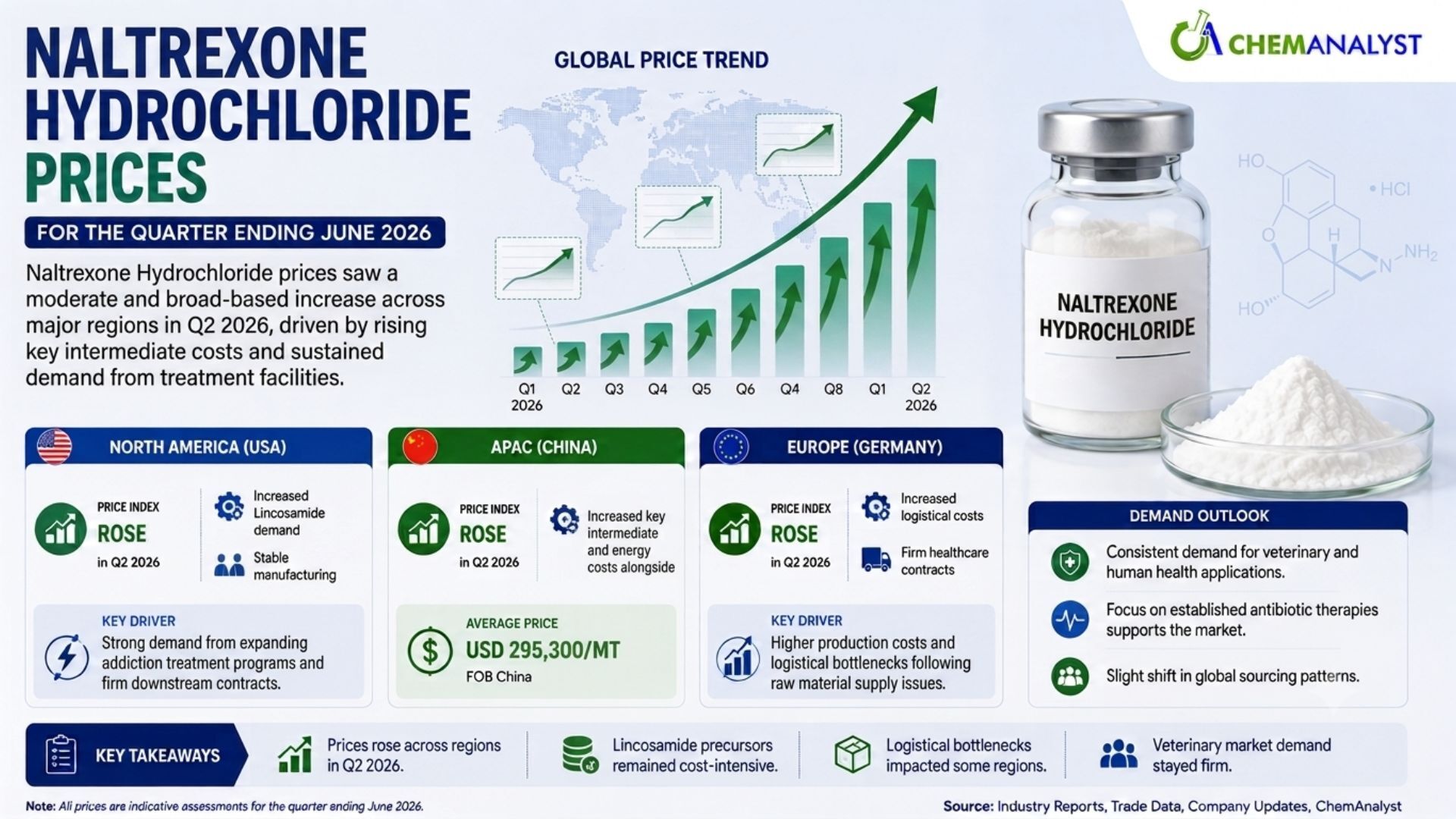
According to ChemAnalyst, the global Naltrexone Hydrochloride Prices market witnessed an upward movement during the second quarter of 2026, with major markets including North America, Europe and APAC recording increases in their respective price indices. The market remained influenced by elevated production costs, higher producer prices, rising input expenses and firm demand conditions.
Naltrexone Hydrochloride is an important pharmaceutical ingredient used in the production of medicines associated with specific therapeutic applications. Its pricing is influenced by manufacturing costs, raw material availability, energy expenses, pharmaceutical-sector demand and broader industrial price trends. During Q2 2026, cost-side pressures emerged as a key factor across the major markets.
In the United States, the Naltrexone Hydrochloride Price Index increased amid elevated production costs and robust demand. Germany also recorded a quarter-over-quarter increase as producers faced higher manufacturing expenses and elevated energy costs. Meanwhile, China's Naltrexone Hydrochloride market experienced upward price movement as producer input costs increased.
The synchronized increase across these regions highlights the importance of production economics in determining Naltrexone Hydrochloride Prices during Q2 2026.
Naltrexone Hydrochloride Prices in North America
In the United States, the Naltrexone Hydrochloride Price Index rose in Q2 2026, supported by elevated production costs and robust demand. The market experienced continued cost-side pressure as manufacturers faced an increase in producer-level expenses during the quarter.
One of the major indicators influencing the market was the movement in producer prices. Producer prices increased by 5.5% year-over-year in June 2026, reflecting a higher cost environment for producers. Such an increase can affect pharmaceutical manufacturing economics by raising the expenses associated with raw materials, processing, utilities, labor, transportation and other production requirements.
The increase in production costs provided upward support to Naltrexone Hydrochloride Prices. Manufacturers operating in the US market had to account for the higher overall cost of production when evaluating pricing strategies. At the same time, robust demand provided additional support to the market, allowing producers to maintain a firm pricing position.
Demand conditions are particularly relevant in the pharmaceutical ingredient market because procurement requirements are closely connected with downstream pharmaceutical manufacturing activity. When demand remains stable or increases while production costs rise, suppliers generally face less pressure to reduce prices.
During Q2 2026, these factors combined to create a firm pricing environment for Naltrexone Hydrochloride in the United States. The market's upward trajectory reflected the interaction between cost inflation and healthy demand.
Naltrexone Hydrochloride Prices in Europe
The European market also recorded an increase in Naltrexone Hydrochloride Prices during Q2 2026. In Germany, the Naltrexone Hydrochloride Price Index rose quarter-over-quarter as manufacturers faced increased production costs.
The German market continued to experience pressure from elevated industrial expenses during the quarter. Producer prices increased by 2.2% in May 2026, indicating a rise in the cost environment faced by industrial producers. For pharmaceutical and chemical manufacturers, changes in producer prices can influence the economics of manufacturing and downstream supply.
Energy costs were another important factor during Q2 2026. Higher energy expenses can have a direct effect on chemical and pharmaceutical production because manufacturing processes often require significant amounts of electricity, heating, cooling and other utilities. Increased energy expenditure can therefore contribute to higher overall production costs.
The combination of higher producer prices and elevated energy costs supported the increase in the German Naltrexone Hydrochloride Price Index. Manufacturers were required to manage increased operating expenses while maintaining adequate supply for downstream customers.
The European market therefore remained cost-sensitive throughout the quarter. For buyers, changes in German producer prices and energy costs represented important indicators for understanding the movement of Naltrexone Hydrochloride Prices.
Get Real Time Online for Naltrexone Hydrochloride Prices: https://www.chemanalyst.com/Pricing-data/naltrexone-hydrochloride-1457
Naltrexone Hydrochloride Prices in APAC
In APAC, China recorded a quarter-over-quarter increase in the Naltrexone Hydrochloride Price Index during Q2 2026. The upward movement was primarily driven by rising producer input costs.
China remains an important manufacturing hub for chemical and pharmaceutical products, making changes in raw material prices particularly relevant to the Naltrexone Hydrochloride market. During June 2026, raw chemical material purchase prices increased year-over-year, contributing to higher production costs.
An increase in raw material purchase prices can significantly affect the cost structure of pharmaceutical ingredient manufacturers. When the cost of chemical inputs increases, producers may experience reduced margins if selling prices remain unchanged. Consequently, suppliers may adjust their offers to account for the higher cost base.
This cost-driven environment contributed to the quarter-over-quarter rise in China's Naltrexone Hydrochloride Price Index. The market's performance during Q2 2026 demonstrated the importance of monitoring upstream chemical prices when evaluating pharmaceutical ingredient pricing.
The Chinese market therefore entered the second half of 2026 with pricing supported by higher producer input costs. Future price movements will depend partly on the direction of raw material prices and the ability of manufacturers to manage their production expenses.
Key Factors Influencing Naltrexone Hydrochloride Prices in Q2 2026
Several market factors contributed to the increase in Naltrexone Hydrochloride Prices across the major regions during Q2 2026.
Elevated Production Costs
Higher production costs were a common factor across North America, Europe and APAC. In the United States, the 5.5% year-over-year increase in producer prices in June 2026 reflected a broader increase in producer-level costs. Germany experienced a 2.2% increase in producer prices in May 2026, while China faced higher raw chemical material purchase prices.
These developments increased the cost burden for manufacturers and contributed to upward pressure on Naltrexone Hydrochloride Prices.
Rising Raw Material Costs
Raw material costs are an important component of pharmaceutical ingredient production. In China, year-over-year increases in raw chemical material purchase prices during June 2026 contributed to higher production expenses.
When upstream chemical costs rise, manufacturers may need to adjust selling prices to preserve production margins. Therefore, raw material price movements can provide an early indication of potential changes in Naltrexone Hydrochloride Prices.
Energy Costs in Europe
Energy costs remained particularly relevant in Germany during Q2 2026. Pharmaceutical and chemical production requires various energy-intensive processes, making energy prices an important component of the overall cost structure.
Higher energy costs increased manufacturing expenses and contributed to the quarter-over-quarter rise in the German Naltrexone Hydrochloride Price Index.
Robust Demand in the United States
Demand remained another supportive factor in the US market. Robust downstream demand helped maintain purchasing activity despite higher production expenses.
A combination of strong demand and increasing costs typically creates a supportive environment for prices because suppliers have greater ability to pass higher production expenses through to buyers.
Book A Demo for Naltrexone Hydrochloride Price: https://www.chemanalyst.com/ChemAnalyst/PricingForm?Product=Naltrexone%20Hydrochloride
Impact of Supply and Demand on the Naltrexone Hydrochloride Market
The relationship between supply and demand remained important for the global Naltrexone Hydrochloride market during Q2 2026. Although cost pressures were a major contributor to price increases, downstream demand also influenced regional market sentiment.
In the United States, robust demand provided additional support to the market. Buyers continued to require pharmaceutical ingredients, while manufacturers faced higher production expenses. This combination contributed to the upward movement in prices.
In Europe, the pricing environment was more closely associated with increased production costs, particularly higher producer prices and energy expenses in Germany. Meanwhile, in China, upstream raw material costs played a more prominent role.
These regional differences demonstrate that Naltrexone Hydrochloride Prices are influenced by a combination of global and local factors. International raw material trends can affect manufacturing costs, while regional demand, energy expenses and industrial conditions determine how strongly these pressures are reflected in market prices.
Regional Comparison of Naltrexone Hydrochloride Prices
The three major regions covered during Q2 2026 recorded upward price movements, although the underlying drivers varied.
North America experienced a rise in the Naltrexone Hydrochloride Price Index because of elevated production costs and robust demand. The 5.5% year-over-year increase in US producer prices in June highlighted the broader cost pressure affecting manufacturers.
Europe, represented by Germany, recorded a quarter-over-quarter increase as production costs rose. The 2.2% increase in producer prices in May, combined with high energy costs during Q2, strengthened the cost-driven upward pressure on the market.
APAC, particularly China, also recorded a quarter-over-quarter increase. Rising producer input costs and higher year-over-year purchase prices for raw chemical materials in June contributed to the increase in production expenses.
Thus, while all three regions experienced upward movements, the market drivers were not identical. This distinction is important for procurement teams and market participants monitoring regional Naltrexone Hydrochloride Prices.
Naltrexone Hydrochloride Market Outlook
The Q2 2026 market performance suggests that Naltrexone Hydrochloride Prices entered the second half of the year under upward cost pressure. Future market direction will depend on several factors, including raw material prices, producer-cost inflation, energy expenses, pharmaceutical demand and overall manufacturing conditions.
In North America, producer price movements and downstream demand will remain important indicators. If production costs remain elevated alongside robust demand, the market could continue to experience pricing pressure.
In Germany, energy expenses and industrial producer prices will remain important variables for assessing future production economics. Any sustained increase in these costs could continue to influence pharmaceutical ingredient pricing.
In China, raw chemical material purchase prices will be particularly important. A continuation of upstream cost increases could result in further pressure on manufacturers and potentially support higher Naltrexone Hydrochloride Prices.
Market participants should therefore closely monitor upstream chemical prices, producer-price indices, energy costs and demand conditions when assessing future market trends.
Naltrexone Hydrochloride Price Trend: Q2 2026 Summary
The second quarter of 2026 was marked by an overall increase in Naltrexone Hydrochloride Prices across North America, Europe and APAC. The upward trend was primarily associated with rising production costs and higher upstream input expenses, while robust demand provided additional support in the United States.
In the United States, the Naltrexone Hydrochloride Price Index rose during Q2 2026 as elevated production costs coincided with strong demand. Producer prices increased by 5.5% year-over-year in June 2026, adding to the cost pressure faced by manufacturers.
Germany also recorded a quarter-over-quarter increase in the Naltrexone Hydrochloride Price Index. Higher production costs, a 2.2% increase in producer prices in May 2026 and high energy costs contributed to the upward movement.
In China, the Naltrexone Hydrochloride Price Index increased quarter-over-quarter as producer input costs rose. Higher year-over-year purchase prices for raw chemical materials in June 2026 contributed to increased production expenses.
Overall, Q2 2026 demonstrated the strong influence of manufacturing economics on the global Naltrexone Hydrochloride market. Rising producer prices, raw material costs, energy expenses and firm demand collectively supported the upward movement in prices. Monitoring these indicators will remain essential for businesses seeking to understand future Naltrexone Hydrochloride Price Trends and make informed procurement decisions.
ChemAnalsyt
Call +1 3322586602
420 Lexington Avenue, Suite 300, New York, NY, United States, 10170
Website: https://www.chemanalyst.com/
Email: sales@chemanalyst.com
この記事をシェア





