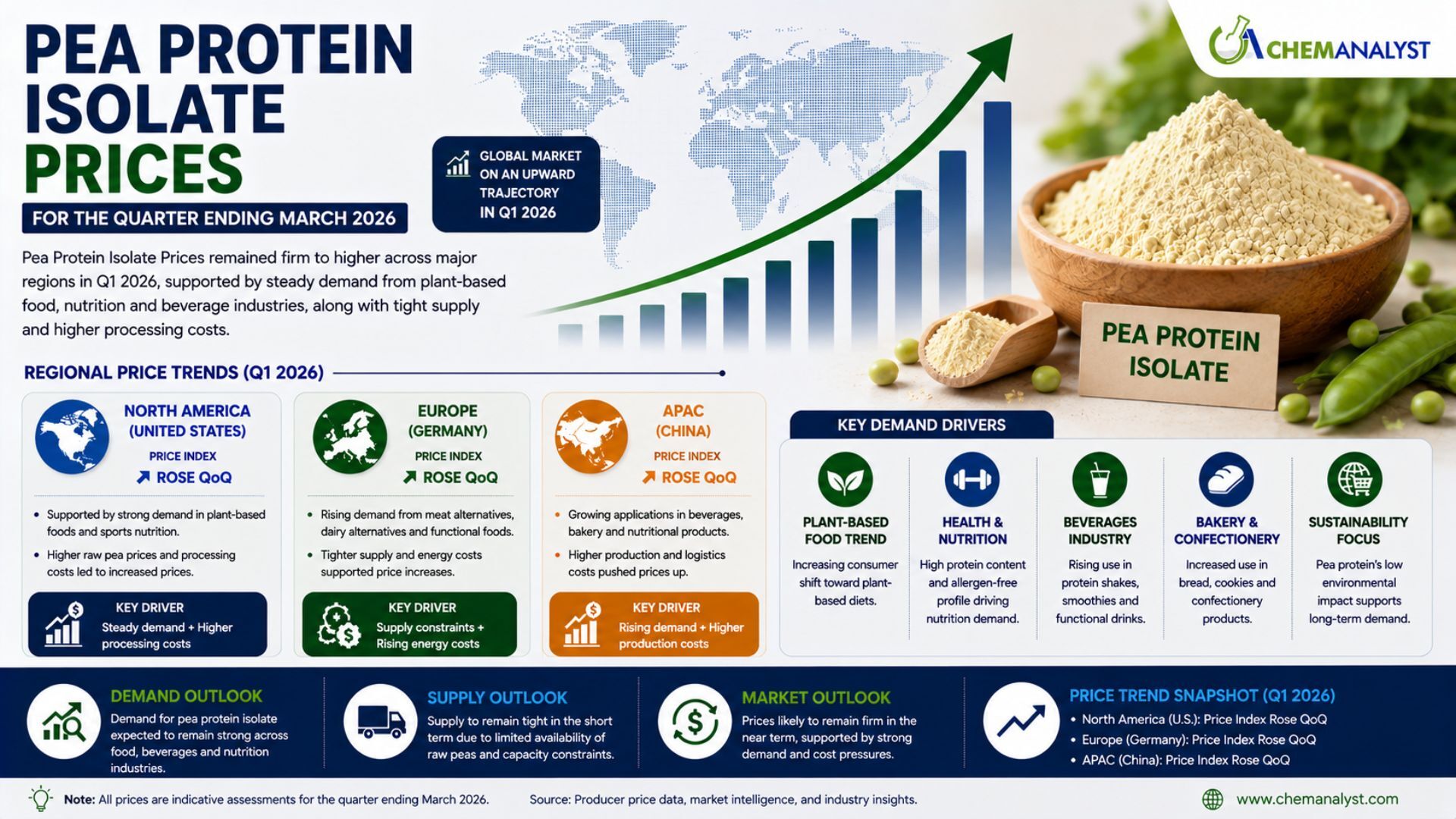
According to ChemAnalyst, the global Pea Protein Isolate prices market recorded an upward trend across APAC, North America and Europe during the quarter ending June 2026. Rising production costs, robust downstream demand, elevated energy expenses and changing feedstock economics influenced regional market conditions throughout Q2 2026.
Pea Protein Isolate is a highly concentrated plant-based protein derived from yellow peas and is widely used in food, beverages, sports nutrition, dietary supplements, meat alternatives and other nutritional products. Growing interest in plant-based nutrition has strengthened the importance of pea protein as an alternative to conventional animal-based and other plant-derived proteins.
During Q2 2026, China experienced a quarter-over-quarter increase in the Pea Protein Isolate Price Index, primarily due to increasing production costs. The average Pea Protein Isolate price for the quarter was approximately USD 4000/MT FOB Indonesia. Production costs increased in June 2026 as the Producer Price Index rose by 4.1% year-over-year.
In the United States, Pea Protein Isolate prices also rose during Q2 2026. The increase was supported by robust demand and elevated production costs. However, production costs were mixed because pea feedstock costs were lower for the 2025/26 marketing year.
Germany recorded an increase in Pea Protein Isolate prices during Q2 2026. Elevated energy costs and sustained producer margin pressure contributed to the upward movement. Production costs increased as industrial producer prices rose by 2.2% in May 2026.
Overall, the Q2 2026 market demonstrated that Pea Protein Isolate prices remained highly sensitive to production economics, feedstock availability, energy expenses and downstream demand.
Pea Protein Isolate Prices in APAC
The Asia-Pacific Pea Protein Isolate market experienced a firm pricing environment during Q2 2026. In China, the Pea Protein Isolate Price Index rose quarter-over-quarter, driven by increasing production costs.
The average Pea Protein Isolate price for the quarter was approximately USD 4000/MT FOB Indonesia.
Production costs increased in June 2026 as the Producer Price Index rose by 4.1% year-over-year. The increase in producer prices reflected a higher industrial cost environment and contributed to upward pressure on Pea Protein Isolate manufacturing expenses.
Production economics are particularly important for plant-based protein products because the final cost is influenced by raw-material availability, processing expenses, energy consumption, transportation and other manufacturing requirements. When these expenses increase, suppliers may seek to adjust prices to protect margins.
China's market conditions were therefore influenced primarily by the cost side during Q2 2026. Higher production expenses provided upward support to market quotations, while buyers continued to monitor procurement requirements and inventory positions.
Demand for plant-based proteins also remains an important factor in the APAC market. Food manufacturers, beverage producers, sports-nutrition companies and dietary supplement manufacturers are among the downstream users that can influence procurement requirements.
The interaction between increasing production costs and downstream demand resulted in a firm Pea Protein Isolate price trend in APAC during Q2 2026.
Get Real Time Online for Pea Protein Isolate Prices: https://www.chemanalyst.com/Pricing-data/pea-protein-isolate-2396
Pea Protein Isolate Prices in North America
The North American Pea Protein Isolate market also recorded an increase during Q2 2026. In the United States, Pea Protein Isolate prices rose in Q2 2026, driven by robust demand and elevated production costs.
The U.S. market benefited from continued demand for plant-based protein products. Pea Protein Isolate is increasingly incorporated into nutritional formulations, plant-based food products, sports-nutrition products and other protein-rich applications.
Strong downstream demand can support prices when buyers maintain regular procurement schedules. When demand remains robust, suppliers may have greater pricing flexibility, particularly when production costs are also elevated.
However, the production-cost environment in the United States was mixed during Q2 2026. Lower pea feedstock costs for the 2025/26 marketing year provided some relief to producers.
The combination of lower feedstock costs and higher overall production expenses created a mixed cost environment. Although lower pea costs could reduce a portion of the raw-material burden, other manufacturing and operating expenses remained relevant to the final market price.
Despite the mixed production-cost environment, robust demand supported the upward movement in U.S. Pea Protein Isolate prices.
The North American market therefore demonstrated the importance of both demand and cost factors. Strong consumption can provide price support even when some components of the production-cost structure are easing.
Pea Protein Isolate Prices in Europe
The European Pea Protein Isolate market experienced an upward price movement during Q2 2026. In Germany, Pea Protein Isolate prices rose, driven by elevated energy costs and sustained producer margin pressure.
Energy expenses represent an important component of industrial food-ingredient processing. Higher energy costs can increase manufacturing expenses and place pressure on producer margins.
Production costs increased in Q2 2026 as industrial producer prices rose by 2.2% in May 2026.
The increase in industrial producer prices contributed to a higher overall cost environment for manufacturers. When industrial input costs increase, producers may attempt to pass part of the additional expenses through to customers, particularly when market demand remains stable.
European buyers therefore faced a market characterized by higher production costs and sustained producer margin pressure. Procurement strategies became increasingly important as manufacturers balanced inventory requirements against market quotations.
Demand from plant-based food manufacturers, nutritional-product companies and other users continued to support the market. The combination of sustained demand and elevated energy costs contributed to the upward Pea Protein Isolate price trend in Europe.
Key Factors Influencing Pea Protein Isolate Prices
Several factors contributed to the movement of Pea Protein Isolate prices during Q2 2026.
Pea Feedstock Costs
Pea feedstock represents one of the most important raw-material considerations for Pea Protein Isolate production. In the United States, lower pea feedstock costs for the 2025/26 marketing year provided some relief to producers.
Changes in pea availability and agricultural market conditions can therefore influence the production economics of pea protein ingredients.
Energy Costs
Energy expenses affected the European market during Q2 2026. Higher energy costs increased production expenses and contributed to sustained producer margin pressure in Germany.
Producer Price Inflation
Producer-price movements also influenced market conditions. China's PPI rose 4.1% year-over-year in June 2026, while Germany's industrial producer prices increased 2.2% in May 2026.
These indicators reflected higher industrial cost environments and contributed to production-cost pressure.
Downstream Demand
Robust demand was a major factor supporting prices in the United States. Growing consumption of plant-based protein products can increase procurement requirements and support market prices.
Production Costs
Production costs remained a major driver across the three regions. While the U.S. experienced some relief from lower pea feedstock costs, China and Germany faced higher production-cost pressure.
Book A Demo for Pea Protein Isolate Price: https://www.chemanalyst.com/ChemAnalyst/PricingForm?Product=Pea%20Protein%20Isolate
Pea Protein Isolate Demand Analysis
Demand remains a critical factor in the global Pea Protein Isolate market. The ingredient is used across a diverse range of applications, helping create multiple sources of downstream consumption.
Plant-based food manufacturers use pea protein in meat alternatives, ready-to-consume products, snacks and other formulations. The ingredient is also increasingly relevant to sports nutrition and dietary supplements because of its protein content.
The food and beverage industry remains an important source of demand. Consumers seeking plant-based and alternative protein products can contribute to increased demand for pea-derived protein ingredients.
Sports nutrition represents another important demand segment. Protein powders, nutritional beverages and other performance-oriented products can utilize Pea Protein Isolate as a plant-based protein source.
During Q2 2026, the U.S. market specifically recorded robust demand, which supported higher Pea Protein Isolate prices despite some relief in pea feedstock costs.
Demand conditions in APAC and Europe also remained important for market stability. Procurement from food, beverage, nutritional and plant-based product manufacturers can help maintain consumption even when production costs fluctuate.
Pea Protein Isolate Production Cost Trend
The Pea Protein Isolate production cost trend varied by region during Q2 2026.
In China, production costs increased as PPI rose 4.1% year-over-year in June 2026. The higher producer-price environment contributed to increased manufacturing expenses.
In the United States, production costs were mixed. Lower pea feedstock costs for the 2025/26 marketing year provided a favorable factor, while elevated production costs overall continued to influence market pricing.
In Germany, production costs increased because of elevated energy costs and producer margin pressure. Industrial producer prices increased 2.2% in May 2026, reinforcing the higher-cost environment.
The regional comparison shows that feedstock and industrial cost movements can affect Pea Protein Isolate markets differently. Producers and buyers therefore need to monitor both agricultural and industrial indicators.
Pea Protein Isolate Supply Analysis
Supply availability remains closely linked to pea production, processing capacity, inventory levels and production economics.
The availability of suitable pea feedstock can influence the amount of Pea Protein Isolate that producers can manufacture. Changes in agricultural conditions and feedstock prices can therefore have downstream implications for protein ingredient markets.
In the United States, lower pea feedstock costs for the 2025/26 marketing year provided some cost relief. However, the overall market still experienced upward pricing because robust demand and elevated production costs supported the market.
In China, higher production costs placed upward pressure on the supply side. Producers operating with higher expenses may need to adjust their pricing strategies to preserve margins.
In Europe, elevated energy costs similarly affected production economics. Sustained producer margin pressure can influence production decisions and supplier quotations.
Supply and cost conditions will therefore remain important indicators for future Pea Protein Isolate prices.
Regional Pea Protein Isolate Price Comparison
The Q2 2026 market recorded upward price movements across APAC, North America and Europe, although the underlying drivers differed.
In China, the Pea Protein Isolate Price Index rose quarter-over-quarter due to increasing production costs. The average price was approximately USD 4000/MT FOB Indonesia, while China's PPI increased 4.1% year-over-year in June 2026.
In the United States, Pea Protein Isolate prices rose due to robust demand and elevated production costs. Lower pea feedstock costs for the 2025/26 marketing year provided some cost relief but did not prevent the overall price increase.
In Germany, Pea Protein Isolate prices rose due to elevated energy costs and sustained producer margin pressure. Industrial producer prices increased 2.2% in May 2026, contributing to higher production costs.
The common theme across all three markets was a firm price environment, while regional supply and cost factors varied.
Pea Protein Isolate Market Outlook
The outlook for Pea Protein Isolate prices will depend on the balance between feedstock availability, production costs, downstream demand and energy expenses.
In APAC, producer-price movements and manufacturing costs will remain important indicators. China's 4.1% year-over-year PPI increase in June 2026 demonstrates the relevance of industrial inflation to the regional market.
In North America, pea feedstock economics will remain important. Lower feedstock costs can provide some relief to producers, but robust demand may continue supporting market prices.
In Europe, energy costs and producer-price inflation will remain key factors. The 2.2% increase in industrial producer prices in Germany in May 2026 highlights the continued cost pressure facing manufacturers.
Demand from plant-based food, beverages, sports nutrition and dietary supplements will also remain important. Continued consumption growth could support prices if supply does not expand at the same pace.
Pea Protein Isolate Price Trend Forecast
The Pea Protein Isolate price trend forecast remains closely linked to developments in agricultural feedstock costs, production expenses, energy prices and downstream demand.
In North America, continued robust demand could maintain upward pressure on prices. However, lower pea feedstock costs could provide some offset if the favorable feedstock environment persists.
In China, continued producer-price inflation could support higher production costs. If the cost environment remains elevated, suppliers may continue facing pressure to maintain firm quotations.
In Europe, energy costs will remain an important market indicator. Continued cost inflation could maintain producer margin pressure and support higher Pea Protein Isolate prices.
Demand trends will also play an important role. Strong procurement from plant-based food and nutrition manufacturers could provide additional support, while weaker downstream consumption could moderate price momentum.
Overall, the market outlook remains sensitive to both agricultural and industrial cost developments.
Conclusion
The global Pea Protein Isolate prices market recorded an upward trend across APAC, North America and Europe during Q2 2026. The market was influenced by a combination of production costs, feedstock economics, energy expenses, producer-price inflation and downstream demand.
In China, the Pea Protein Isolate Price Index rose quarter-over-quarter due to increasing production costs. The average Pea Protein Isolate price for the quarter was approximately USD 4000/MT FOB Indonesia, while production costs increased as PPI rose 4.1% year-over-year in June 2026.
In the United States, Pea Protein Isolate prices rose during Q2 2026, supported by robust demand and elevated production costs. However, lower pea feedstock costs for the 2025/26 marketing year provided some relief within the production-cost structure.
In Germany, Pea Protein Isolate prices increased due to elevated energy costs and sustained producer margin pressure. Production costs increased as industrial producer prices rose 2.2% in May 2026.
Overall, Q2 2026 reflected a firm Pea Protein Isolate price trend, with regional markets responding to different combinations of supply, demand, feedstock, energy and production-cost factors. Going forward, buyers and suppliers will need to monitor pea feedstock availability, producer-price inflation, energy costs, production economics, inventory levels and downstream demand to assess future market movements.
ChemAnalsyt
Call +1 3322586602
420 Lexington Avenue, Suite 300, New York, NY, United States, 10170
Website: https://www.chemanalyst.com/
Email: sales@chemanalyst.com
この記事をシェア





