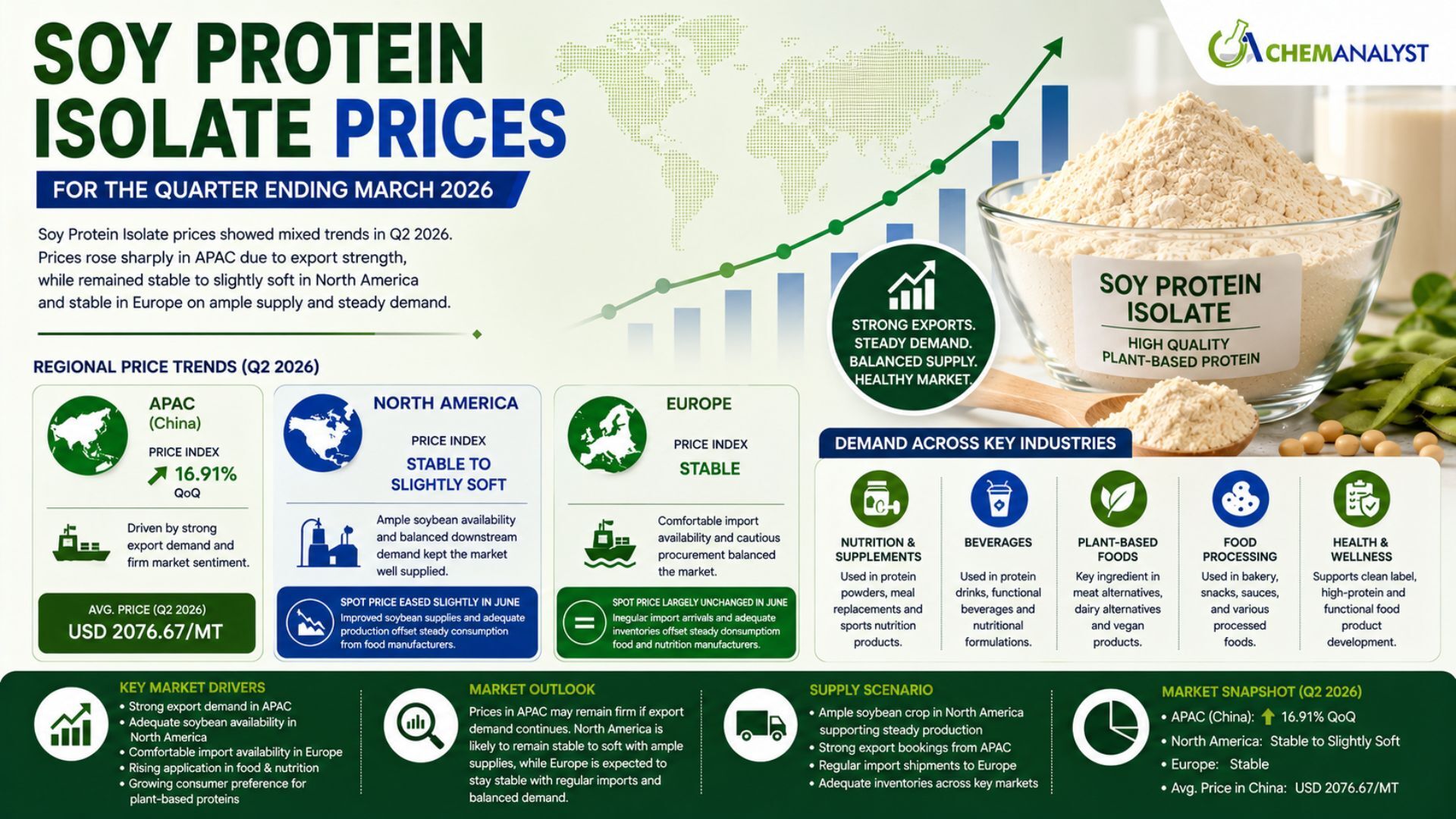
According to ChemAnalyst, the global Soy Protein Isolate prices market displayed mixed regional trends during the quarter ending June 2026. While the Asia-Pacific market experienced a significant increase in prices, North America and Europe maintained comparatively stable market conditions. Regional differences were primarily shaped by export activity, soybean availability, import flows, inventory levels and downstream procurement strategies.
Soy Protein Isolate is a highly refined plant-based protein ingredient derived from soybeans and is widely used across food and nutrition applications. It is valued for its high protein content and functional properties, making it suitable for protein beverages, nutritional products, meat alternatives, sports nutrition products and various processed food formulations.
During Q2 2026, China emerged as the strongest-performing market among the regions assessed. The Soy Protein Isolate Price Index increased by 16.91% quarter-over-quarter, supported by stronger export activity. The average Soy Protein Isolate price in China reached approximately USD 2076.67/MT during the quarter.
In contrast, North America and Europe experienced stable-to-soft or stable pricing as adequate soybean availability, comfortable imports, sufficient inventories and cautious purchasing behavior balanced downstream demand.
The divergent regional trends highlight the importance of soybean supply, international trade, inventory management and procurement activity in determining the global Soy Protein Isolate price trend.
Soy Protein Isolate Prices in APAC
The Asia-Pacific Soy Protein Isolate market recorded a significant increase during Q2 2026. In China, the Soy Protein Isolate Price Index rose by 16.91% quarter-over-quarter, supported by stronger export activity.
The average Soy Protein Isolate price for the quarter was approximately USD 2076.67/MT.
Export strength represented the primary factor behind the upward movement in the Chinese market. Stronger overseas purchasing activity increased demand for locally produced Soy Protein Isolate and contributed to firmer market sentiment among suppliers.
China plays an important role in the regional plant-based protein supply chain and changes in export demand can significantly influence domestic market conditions. During the quarter, stronger international procurement supported producer confidence and encouraged suppliers to maintain higher price levels.
Downstream consumption also remained important. Soy Protein Isolate is widely used by food manufacturers producing nutritional products, protein-based foods, beverages, meat alternatives and other plant-based formulations. Continued demand from these applications provided an underlying consumption base alongside stronger export activity.
The combination of firm export demand and regular domestic consumption resulted in a significant quarter-over-quarter increase in the Chinese Soy Protein Isolate Price Index.
Market participants continued monitoring soybean availability, processing costs, export orders and international demand when making purchasing and production decisions. The upward price movement reflected the stronger demand environment rather than a broad supply shortage across all applications.
Overall, China remained the strongest regional market during Q2 2026, with export strength serving as the main driver of the Soy Protein Isolate price increase.
Soy Protein Isolate Prices in North America
The North American Soy Protein Isolate market remained stable to slightly soft during the second quarter of 2026. Unlike China, the region benefited from ample soybean availability and balanced downstream demand, which kept the market adequately supplied.
The Soy Protein Isolate Price Index remained stable to slightly soft during Q2 2026, reflecting comfortable supply conditions and moderate purchasing activity.
In June, the Soy Protein Isolate spot price eased slightly as improved soybean supplies and adequate production offset steady consumption from food manufacturers.
The availability of soybeans remained an important factor influencing the regional market. Adequate feedstock availability supported consistent Soy Protein Isolate production and reduced the likelihood of significant supply-side price pressure.
Food manufacturers continued purchasing Soy Protein Isolate for nutritional and food-processing applications. However, downstream demand remained balanced rather than aggressively increasing, allowing suppliers to maintain adequate inventories.
Buyers generally adopted disciplined procurement strategies during the quarter, focusing on immediate manufacturing requirements and avoiding excessive inventory accumulation. This purchasing behavior helped prevent significant upward price pressure.
The stable supply situation also allowed manufacturers and distributors to respond to regular customer demand without encountering substantial shortages. As a result, market participants were able to maintain relatively balanced inventories.
The North American market therefore remained comparatively stable during Q2 2026, with sufficient soybean availability and balanced downstream demand preventing significant price increases.
Overall, the Soy Protein Isolate price trend in North America remained stable to slightly soft, with June prices experiencing a modest easing as improved soybean supplies supported production.
Book A Demo for Soy Protein Isolate Price: https://www.chemanalyst.com/ChemAnalyst/PricingForm?Product=Soy%20Protein%20Isolate
Soy Protein Isolate Prices in Europe
The European Soy Protein Isolate market remained broadly stable throughout the second quarter of 2026. Comfortable import availability and cautious downstream procurement helped maintain a balanced market environment.
The Soy Protein Isolate Price Index remained stable during Q2 2026, as regular import flows and controlled purchasing activity balanced steady demand from food and nutrition manufacturers.
The Soy Protein Isolate spot price remained largely unchanged in June, with regular import arrivals and adequate inventories offsetting consistent downstream consumption.
European buyers continued receiving sufficient supplies through international import channels, reducing the urgency to secure additional inventory. This comfortable availability allowed procurement teams to maintain disciplined purchasing strategies throughout the quarter.
Demand from food and nutrition manufacturers remained steady. Soy Protein Isolate continued to be utilized in protein-rich foods, nutritional formulations, plant-based products and other food applications. However, downstream buyers generally focused on regular production requirements rather than aggressive inventory building.
Adequate inventories among distributors and manufacturers further contributed to stable market conditions. With sufficient product available, suppliers faced limited opportunities to implement significant price increases.
The European market therefore remained balanced during Q2 2026, with supply availability and cautious procurement preventing major price fluctuations.
Overall, the Soy Protein Isolate price trend in Europe remained stable, supported by regular imports, adequate inventories and consistent but measured downstream demand.
Key Factors Influencing Soy Protein Isolate Prices
Several market factors influenced Soy Protein Isolate prices across major regions during Q2 2026.
Export Demand
Export strength was the primary factor supporting China's significant price increase. Stronger overseas procurement contributed to higher demand for locally produced Soy Protein Isolate.
Soybean Availability
Feedstock availability played an important role in North America. Improved soybean supplies supported production and contributed to slightly softer spot prices in June.
Downstream Food Demand
Food manufacturers remained consistent consumers of Soy Protein Isolate across North America and Europe. However, demand remained balanced rather than creating substantial supply pressure.
Import Availability
Regular import arrivals supported stable European market conditions. Comfortable availability allowed buyers to maintain disciplined procurement practices.
Inventory Levels
Adequate inventories in North America and Europe helped balance demand and supply, reducing the potential for significant price increases during the quarter.
Procurement Strategies
Cautious purchasing behavior among downstream manufacturers contributed to market stability. Buyers generally focused on production requirements rather than building excessive inventories.
Soy Protein Isolate Demand Analysis
Demand for Soy Protein Isolate remained fundamentally healthy during Q2 2026, although regional purchasing patterns differed significantly.
Food and nutrition manufacturers continued using Soy Protein Isolate across a variety of applications. Its nutritional profile and functional characteristics make it suitable for protein-enriched foods, nutritional products, beverages, plant-based formulations and other food applications.
In China, stronger export demand provided additional support to regular domestic consumption, resulting in a significant increase in the Price Index.
North America experienced steady consumption from food manufacturers, but adequate soybean availability and sufficient production prevented demand from creating substantial price pressure.
Europe also maintained consistent demand from food and nutrition manufacturers. However, comfortable imports and adequate inventories allowed buyers to procure material without significantly increasing market prices.
The overall demand environment therefore remained healthy but regionally differentiated.
Soy Protein Isolate Production and Supply Trend
The supply environment played a major role in determining regional price performance during Q2 2026.
China experienced stronger market momentum as export demand increased, supporting higher prices. The resulting demand environment strengthened supplier positions and contributed to the 16.91% quarter-over-quarter increase in the Price Index.
North America benefited from improved soybean availability and adequate production. These conditions ensured sufficient material availability and contributed to slightly softer spot prices in June.
Europe also maintained comfortable supply conditions because of regular import arrivals and adequate inventories. The balanced supply environment prevented significant price volatility.
These developments demonstrate that Soy Protein Isolate prices are influenced not only by downstream demand but also by the availability and movement of soybean-based feedstock and finished product across international markets.
Regional Soy Protein Isolate Price Comparison
The Q2 2026 regional market demonstrated three distinct pricing patterns.
China recorded the strongest increase, with the Soy Protein Isolate Price Index rising by 16.91% quarter-over-quarter. The average price reached approximately USD 2076.67/MT, supported by export strength.
North America remained stable to slightly soft, as ample soybean availability and balanced downstream demand kept the market adequately supplied. Spot prices eased slightly in June as improved soybean supplies and sufficient production offset steady consumption.
Europe maintained a stable Soy Protein Isolate Price Index during Q2 2026. Regular import arrivals, comfortable availability and adequate inventories balanced consistent demand from food and nutrition manufacturers.
The contrast between these regions demonstrates the impact of international trade, feedstock availability and procurement strategies on global Soy Protein Isolate prices.
Soy Protein Isolate Price Trend Outlook
The outlook for Soy Protein Isolate prices will remain closely linked to soybean availability, export demand, international trade flows, inventories and downstream food-sector consumption.
In China, future price movements will depend significantly on the sustainability of export demand. If international procurement remains strong, the market could continue experiencing firm pricing conditions. Conversely, a reduction in export activity could moderate the upward pressure observed during Q2 2026.
North America is expected to remain relatively balanced if soybean supplies continue to support adequate production. Steady food-manufacturer demand should provide a stable consumption base, while sufficient feedstock availability could limit significant upward price movements.
Europe is also expected to maintain balanced conditions if import arrivals remain regular and inventories stay adequate. Cautious procurement by food and nutrition manufacturers may continue limiting price volatility.
Overall, the global market outlook remains regionally diverse, with export demand likely to remain a key price driver in Asia-Pacific, while supply availability and inventory conditions will remain more influential in North America and Europe.
Conclusion
The global Soy Protein Isolate prices market displayed mixed regional performance during the quarter ending June 2026. China experienced a significant increase, while North America and Europe maintained comparatively stable market conditions.
In China, the Soy Protein Isolate Price Index rose by 16.91% quarter-over-quarter, supported by export strength. The average Soy Protein Isolate price reached approximately USD 2076.67/MT during the quarter, reflecting stronger international purchasing activity and firm market sentiment.
In North America, the Soy Protein Isolate Price Index remained stable to slightly soft during Q2 2026. Ample soybean availability and balanced downstream demand kept the market well supplied. The Soy Protein Isolate spot price eased slightly in June as improved soybean supplies and adequate production offset steady food-manufacturer consumption.
In Europe, the Soy Protein Isolate Price Index remained stable throughout Q2 2026. Comfortable import availability and cautious procurement balanced consistent demand from food and nutrition manufacturers. The Soy Protein Isolate spot price remained largely unchanged in June, supported by regular import arrivals and adequate inventories.
Overall, the Q2 2026 market demonstrated how regional supply-demand fundamentals can produce significantly different pricing outcomes. Export strength supported higher prices in China, while adequate feedstock availability, imports and disciplined procurement kept North American and European markets comparatively stable. Going forward, soybean availability, export demand, import flows, inventory levels and downstream food-sector consumption will remain the key factors shaping the global Soy Protein Isolate price trend.
ChemAnalsyt
Call +1 3322586602
420 Lexington Avenue, Suite 300, New York, NY, United States, 10170
Website: https://www.chemanalyst.com/
Email: sales@chemanalyst.com
この記事をシェア





