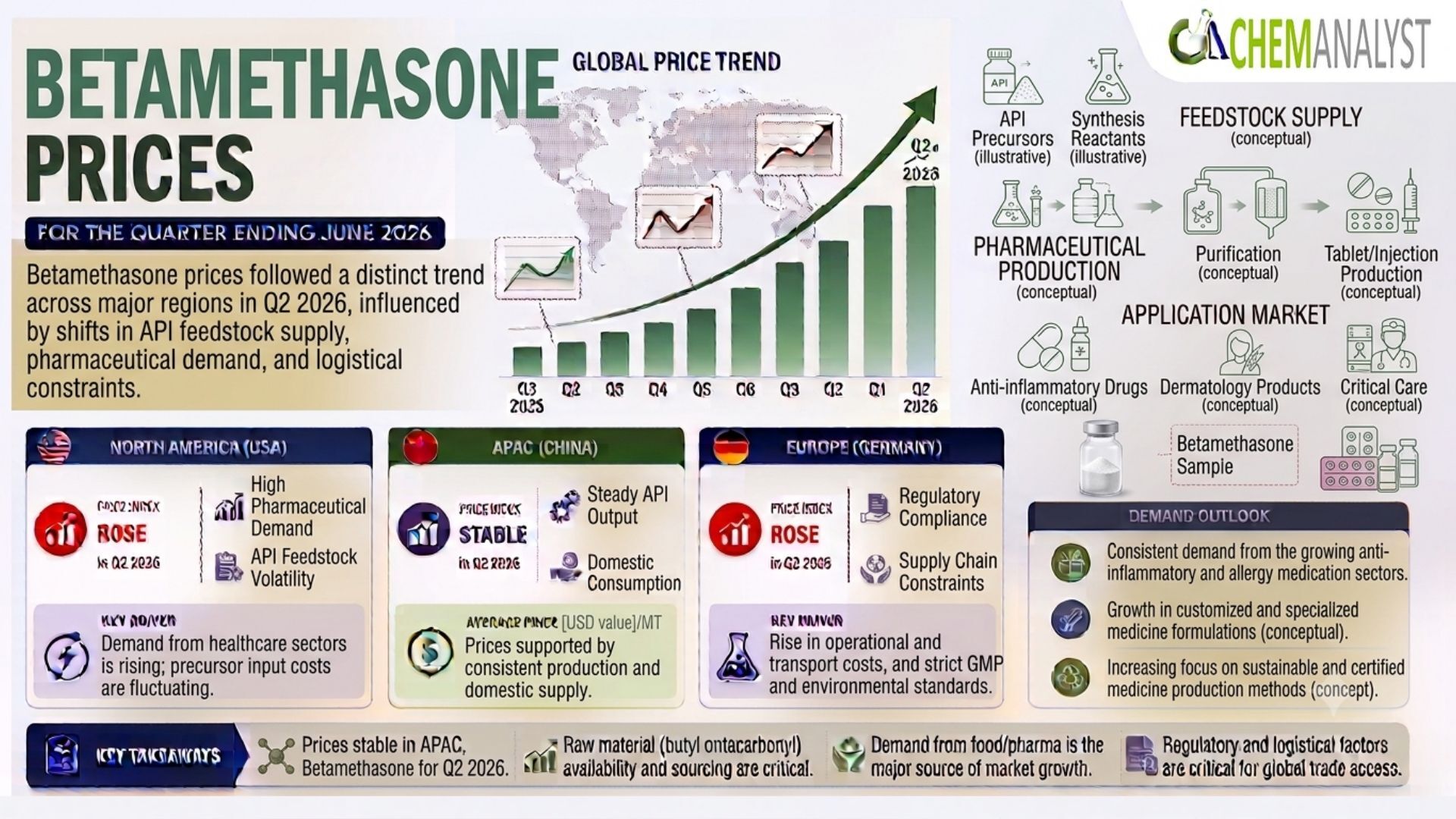
According to ChemAnalyst, the Betamethasone prices increased across the major assessed markets during the quarter ending June 2026. The United States, China and Germany all recorded quarter-over-quarter increases in their respective Betamethasone Price Indexes, with rising production costs, inflationary pressure and supply constraints shaping market conditions.
Betamethasone is a corticosteroid active pharmaceutical ingredient used in the formulation of various pharmaceutical products. Its market is closely connected to pharmaceutical manufacturing and the availability of specialized production inputs. Because the product requires controlled manufacturing processes and consistent quality, changes in production economics can influence supplier pricing and procurement costs.
During Q2 2026, the United States experienced higher prices amid escalating production costs and inflation. China also recorded an increase as significant production-cost pressure affected the market. In Germany, higher production costs were accompanied by supply constraints, creating additional upward pressure on prices.
The simultaneous upward movement across the three markets indicates that cost-side factors played a central role in the global Betamethasone market during Q2 2026.
Betamethasone Prices in North America
In the United States, the Betamethasone Price Index rose quarter-over-quarter during Q2 2026, driven by escalating production costs and inflation.
Betamethasone production costs increased significantly during Q2 2026, with producer prices rising 5.5% year-over-year in June 2026.
The increase in US Betamethasone prices reflected a stronger cost environment affecting pharmaceutical and chemical production. Producer-price inflation can influence the expenses associated with raw materials, processing, utilities, labor, packaging and other manufacturing inputs.
The 5.5% year-over-year increase in producer prices in June 2026 represented a significant source of cost pressure. When manufacturing expenses increase, producers may seek to adjust prices to preserve operating margins, particularly when products require specialized manufacturing capabilities.
Betamethasone's pharmaceutical applications create a relatively specialized demand base. Pharmaceutical manufacturers require consistent supplies of active ingredients to maintain production schedules and meet formulation requirements. Consequently, procurement activity can remain comparatively resilient even when prices increase.
The Q2 2026 increase therefore reflected the interaction between elevated production expenses and pharmaceutical procurement requirements. Suppliers facing higher input costs may have had greater incentive to maintain firm offers.
The US market entered the second half of 2026 with production economics remaining an important consideration. If producer inflation remains elevated, further cost pressure could continue to influence Betamethasone prices.
Get Real Time Online for Betamethasone Prices: https://www.chemanalyst.com/Pricing-data/betamethasone-1322
Betamethasone Prices in APAC
In China, the Betamethasone Price Index rose quarter-over-quarter during Q2 2026, driven by significant upward production-cost pressures.
Betamethasone production costs increased during Q2 2026, influenced by a 4.1% rise in the Producer Price Index in June 2026.
China's market was therefore strongly influenced by the broader producer-cost environment. The 4.1% year-over-year increase in PPI in June 2026 indicated that manufacturers faced higher producer-level pricing conditions toward the end of the quarter.
Higher production costs can affect the economics of pharmaceutical API manufacturing. Producers may face increased expenses for upstream materials, utilities, labor, processing and other operating requirements. These expenses can eventually influence selling prices when suppliers attempt to maintain margins.
The quarter-over-quarter increase in the Betamethasone Price Index indicates that these cost pressures translated into a firmer market.
China's role in global pharmaceutical manufacturing also makes its production economics relevant to international procurement. Changes in Chinese production costs can influence export quotations and the overall cost structure for buyers sourcing pharmaceutical ingredients from the region.
The Q2 2026 price increase consequently reflected significant cost-side pressure rather than a single isolated market event. Future market direction will depend on whether producer inflation persists and how downstream pharmaceutical demand develops.
Betamethasone Prices in Europe
In Germany, the Betamethasone Price Index rose quarter-over-quarter during Q2 2026, driven by increasing production costs and supply constraints.
Betamethasone production costs increased during Q2 2026 as the Producer Price Index rose by 2.2% in May 2026.
Germany's market experienced a combination of cost pressure and supply constraints, creating a stronger environment for price increases than would be expected from production-cost changes alone.
The 2.2% increase in producer prices in May 2026 contributed to higher manufacturing expenses. At the same time, supply constraints reduced the availability of material, potentially strengthening supplier pricing power.
When supply becomes more restricted while production costs are increasing, buyers can face higher procurement expenses. Pharmaceutical manufacturers may prioritize supply continuity, particularly for specialized APIs where alternative sourcing options can be limited.
This dynamic can make buyers more willing to accept higher prices to secure reliable material and avoid disruptions to downstream production.
Germany's pharmaceutical manufacturing sector provides an important demand base for specialized pharmaceutical ingredients. Continued procurement requirements, combined with restricted supply, supported the upward movement in the Betamethasone Price Index during Q2 2026.
The European market will therefore remain sensitive to both supply availability and producer-cost developments during the second half of 2026.
Book A Demo for Betamethasone Price: https://www.chemanalyst.com/ChemAnalyst/PricingForm?Product=Betamethasone
Key Factors Influencing Betamethasone Prices in Q2 2026
Several factors contributed to the global increase in Betamethasone prices during Q2 2026.
Production Costs
Rising production costs were the most consistent factor across all three assessed markets. The United States, China and Germany each experienced increases in producer-level prices.
Higher manufacturing expenses can put pressure on producer margins and encourage suppliers to adjust selling prices.
Producer Price Inflation
Producer inflation was particularly significant in the United States, where producer prices increased 5.5% year-over-year in June 2026.
China recorded a 4.1% increase in PPI in June 2026, while Germany's Producer Price Index increased 2.2% in May 2026.
These indicators highlight the broad cost pressure affecting manufacturers across different regions.
Supply Constraints
Supply constraints were an important factor in Germany. Limited availability can increase competition among buyers and strengthen supplier pricing power.
For specialized pharmaceutical ingredients, supply security can be particularly important because production schedules depend on reliable access to approved raw materials.
Pharmaceutical Demand
Betamethasone is used in pharmaceutical formulations, making demand from pharmaceutical manufacturers an important market factor.
Steady pharmaceutical production can provide a consistent demand base and support prices when manufacturing costs rise.
Procurement Requirements
Pharmaceutical manufacturers typically need to plan purchases according to production schedules, inventory positions and regulatory requirements. Procurement decisions can therefore influence short-term market conditions.
When supply becomes constrained, buyers may increase efforts to secure inventory, contributing to firmer market conditions.
Betamethasone Demand Outlook
The demand outlook for Betamethasone remains closely connected to pharmaceutical manufacturing activity.
As an active pharmaceutical ingredient used in corticosteroid formulations, Betamethasone serves specialized pharmaceutical applications. Demand therefore depends on formulation requirements, pharmaceutical production schedules and procurement activity.
The United States market may remain supported if pharmaceutical manufacturers continue maintaining regular procurement despite higher production costs.
China's demand outlook will depend on both domestic pharmaceutical production and export-oriented manufacturing. Stronger pharmaceutical activity could help producers pass higher costs through the supply chain.
In Germany, demand will remain important alongside supply availability. If pharmaceutical manufacturers continue purchasing while supply remains constrained, prices could remain firm.
The specialized nature of Betamethasone production also means that changes in supply availability can have an amplified effect on procurement conditions.
Betamethasone Supply Chain and Procurement Trends
Supply-chain conditions are particularly important for pharmaceutical APIs because manufacturers require consistent quality, reliable supply and appropriate inventory levels.
During Q2 2026, rising production costs created additional pressure on suppliers across the United States, China and Germany.
US buyers faced a production environment influenced by a 5.5% year-over-year rise in producer prices in June 2026. Chinese suppliers experienced a 4.1% PPI increase, while German producers faced a 2.2% increase in producer prices in May 2026.
For procurement teams, monitoring producer-price trends can provide an early indication of potential changes in supplier quotations.
Inventory planning is also important. Maintaining sufficient stocks can help pharmaceutical manufacturers manage temporary supply constraints and avoid production interruptions. However, excessive inventories can increase working-capital requirements and create exposure if market prices later decline.
Buyers may therefore balance long-term supply agreements, inventory levels and spot-market procurement according to their production requirements.
Regional Betamethasone Market Dynamics
The Q2 2026 market showed a consistent upward trend across North America, APAC and Europe.
In the United States, the Betamethasone Price Index rose quarter-over-quarter due to escalating production costs and inflation. Production costs increased significantly as producer prices rose 5.5% year-over-year in June 2026.
In China, the Betamethasone Price Index increased quarter-over-quarter due to significant upward production-cost pressures. The Producer Price Index rose 4.1% in June 2026, contributing to the higher cost environment.
In Germany, the Betamethasone Price Index rose quarter-over-quarter as increasing production costs and supply constraints affected the market. Producer prices increased 2.2% in May 2026.
The three regions therefore shared a common upward trend but experienced different combinations of cost and supply factors. The United States faced significant producer inflation, China experienced notable production-cost pressure and Germany encountered both higher costs and supply constraints.
Betamethasone Market Outlook for the Second Half of 2026
The Betamethasone market entered the second half of 2026 with a firm outlook. Future pricing will depend on production costs, producer inflation, pharmaceutical demand, supply availability and procurement activity.
In the United States, persistent producer inflation could continue supporting higher prices. A moderation in production costs, however, could reduce the pace of upward movement.
China's market will remain sensitive to producer-price developments. If the 4.1% PPI increase recorded in June 2026 is followed by continued cost pressure, suppliers may maintain firmer quotations.
Germany's outlook will depend on the interaction between production costs and supply availability. If supply constraints persist alongside higher producer prices, the market could remain under upward pressure.
Pharmaceutical demand will remain a critical factor across all regions. Stable procurement requirements can help absorb higher production costs, while weaker demand could limit suppliers' ability to pass through additional expenses.
Conclusion
Betamethasone prices increased across the major assessed markets during the quarter ending June 2026, with production-cost inflation and supply conditions serving as the primary drivers.
In the United States, the Betamethasone Price Index rose quarter-over-quarter, driven by escalating production costs and inflation. Producer prices increased 5.5% year-over-year in June 2026, creating significant cost pressure.
In China, the Betamethasone Price Index also rose quarter-over-quarter due to significant production-cost pressures. The 4.1% rise in the Producer Price Index in June 2026 contributed to the upward market trend.
In Germany, the Betamethasone Price Index increased quarter-over-quarter, supported by increasing production costs and supply constraints. Producer prices rose 2.2% in May 2026, adding to manufacturing expenses.
Overall, Q2 2026 was characterized by a firm global Betamethasone market, with production costs, producer inflation, supply availability, pharmaceutical demand and procurement activity shaping price movements. During the second half of 2026, market participants will closely monitor these factors to assess the direction of Betamethasone Prices and manage pharmaceutical procurement strategies accordingly.
ChemAnalsyt
Call +1 3322586602
420 Lexington Avenue, Suite 300, New York, NY, United States, 10170
Website: https://www.chemanalyst.com/
Email: sales@chemanalyst.com
この記事をシェア





