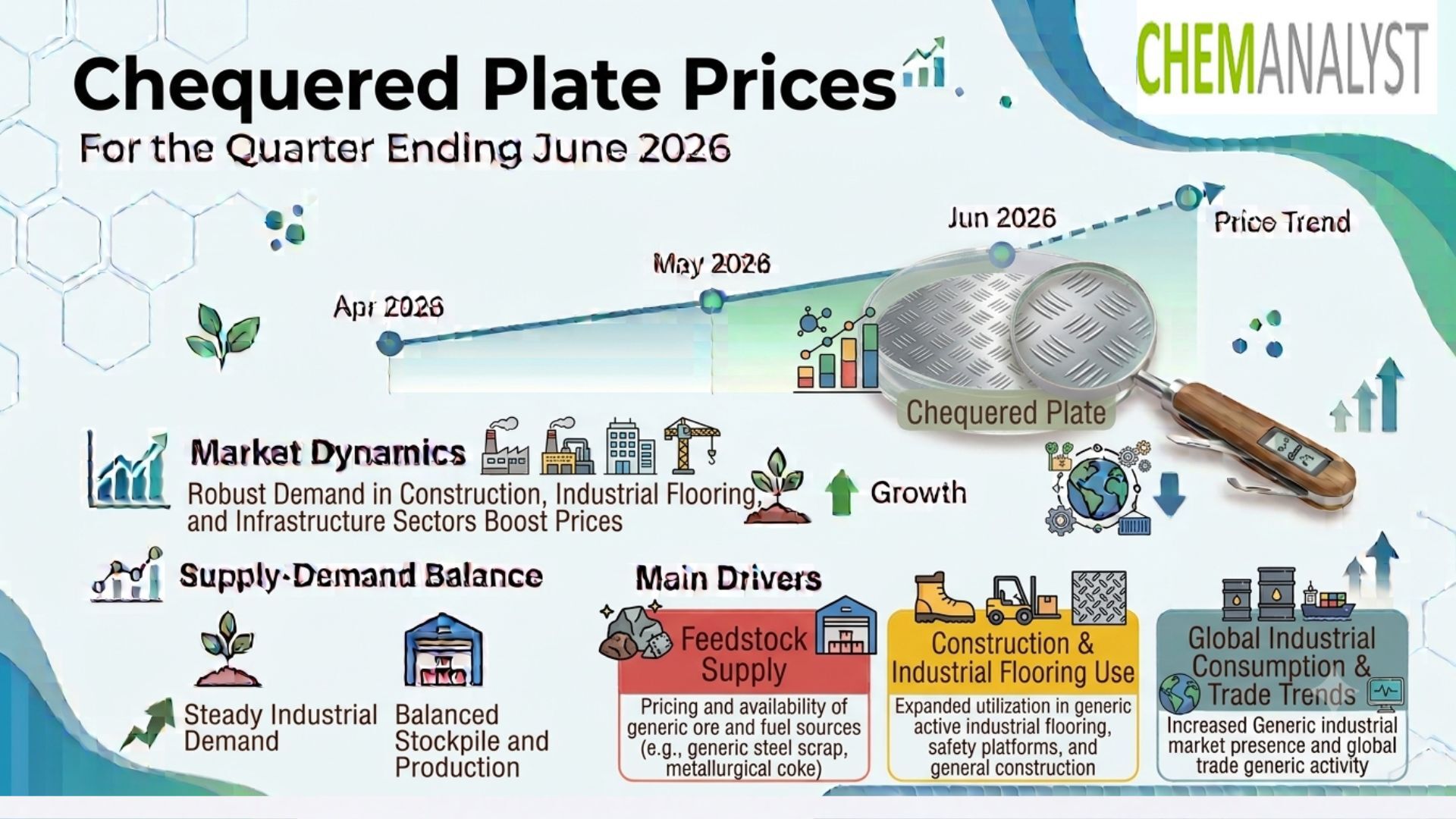
According to ChemAnalyst, the global Chequered Plate Prices market showed mixed regional trends during the second quarter of 2026. While China and the United States experienced upward price movements, the German market recorded a quarter-over-quarter decline amid contracting industrial demand. The contrasting regional performance reflected differences in construction activity, industrial consumption, steel supply and producer-level cost pressures.
Chequered plate, also known as checker plate or tread plate, is a steel product characterized by its raised pattern on the surface. The patterned structure provides improved traction and makes the material widely used in construction, industrial flooring, transportation equipment, platforms, stairways, machinery and infrastructure applications.
During Q2 2026, the balance between steel supply and downstream demand remained a major factor affecting the Chequered Plate Price Trend. In China, balanced steel supply and steady construction demand supported a relatively firm market. In the United States, elevated producer costs contributed to higher prices. Germany, however, experienced weaker industrial demand, resulting in a decline in its Chequered Plate Price Index despite increasing production costs.
The different regional outcomes demonstrate that Chequered Plate Prices are influenced not only by manufacturing expenses but also by the strength of downstream industries and local market conditions.
Get Real Time Online for Chequered Plate Prices: https://www.chemanalyst.com/Pricing-data/chequered-plate-1490
Chequered Plate Prices in APAC
China Chequered Plate Price Trend
China remained an important market for Chequered Plate Prices during Q2 2026. The Chequered Plate Price Index was assessed at USD 644/MT FOB China during the quarter.
The market remained relatively balanced, with steel supply and construction demand maintaining an equilibrium. Steady construction activity provided consistent downstream consumption, while adequate steel availability prevented excessive supply-side tightening.
The USD 644/MT FOB China assessment reflected the prevailing balance between supply and demand. Buyers continued to source material for construction and industrial applications, while producers maintained supply in line with market requirements.
Balanced Steel Supply Supports the Market
Balanced steel supply played an important role in preventing significant downward pressure on Chinese Chequered Plate Prices. When production and available inventories remain aligned with demand, price volatility generally becomes more limited.
During Q2 2026, the Chinese market benefited from steady construction demand. Construction projects require steel products for structural and functional applications, including platforms, flooring, walkways and other areas where the anti-slip surface of chequered plate provides a practical advantage.
This steady demand helped support the market despite the broader cost pressures affecting steel production.
Impact of Producer Costs in China
Although supply and demand remained relatively balanced, production costs for Chequered Plate remained elevated during Q2 2026.
The higher production-cost environment was driven in part by a 4.1% PPI increase in June 2026. Producer Price Index movements provide an indication of changes in the prices received by producers and can signal broader shifts in industrial input and manufacturing costs.
Higher producer-level costs can affect steel manufacturers through increased expenses across raw materials, energy, processing, transportation and other industrial inputs.
Consequently, even when demand remains stable, elevated production costs can provide a floor for Chequered Plate Prices and limit the potential for significant price declines.
Chequered Plate Prices in North America
United States Chequered Plate Price Trend
In the United States, the Chequered Plate Price Index rose during Q2 2026, influenced by elevated producer costs.
The U.S. market experienced a higher industrial cost environment during the quarter, increasing pressure on steel manufacturers and suppliers. Since Chequered Plate production requires steel inputs and energy-intensive processing, changes in producer costs can influence the final market price.
The upward movement in the U.S. Chequered Plate Price Index therefore reflected the impact of increasing manufacturing expenses.
Rising Production Costs in the United States
Chequered Plate production costs increased during Q2 2026, with the Producer Price Index rising 5.5% year-over-year in June 2026.
The increase in producer prices reflected broader cost pressure across the industrial economy. For steel manufacturers, elevated producer costs can affect production economics and encourage suppliers to maintain higher selling prices.
The impact becomes particularly relevant when downstream buyers continue to require material. Even if demand is not exceptionally strong, increased production expenses can prevent suppliers from lowering prices substantially.
The U.S. market therefore experienced upward price pressure as manufacturers and distributors adjusted to the higher cost environment.
Industrial Applications Support Chequered Plate Demand
Chequered plate has applications across construction, industrial facilities, transportation, machinery, infrastructure and fabrication. Its raised surface provides traction and durability, making it suitable for areas exposed to heavy traffic and demanding operating conditions.
Consistent demand from these applications can help support prices when production costs increase. During Q2 2026, elevated producer costs were the primary factor highlighted in the U.S. market, contributing to the increase in the Chequered Plate Price Index.
Chequered Plate Prices in Europe
Germany Chequered Plate Price Trend
Germany recorded a different market direction during Q2 2026. The Chequered Plate Price Index fell quarter-over-quarter, driven by contracting industrial demand.
The decline occurred despite an increase in production costs, highlighting the importance of demand-side conditions in the European steel market.
Industrial activity represents an important source of demand for chequered plate. When industrial manufacturers, machinery producers, construction companies and other users reduce purchasing requirements, steel suppliers may face greater pressure to compete for available orders.
This demand contraction outweighed the effect of higher production costs and contributed to the quarterly decline in German Chequered Plate Prices.
Contracting Industrial Demand Pressures Prices
The relationship between industrial activity and steel consumption is particularly important for products such as chequered plate. When industrial production slows, companies may postpone capital expenditure, reduce inventories, or delay purchases of steel products.
During Q2 2026, contracting industrial demand in Germany reduced buying pressure. As a result, suppliers faced a less supportive market environment and were unable to fully pass higher production costs through to buyers.
The German market therefore demonstrated how weakening demand can counteract cost inflation.
German Producer Prices and Production Costs
Despite the decline in the Chequered Plate Price Index, production costs increased in Germany during May 2026.
Producer prices of industrial products rose by 2.2% year-on-year in May 2026, indicating a higher cost environment for producers.
Increasing producer prices can place pressure on steel manufacturers through higher expenses for industrial inputs and operating requirements. However, the weak demand environment limited suppliers' ability to transfer these costs into final Chequered Plate Prices.
This created a margin-pressure environment in which producers faced higher costs while buyers remained resistant to higher offers.
Book A Demo for Chequered Plate Price: https://www.chemanalyst.com/ChemAnalyst/PricingForm?Product=Chequered%20Plate
Key Factors Influencing Chequered Plate Prices in Q2 2026
Several major factors shaped the global Chequered Plate Price Trend during Q2 2026.
1. Construction Demand
Construction activity was an important supportive factor in China. Steady construction demand helped maintain a balanced market and supported the USD 644/MT FOB China price assessment.
2. Industrial Demand
Industrial demand had a different effect in Germany. Contracting industrial consumption reduced purchasing activity and contributed to a quarter-over-quarter decline in the German Chequered Plate Price Index.
3. Producer Price Inflation
Producer costs increased across the three highlighted markets. China recorded a 4.1% PPI increase in June 2026, while the United States recorded a 5.5% year-over-year PPI increase in June 2026. Germany saw producer prices of industrial products rise 2.2% year-on-year in May 2026.
4. Steel Supply
Balanced steel supply in China helped prevent excessive price volatility. Adequate availability ensured that steady construction demand could be met without creating severe supply tightness.
5. Manufacturing Costs
Energy, raw materials, processing, logistics and other production expenses remained important considerations for Chequered Plate manufacturers. Higher producer prices increased the cost base and provided upward pressure in China and the United States.
Example: How Demand and Production Costs Affect Chequered Plate Prices
Consider two steel markets experiencing similar increases in production costs.
In the first market, construction and industrial demand remains stable. Producers can potentially pass some of their increased costs to buyers because purchasing activity remains sufficient. This situation resembles the market environment in China, where balanced steel supply and steady construction demand supported prices.
In the second market, industrial demand declines significantly. Even if production costs increase, suppliers may struggle to raise selling prices because buyers have reduced their purchasing requirements. Germany demonstrated this dynamic during Q2 2026, with contracting industrial demand contributing to a decline in Chequered Plate Prices despite higher producer costs.
This example demonstrates why procurement professionals need to evaluate both supply-side costs and downstream demand when analyzing the Chequered Plate market.
Impact on Procurement and Supply Chain Planning
The movement in Chequered Plate Prices during Q2 2026 has important implications for procurement teams.
Buyers in China should monitor construction activity and steel supply conditions because these factors influence the balance between availability and demand. Changes in producer costs should also be tracked because they can affect supplier price expectations.
In the United States, procurement teams should pay close attention to producer-price trends. The 5.5% year-over-year increase in PPI in June 2026 indicates that industrial cost pressures can have a meaningful impact on steel procurement budgets.
For German buyers, demand conditions may provide greater negotiating leverage when industrial purchasing remains weak. However, buyers should also monitor producer costs because prolonged cost inflation could eventually influence supplier pricing if demand recovers.
Inventory planning should therefore be based on both current prices and expectations for downstream demand and production costs.
Regional Chequered Plate Price Comparison
The Q2 2026 market showed distinct regional pricing patterns.
China: The Chequered Plate Price Index was assessed at USD 644/MT FOB China, supported by balanced steel supply and steady construction demand. Production costs remained elevated due to a 4.1% PPI increase in June 2026.
United States: The Chequered Plate Price Index rose during Q2 2026 as elevated producer costs supported higher market values. Production costs increased alongside a 5.5% year-over-year increase in PPI in June 2026.
Germany: The Chequered Plate Price Index declined quarter-over-quarter because of contracting industrial demand. At the same time, production costs increased as producer prices of industrial products rose 2.2% year-on-year in May 2026.
The regional comparison highlights the different ways supply, demand and production economics can influence Chequered Plate Prices.
Chequered Plate Prices Outlook
The outlook for Chequered Plate Prices will depend on construction activity, industrial demand, steel supply, producer costs and overall manufacturing conditions.
In China, steady construction demand could continue to provide support if steel supply remains balanced. However, elevated production costs may keep suppliers' price expectations firm.
In the United States, producer cost inflation will remain an important factor. If elevated producer costs persist, Chequered Plate suppliers may continue to face pressure to maintain higher price levels.
In Germany, the recovery of industrial demand will be particularly important. Continued contraction could keep prices under pressure, while an improvement in industrial orders could increase purchasing activity and support market recovery.
Overall, regional price movements are likely to remain dependent on the interaction between production costs and downstream demand.
Conclusion
The global Chequered Plate Prices market experienced mixed regional trends during Q2 2026. China maintained a relatively balanced market, with the Chequered Plate Price Index assessed at USD 644/MT FOB China, supported by balanced steel supply and steady construction demand. Production costs remained elevated due to a 4.1% PPI increase in June 2026.
In the United States, the Chequered Plate Price Index rose during the quarter as elevated producer costs influenced the market. U.S. Chequered Plate production costs increased alongside a 5.5% year-over-year rise in PPI in June 2026.
Germany experienced a contrasting trend, with its Chequered Plate Price Index falling quarter-over-quarter due to contracting industrial demand. Despite the decline in market prices, production costs increased as producer prices of industrial products rose 2.2% year-on-year in May 2026.
Going forward, Chequered Plate Prices will remain sensitive to steel supply, construction activity, industrial demand, producer-price inflation and manufacturing costs. Monitoring these indicators will be essential for steel producers, traders, distributors and procurement professionals seeking to manage purchasing costs and supply-chain risks.
ChemAnalsyt
Call +1 3322586602
420 Lexington Avenue, Suite 300, New York, NY, United States, 10170
Website: https://www.chemanalyst.com/
Email: sales@chemanalyst.com
この記事をシェア





