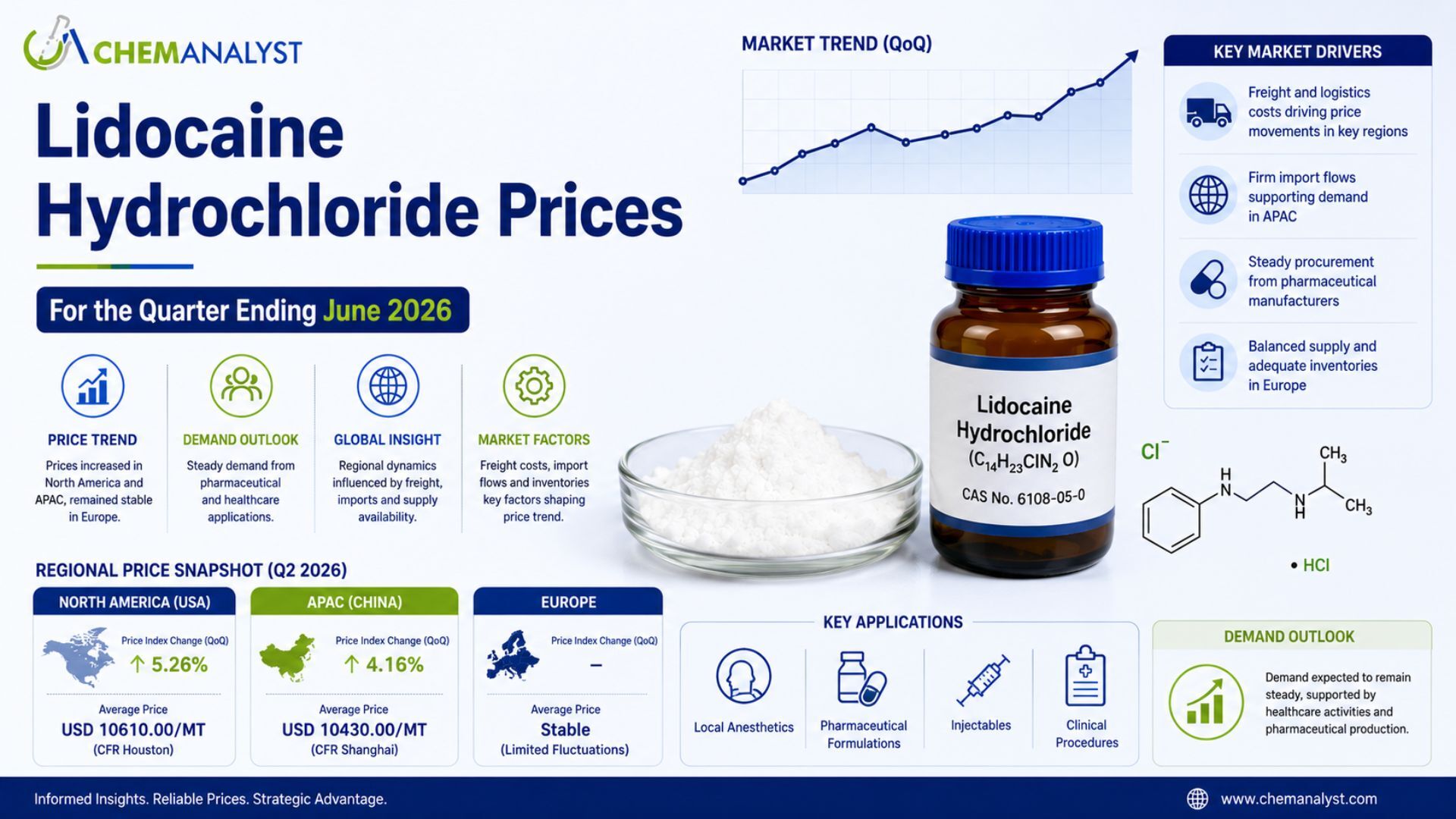
According to ChemAnalyst, the global Lidocaine Hydrochloride Prices market recorded a mixed but generally firm performance during the quarter ending June 2026. Prices increased across North America and Asia-Pacific (APAC), while the European market remained largely stable amid balanced supply, adequate inventories and consistent procurement from pharmaceutical manufacturers.
In the United States, the Lidocaine Hydrochloride Price Index increased by 5.26% quarter-over-quarter, with freight costs serving as the primary driver. The average price during the quarter reached approximately USD 10,610.00/MT on a CFR Houston basis.
In China, the Lidocaine Hydrochloride Price Index increased by 4.16% quarter-over-quarter, supported by firm import flows. The average price stood at approximately USD 10,430.00/MT on a CFR Shanghai assessment basis.
Europe followed a different trajectory, with the Lidocaine Hydrochloride Price Index remaining largely stable quarter-over-quarter. Balanced regional supply, sufficient inventories and steady procurement from pharmaceutical manufacturers prevented significant price fluctuations.
Lidocaine Hydrochloride is an important pharmaceutical active ingredient and local anesthetic used in a wide range of medical formulations and healthcare applications. Consequently, its market pricing is influenced by pharmaceutical demand, manufacturing costs, raw-material economics, international trade flows, freight expenses, inventory positions and procurement strategies.
The Q2 2026 market demonstrated how regional logistics and trade fundamentals can produce different pricing outcomes even when the underlying global demand environment remains relatively stable.
Lidocaine Hydrochloride Prices in North America
The Lidocaine Hydrochloride Prices in North America recorded a notable increase during Q2 2026. In the United States, the Lidocaine Hydrochloride Price Index rose by 5.26% quarter-over-quarter, with freight costs identified as the primary factor behind the increase.
The average Lidocaine Hydrochloride price in the USA reached approximately USD 10,610.00/MT, based on CFR Houston assessments. The pricing movement indicates that transportation and landed-cost considerations played a meaningful role in determining market quotations during the quarter.
Freight is an important component of delivered pharmaceutical chemical costs because international supply chains can expose buyers to changes in shipping, handling and logistics expenses. When transportation costs rise, suppliers and distributors may adjust quotations to account for increased landed costs.
The Q2 increase in the US market therefore appears to have been driven more strongly by logistical considerations than by a significant disruption in product availability. Pharmaceutical manufacturers continued to procure Lidocaine Hydrochloride, while suppliers maintained sufficient material to serve market requirements.
Procurement strategies also remained important. Buyers operating in pharmaceutical supply chains typically require consistent quality and reliable availability, which can make supply continuity an important consideration alongside price. As a result, changes in freight costs can have a direct influence on the final procurement price.
Going forward, the North American Lidocaine Hydrochloride Price Trend will remain sensitive to freight rates, import costs, pharmaceutical demand and supplier availability. Any moderation in logistics expenses could reduce cost pressure, while continued freight increases could keep delivered prices elevated.
Get Real Time Online for Lidocaine Hydrochloride Prices: https://www.chemanalyst.com/ChemAnalyst/PricingForm?Product=Lidocaine%20Hydrochloride
Lidocaine Hydrochloride Prices in APAC
The APAC market also recorded an increase in Lidocaine Hydrochloride Prices during Q2 2026. China, an important participant in the regional pharmaceutical chemical supply chain, witnessed a 4.16% quarter-over-quarter rise in its Lidocaine Hydrochloride Price Index.
The average Lidocaine Hydrochloride price in China was approximately USD 10,430.00/MT on a CFR Shanghai assessment basis. The increase was primarily associated with firm import flows, indicating continued purchasing activity within the regional market.
Firm import flows provided support to market sentiment during the quarter. When import demand remains consistent, suppliers can maintain relatively stable selling positions, particularly when downstream buyers require uninterrupted material availability.
China's market is also influenced by international trade dynamics. Import requirements, regional supply conditions and pharmaceutical manufacturing activity can all affect the balance between available material and purchasing interest. During Q2 2026, firm import flows contributed to a supportive pricing environment.
The 4.16% quarter-over-quarter increase was slightly lower than the rise recorded in the United States. Nevertheless, the upward movement confirms that the APAC market experienced a firmer pricing environment during the quarter.
The future direction of Lidocaine Hydrochloride Prices in APAC will depend on import requirements, supplier availability, pharmaceutical manufacturing activity, freight economics and broader regional demand. If import flows remain firm, prices could retain some upward support. Conversely, softer purchasing activity could moderate the market.
Book A Demo for Lidocaine Hydrochloride Price: https://www.chemanalyst.com/Pricing-data/lidocaine-hydrochloride-2547
Lidocaine Hydrochloride Prices in Europe
The European Lidocaine Hydrochloride Prices market remained largely stable during the quarter ending June 2026. Unlike the United States and China, Europe did not experience a significant quarter-over-quarter price increase.
The stable market was supported by balanced regional supply and steady procurement from pharmaceutical manufacturers. Adequate inventories and consistent import availability helped maintain equilibrium between supply and demand.
The availability of sufficient inventories reduced the need for buyers to compete aggressively for material. Pharmaceutical manufacturers were able to maintain regular procurement schedules without facing significant shortages, helping to limit price volatility.
Import availability also contributed to the stability of the European market. Consistent inbound supply allowed buyers to access material according to their requirements, reducing the potential for sudden price increases.
The European market therefore remained relatively balanced throughout Q2 2026. Although global logistics and trade costs remained important considerations, adequate product availability prevented these factors from generating substantial upward pressure on prices.
The Lidocaine Hydrochloride Spot Price recorded only limited fluctuations during the quarter. The stable pricing environment reflects a market where suppliers and buyers were able to maintain relatively predictable procurement conditions.
Future European pricing will depend on inventory levels, import flows, pharmaceutical demand, freight costs and regional procurement patterns. A significant change in any of these factors could alter the current equilibrium.
Key Factors Influencing Lidocaine Hydrochloride Prices
Several factors contributed to the regional Lidocaine Hydrochloride Price Trend during Q2 2026.
Freight and Logistics Costs
Freight was the most prominent factor influencing the US market during the quarter. The 5.26% increase in the US Lidocaine Hydrochloride Price Index was attributed primarily to higher freight-related costs.
Transportation expenses can significantly influence CFR and landed prices, particularly when pharmaceutical chemicals are sourced through international supply chains. Changes in shipping costs can therefore be reflected in supplier quotations.
Import Flows
Import activity played an important role in China during Q2 2026. Firm import flows supported the 4.16% quarterly increase in the country's Lidocaine Hydrochloride Price Index.
Consistent import demand can strengthen market sentiment and provide suppliers with greater pricing stability. Changes in import requirements, however, could alter this balance in subsequent quarters.
Pharmaceutical Demand
Lidocaine Hydrochloride is closely linked to pharmaceutical manufacturing and healthcare applications. Steady procurement from pharmaceutical manufacturers helped support market equilibrium in Europe and contributed to the relatively stable regional pricing environment.
Changes in pharmaceutical production schedules, formulation demand and inventory management can therefore influence procurement volumes.
Inventory Levels
Inventory availability was particularly relevant in Europe. Adequate inventories reduced the need for urgent procurement and helped limit price volatility.
When inventory levels are comfortable, buyers generally have greater flexibility regarding purchasing schedules. Conversely, declining inventories can encourage restocking and potentially create stronger demand for available material.
Regional Supply Balance
The balance between supply and demand remained a key factor across all three markets. The United States and China experienced upward price movements, while Europe maintained stability because regional availability remained sufficient to meet procurement requirements.
Regional Comparison of Lidocaine Hydrochloride Prices
The Q2 2026 market showed clear differences in regional price behavior.
North America: The US Lidocaine Hydrochloride Price Index increased 5.26% quarter-over-quarter, with the average price reaching approximately USD 10,610.00/MT CFR Houston. Freight was the principal driver of the increase.
APAC: China's Lidocaine Hydrochloride Price Index rose 4.16% quarter-over-quarter, while the average price reached approximately USD 10,430.00/MT CFR Shanghai. Firm import flows supported the upward movement.
Europe: The European market remained largely stable quarter-over-quarter. Balanced supply, adequate inventories, consistent import availability and steady pharmaceutical procurement kept prices within a relatively narrow range.
The comparison indicates that North America recorded the strongest reported quarterly increase, followed by APAC, while Europe maintained a more stable pricing environment.
Demand Outlook for Lidocaine Hydrochloride
The demand outlook for Lidocaine Hydrochloride remains closely associated with pharmaceutical manufacturing and healthcare-related consumption. As a pharmaceutical active ingredient and local anesthetic, Lidocaine Hydrochloride continues to serve established applications across the healthcare sector.
Steady procurement by pharmaceutical manufacturers is expected to remain a key source of demand. Buyers generally prioritize product quality, supply consistency, regulatory compliance and reliable delivery alongside price considerations.
In North America, future demand will interact with freight and import economics. If pharmaceutical procurement remains steady while freight costs stay elevated, delivered prices could remain firm.
In APAC, import flows will remain an important indicator. Continued purchasing activity could support the market, while weaker import requirements could reduce price momentum.
Europe is likely to remain comparatively balanced as long as inventories remain adequate and pharmaceutical manufacturers maintain regular procurement schedules.
Lidocaine Hydrochloride Price Outlook
The Lidocaine Hydrochloride Price Outlook for the coming period remains moderately firm, although regional conditions are expected to remain different.
In the United States, freight costs will remain a key factor to monitor. The 5.26% quarterly increase demonstrates the impact that logistics can have on delivered pharmaceutical chemical prices. If freight rates remain elevated, the market could continue to experience cost-related support.
In China, the direction of import flows will be important. Continued firm imports could sustain the current pricing momentum, while a slowdown in purchasing could bring greater stability.
Europe is expected to remain relatively balanced in the near term. Adequate inventories and consistent import availability could continue to limit significant price movements. However, changes in pharmaceutical demand or supply-chain costs could alter this outlook.
Overall, the global Lidocaine Hydrochloride Price Trend will depend on the interaction between freight expenses, import flows, pharmaceutical procurement, inventories and regional supply availability.
Conclusion
The quarter ending June 2026 presented a differentiated but generally firm market for Lidocaine Hydrochloride Prices. North America recorded the strongest increase among the reported regions, with the US Lidocaine Hydrochloride Price Index rising 5.26% quarter-over-quarter and the average price reaching approximately USD 10,610.00/MT CFR Houston. Freight costs were the primary driver.
In APAC, China's Lidocaine Hydrochloride Price Index increased by 4.16% quarter-over-quarter, with an average price of approximately USD 10,430.00/MT CFR Shanghai. Firm import flows supported the market and contributed to the upward price movement.
Europe remained comparatively stable as balanced supply, adequate inventories, consistent import availability and steady pharmaceutical procurement maintained market equilibrium. The region experienced only limited fluctuations in its Lidocaine Hydrochloride Spot Price.
Going forward, market participants should closely monitor freight rates, import flows, pharmaceutical demand, inventory levels and regional supply conditions. These factors will be central to determining the next phase of Lidocaine Hydrochloride Prices and will remain important considerations for procurement planning and market analysis through the remainder of 2026.
ChemAnalsyt
Call +1 3322586602
420 Lexington Avenue, Suite 300, New York, NY, United States, 10170
Website: https://www.chemanalyst.com/
Email: sales@chemanalyst.com
この記事をシェア





