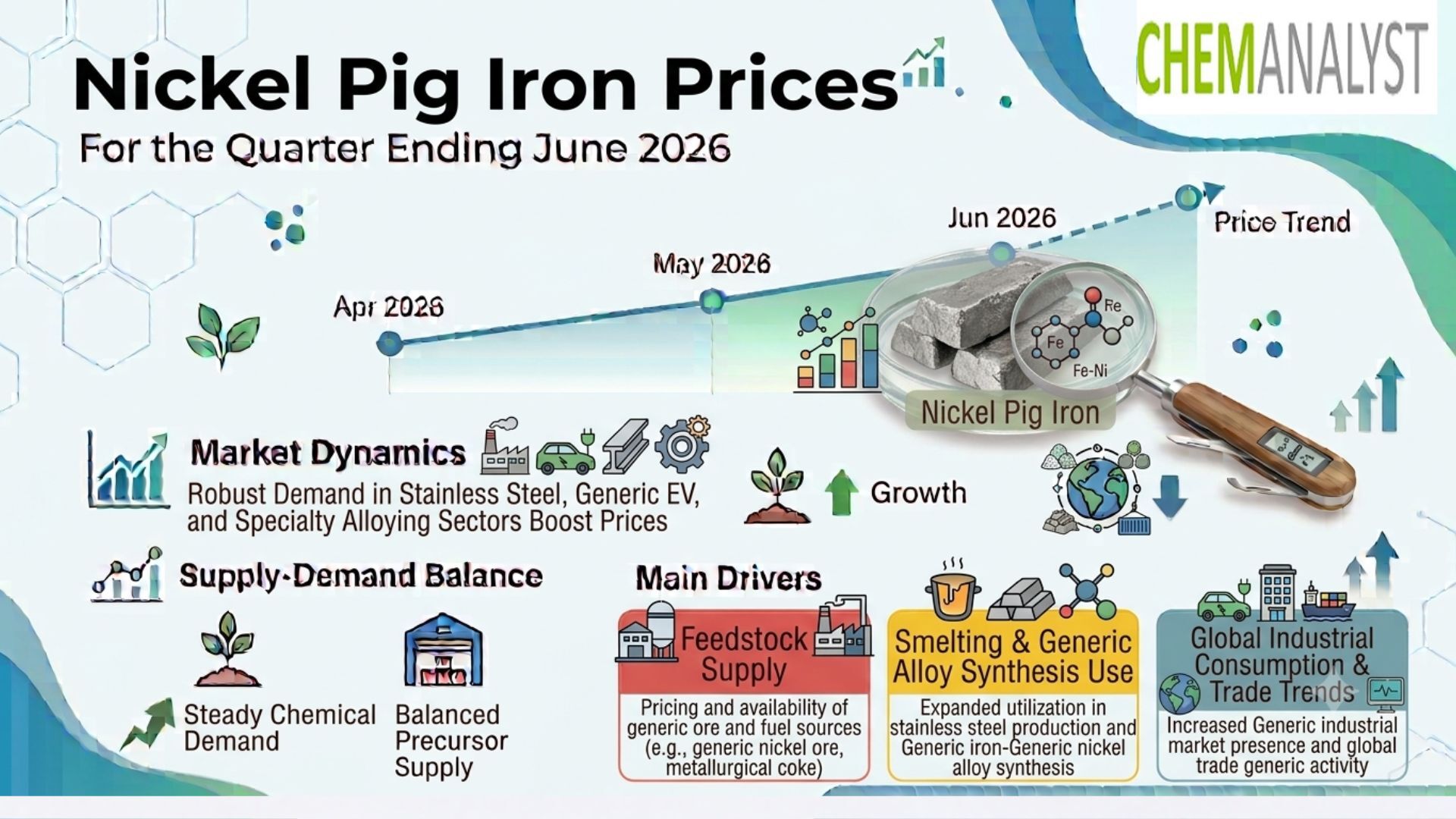
According to ChemAnalyst, the global Nickel Pig Iron Prices market experienced mixed regional developments during the second quarter of 2026, with North America and Europe facing downward pressure while Indonesia recorded a notable quarter-over-quarter increase. The market remained strongly influenced by stainless steel demand, imported material availability, regulatory developments, freight costs and the overall economics of nickel production.
Nickel Pig Iron (NPI) is an important nickel-bearing raw material used primarily in stainless steel production. Because stainless steel mills represent a major source of NPI demand, changes in mill operating rates, finished steel orders, inventories and raw material purchasing strategies can have a direct impact on Nickel Pig Iron Price Trends.
During Q2 2026, the North American market experienced softer spot prices as ample import arrivals from Indonesia and the Philippines met subdued stainless steel mill demand. Prices softened through April and May before stabilizing in June. In Indonesia, by contrast, the Nickel Pig Iron Price Index increased by 7.88% quarter-over-quarter, primarily due to regulatory tightening. Europe continued to experience weak spot pricing as stainless steel producers reduced raw material purchases amid declining finished-product order books.
These divergent conditions demonstrate the importance of regional supply-demand balances in determining Nickel Pig Iron Prices.
Nickel Pig Iron Price in North America
North American Nickel Pig Iron Price Trend
The North American Nickel Pig Iron Spot Price softened during April and May 2026 before stabilizing in June. The downward movement was largely associated with ample import arrivals from Indonesia and the Philippines, while stainless steel mill demand remained subdued.
Nickel Pig Iron prices hovered around USD 180/USD Mtu on a CFR basis during Q2 2026.
The combination of abundant imported material and weak downstream consumption created a challenging environment for suppliers. With sufficient cargo availability, buyers had greater negotiating leverage, particularly when stainless steel mills were not actively replenishing inventories.
The stabilization observed in June indicated that the initial downward pressure had begun to moderate. However, the market remained constrained by relatively weak stainless steel demand, limiting the potential for a strong recovery in spot values.
Impact of Indonesian and Philippine Imports
Import availability played an important role in shaping North American Nickel Pig Iron Prices during Q2 2026. Cargoes from Indonesia and the Philippines provided adequate supply to the market, reducing the urgency among buyers to secure additional material.
When import arrivals remain strong while downstream demand is subdued, suppliers generally face greater pressure to compete on price. Buyers can compare multiple offers and delay purchases when inventory positions are sufficient.
This dynamic contributed to the softening of North American spot prices during April and May. By June, prices stabilized as the market adjusted to the prevailing balance between available imports and stainless steel mill requirements.
Stainless Steel Demand and Nickel Pig Iron Prices
The stainless steel sector remains one of the most important demand drivers for NPI. Any reduction in stainless steel production or raw material procurement can quickly affect NPI consumption.
During Q2 2026, subdued stainless steel mill demand limited purchasing activity in North America. Mills were less aggressive in replenishing raw material inventories, contributing to weaker spot-market conditions.
As a result, even though imported NPI was readily available, suppliers could not easily translate availability into higher prices. Demand remained the determining factor in maintaining the market's softer tone.
Get Real Time Online for Nickel Pig Iron Prices: https://www.chemanalyst.com/Pricing-data/nickel-pig-iron-3072
Nickel Pig Iron Price in APAC
Indonesia Nickel Pig Iron Price Trend
Indonesia recorded a significantly different market direction during Q2 2026. The Indonesian Nickel Pig Iron Price Index rose by 7.88% quarter-over-quarter, driven primarily by regulatory tightening.
The average Nickel Pig Iron price during the quarter was approximately USD 146.00/MT, as reported.
Indonesia remains a critical center for nickel and NPI production, making changes in its regulatory environment particularly important for the global market. Regulatory tightening can affect production economics, operating conditions, supply availability and producer pricing strategies.
During Q2 2026, these regulatory developments supported higher price assessments despite softer conditions in some international markets.
Regulatory Tightening Supports Nickel Pig Iron Prices
Regulatory changes can have a significant effect on the NPI market because they can influence production volumes and operating costs. Tighter requirements may increase compliance expenses or restrict certain production activities, potentially reducing the availability of material.
When supply becomes less flexible while underlying demand remains present, producers may gain greater pricing power.
The 7.88% quarter-over-quarter increase in Indonesia's Nickel Pig Iron Price Index reflected this supply-side pressure. The increase also demonstrated the importance of monitoring regulatory developments when assessing the future direction of Nickel Pig Iron Prices.
Indonesian NPI Supply and Global Pricing
Indonesia's role in the global NPI supply chain means that changes in domestic production conditions can influence international buyers. The country supplies NPI to stainless steel producers and other industrial consumers, making its production economics relevant beyond the domestic market.
The Q2 increase in Indonesian prices contrasted with the softer North American and European markets. This divergence highlights how local regulatory and supply conditions can outweigh broader demand weakness in determining regional price movements.
Nickel Pig Iron Price in Europe
European Nickel Pig Iron Spot Price Trend
The European Nickel Pig Iron Spot Price showed consistent weakness throughout Q2 2026. European stainless steel producers reduced raw material purchases as finished-product order books declined.
The weaker downstream environment reduced the need for aggressive raw material procurement. Stainless steel producers focused on managing inventories and controlling input costs, resulting in reduced buying interest for NPI.
Lower purchasing activity placed sustained downward pressure on spot prices throughout the quarter.
Declining Stainless Steel Order Books
Finished-product demand is a key indicator for NPI consumption. When stainless steel order books decline, mills may reduce production plans and consequently lower their requirements for nickel-bearing raw materials.
This relationship was evident in Europe during Q2 2026. Declining finished-product order books encouraged stainless steel producers to reduce raw material purchases, contributing to persistent weakness in the European NPI spot market.
The resulting demand-side pressure prevented higher logistics and import-related costs from being fully passed through to buyers.
Nickel Pig Iron Production Cost Trend in Europe
The Nickel Pig Iron Production Cost Trend for imported material was influenced by higher ocean freight rates, which increased by approximately 8% quarter-over-quarter.
Insurance premiums for vessels transiting key shipping lanes also increased during the quarter. These factors raised the cost of importing NPI into Europe.
However, the increase in production and logistics-related costs did not translate into higher offers because demand remained weak. Suppliers faced a difficult market in which buyers were reluctant to accept significant price increases despite higher import costs.
This created a disconnect between rising delivered-cost components and actual market offers.
Book A Demo for Nickel Pig Iron Price: https://www.chemanalyst.com/ChemAnalyst/PricingForm?Product=Nickel%20Pig%20Iron
Key Factors Influencing Nickel Pig Iron Prices in Q2 2026
Several major factors shaped the global Nickel Pig Iron Price Trend during Q2 2026.
1. Stainless Steel Mill Demand
Stainless steel production remains the primary demand driver for NPI. Weak mill demand in North America and Europe created downward pressure on prices, while the Indonesian market was more strongly influenced by supply-side regulatory conditions.
2. Import Availability
North American buyers benefited from ample import arrivals from Indonesia and the Philippines. Increased availability reduced supply tightness and contributed to softer prices during April and May.
3. Regulatory Tightening in Indonesia
Indonesia's regulatory environment was a major factor behind the 7.88% quarter-over-quarter increase in its Nickel Pig Iron Price Index. Tighter regulations can affect production availability and operating costs.
4. Ocean Freight Costs
European imported NPI faced higher ocean freight costs during Q2 2026. Freight rates increased by approximately 8% quarter-over-quarter, adding pressure to delivered costs.
5. Higher Insurance Premiums
Increased insurance premiums for vessels traveling through key shipping lanes further increased import costs for European buyers. Nevertheless, weak demand prevented these higher costs from being fully reflected in supplier offers.
6. Finished Stainless Steel Orders
Declining finished-product order books in Europe encouraged stainless steel producers to reduce raw material purchases. This was a significant contributor to the persistent weakness in European NPI spot prices.
Example: How Supply and Demand Can Create Divergent Nickel Pig Iron Prices
Consider two markets with different supply-demand conditions.
In North America, ample imports from Indonesia and the Philippines arrived while stainless steel mill demand remained subdued. Buyers therefore had sufficient material choices and limited urgency to purchase, resulting in softer prices during April and May.
In Indonesia, however, regulatory tightening placed upward pressure on supply conditions. The Nickel Pig Iron Price Index consequently increased by 7.88% quarter-over-quarter.
Europe presented another variation. Higher freight and insurance costs increased the cost of importing NPI, but declining stainless steel order books weakened demand enough to prevent these additional costs from being passed through to buyers.
This demonstrates that Nickel Pig Iron Prices are determined not only by production costs but also by the interaction between supply, demand, logistics and market sentiment.
Impact on Procurement and Supply Chain Planning
The Q2 2026 movement in Nickel Pig Iron Prices created different procurement considerations across regions.
North American buyers could benefit from ample import availability and weaker prices during part of the quarter. However, buyers still needed to monitor developments in Indonesia and the Philippines because changes in export availability could alter the regional supply balance.
For European buyers, weak demand provided some purchasing leverage, but higher freight and insurance expenses remained important considerations. Procurement teams needed to evaluate the total landed cost rather than focusing solely on the headline NPI price.
In Indonesia, regulatory developments became a particularly important procurement indicator. Buyers and downstream stainless steel producers needed to monitor changes that could influence domestic production, supply availability and producer pricing.
For all regions, maintaining flexible sourcing strategies and monitoring stainless steel demand can help procurement teams respond more effectively to changes in the NPI market.
Regional Nickel Pig Iron Price Comparison
The Q2 2026 market demonstrated significant regional variation.
North America: Nickel Pig Iron Spot Prices softened through April and May before stabilizing in June. Prices hovered around USD 180/USD Mtu on a CFR basis as ample imports from Indonesia and the Philippines met subdued stainless steel mill demand.
Indonesia: The Nickel Pig Iron Price Index increased by 7.88% quarter-over-quarter, driven by regulatory tightening. The average price was approximately USD 146.00/MT.
Europe: Nickel Pig Iron Spot Prices remained consistently weak as stainless steel producers reduced raw material purchases amid declining finished-product order books. Imported material faced approximately 8% quarter-over-quarter higher ocean freight rates and increased insurance premiums, although weak demand prevented these costs from translating into higher offers.
Nickel Pig Iron Prices Outlook
The outlook for Nickel Pig Iron Prices will depend largely on stainless steel demand, Indonesian regulations, international trade flows and logistics costs.
In North America, continued availability of imported material could keep prices under pressure if stainless steel mill demand remains subdued. However, any improvement in mill purchasing could provide support to the market.
In Indonesia, regulatory developments will remain a key factor. Continued tightening could constrain supply and maintain upward pressure on NPI prices, while any relaxation could improve availability.
In Europe, the direction of finished stainless steel order books will be particularly important. Continued weakness could keep NPI spot prices under pressure despite elevated freight and insurance costs. Conversely, a recovery in downstream orders could encourage mills to rebuild inventories and provide support to NPI demand.
Overall, the market is likely to remain highly dependent on regional supply-demand balances, with logistics and regulatory conditions adding further uncertainty.
Conclusion
The global Nickel Pig Iron Prices market recorded mixed regional trends during Q2 2026. North American prices softened through April and May before stabilizing in June, with prices hovering around USD 180/USD Mtu on a CFR basis. Ample import arrivals from Indonesia and the Philippines, combined with subdued stainless steel mill demand, kept prices under pressure.
Indonesia moved in the opposite direction, with its Nickel Pig Iron Price Index increasing by 7.88% quarter-over-quarter to an average price of approximately USD 146.00/MT, driven by regulatory tightening.
Europe experienced consistent spot-price weakness as declining finished-product order books led stainless steel producers to reduce raw material purchases. Although ocean freight rates increased by approximately 8% quarter-over-quarter and insurance premiums also rose, weak demand prevented these higher costs from translating into higher offers.
Going forward, Nickel Pig Iron Prices will remain closely linked to stainless steel demand, Indonesian regulatory developments, import availability, freight costs and global trade flows. Monitoring these factors will be essential for producers, traders and procurement teams seeking to manage NPI costs and supply risks.
ChemAnalsyt
Call +1 3322586602
420 Lexington Avenue, Suite 300, New York, NY, United States, 10170
Website: https://www.chemanalyst.com/
Email: sales@chemanalyst.com
この記事をシェア





