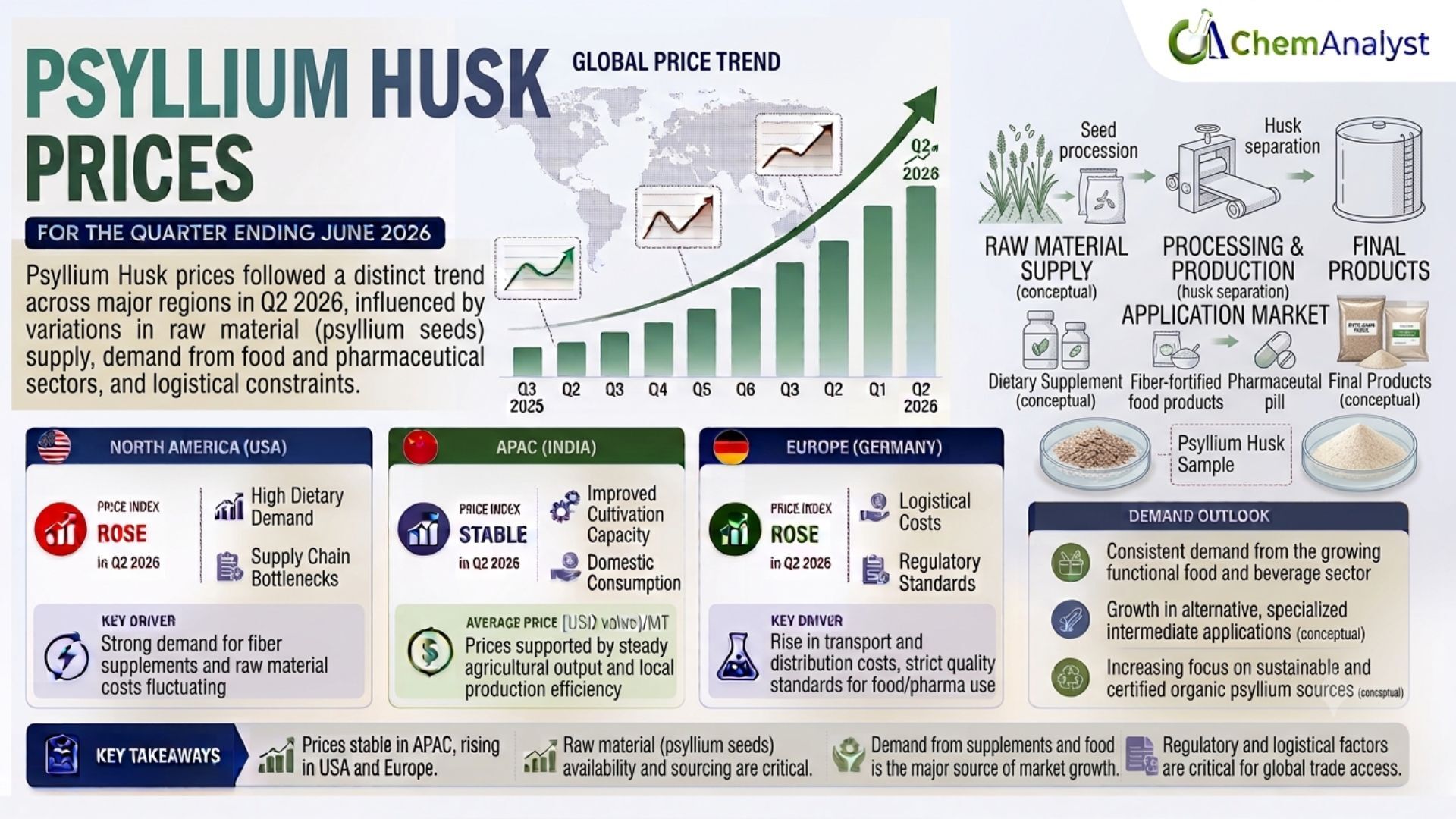
According to ChemAnalyst, the Psyllium Husk prices moved higher across the major assessed markets during the quarter ending June 2026. The market remained supported by firm import costs, limited export availability from India, tighter seed availability, stable consumer demand and elevated freight expenses. While the magnitude of price movement varied by region, the overall market tone remained firm during Q2 2026.
Psyllium Husk is derived from the seeds of Plantago ovata and is widely used in food, dietary-fiber products, pharmaceutical formulations, nutraceutical applications and functional-food products. Its high soluble-fiber content makes it an important ingredient for manufacturers responding to continued demand for fiber-rich and health-oriented products.
India remains particularly important to the global Psyllium Husk supply chain because of its role in cultivation, processing and exports. Consequently, changes in seed availability and export volumes from India can have an impact on international prices. During Q2 2026, tighter seed availability and limited export availability provided significant support to prices in both domestic and overseas markets.
Psyllium Husk Prices in North America
In the United States, the Psyllium Husk Price Index increased quarter-over-quarter during Q2 2026. The upward movement was supported by firm import costs, limited export availability from India and steady demand from the food and pharmaceutical sectors.
Psyllium Husk prices hovered around USD 3902/MT on a CFR basis during Q2 2026.
Import costs remained an important factor for the US market because a significant portion of the material available to international buyers is connected to the Indian supply chain. When export availability becomes restricted, importers can face higher sourcing costs and greater competition for available cargoes.
Limited export availability from India consequently created additional support for US prices. Buyers seeking to maintain inventories may have had to secure material at firmer import values, particularly when alternative supply was limited.
Demand from the food and pharmaceutical sectors also helped sustain the market. Psyllium Husk is used as a source of dietary fiber in food products and as an ingredient in various pharmaceutical and health-related formulations. Consistent consumption from these industries can provide a relatively stable demand base.
The combination of steady downstream requirements and higher import costs allowed suppliers to maintain firm pricing. The Q2 2026 price level of approximately USD 3902/MT CFR reflects the prevailing cost and supply environment in the US market.
The US market therefore demonstrated how international supply conditions can influence domestic pricing. Even without a sharp surge in consumption, limited export availability and firm sourcing expenses can place upward pressure on imported Psyllium Husk.
Get Real Time Online for Psyllium Husk Prices: https://www.chemanalyst.com/Pricing-data/psyllium-husk-1666
Psyllium Husk Prices in APAC
India recorded a 1.31% quarter-over-quarter increase in the Psyllium Husk Price Index during Q2 2026, reflecting tighter seed availability.
The average Psyllium Husk price for the quarter was approximately USD 3595.18/MT on an ex-Gujarat basis.
Tighter seed availability was the primary factor behind the upward movement in India's market. Psyllium Husk production depends on the availability and quality of Psyllium seeds, making changes in seed supply an important consideration for processors and traders.
When seed availability becomes tighter, processors may face higher procurement costs for raw material. These increased costs can eventually be reflected in Psyllium Husk prices, particularly when downstream demand remains stable.
The 1.31% quarter-over-quarter increase was relatively moderate, suggesting that the market experienced gradual tightening rather than a severe supply disruption. Nevertheless, reduced seed availability provided sufficient support to push prices higher during Q2.
The ex-Gujarat average of USD 3595.18/MT provides a key reference for the Indian market. Gujarat is an important center within the Psyllium supply chain, making ex-Gujarat assessments useful for understanding domestic market conditions.
India's market also has broader significance for global Psyllium Husk prices because changes in domestic availability can influence export availability and international sourcing costs. Tightness in the Indian raw-material market can therefore affect buyers beyond the domestic market.
Psyllium Husk Prices in Europe
In Europe, the Psyllium Husk Price Index increased quarter-over-quarter during Q2 2026, supported by firm import costs, stable consumer demand and higher freight expenses.
The average Psyllium Husk Spot Price strengthened during the quarter as importers passed through higher sourcing and logistics costs to the market.
Europe's reliance on imported Psyllium Husk makes international sourcing conditions particularly important. When import costs rise, European buyers can experience higher landed prices even when domestic consumption remains relatively stable.
Freight expenses added another layer of upward pressure during Q2 2026. Transportation represents an important component of the landed cost of imported commodities and higher logistics expenses can eventually be reflected in spot-market pricing.
Stable consumer demand provided additional support. Psyllium Husk is widely associated with dietary-fiber products, food applications and pharmaceutical and nutraceutical formulations. Consistent consumption allows importers and distributors to maintain regular purchasing requirements.
The combination of stable demand and higher sourcing costs enabled importers to pass increased expenses through to downstream buyers. As a result, the European Psyllium Husk Spot Price strengthened during the quarter.
Book A Demo for Psyllium Husk Price: https://www.chemanalyst.com/ChemAnalyst/PricingForm?Product=Psyllium%20Husk
Key Factors Influencing Psyllium Husk Prices in Q2 2026
Several interconnected factors shaped Psyllium Husk prices during the quarter ending June 2026.
Seed Availability
Seed availability was particularly important in India. Tighter availability increased competition among processors for raw material and contributed to higher Psyllium Husk prices.
Because Psyllium Husk production begins with Psyllium seeds, any reduction in seed availability can affect processing economics. Monitoring seed procurement conditions is therefore essential for understanding potential changes in future Psyllium Husk prices.
Export Availability from India
India's export availability had a direct influence on international markets. Limited export availability during Q2 2026 contributed to higher import costs in the United States and supported firmer global pricing.
International buyers often depend on reliable Indian supply, meaning changes in export volumes can quickly influence sourcing strategies and inventory decisions.
Import Costs
Import costs were an important driver in both North America and Europe. Higher sourcing expenses can increase the landed cost paid by importers, especially when international supply is comparatively tight.
In the United States, firm import costs contributed to prices around USD 3902/MT CFR. European importers also passed higher sourcing costs through to the market.
Freight Expenses
Higher freight expenses contributed to the strengthening of European Psyllium Husk prices. Transportation costs can become particularly important for products shipped over long distances, where logistics account for a meaningful portion of the final landed price.
When freight rates increase, importers may adjust selling prices to protect margins.
Food and Pharmaceutical Demand
Demand from food and pharmaceutical sectors supported the US market during Q2 2026. Psyllium Husk's functional properties make it useful in a range of products, helping provide a diversified demand base.
Stable consumption can help prevent prices from weakening substantially, particularly when supply availability is limited.
Psyllium Husk Demand Outlook
The demand outlook for Psyllium Husk remains closely connected to the food, pharmaceutical, nutraceutical and dietary-fiber industries.
Consumer interest in fiber-rich products provides a significant underlying demand factor. Psyllium Husk is valued for its high fiber content and functional characteristics, supporting its use in a variety of formulations.
The pharmaceutical sector also contributes to recurring demand. Manufacturers require consistent supplies of suitable raw materials to maintain production schedules, making supply reliability an important procurement consideration.
In North America and Europe, stable consumer demand could continue providing support if international supply remains constrained. However, any significant improvement in export availability could reduce import-related price pressure.
In India, future demand will need to be considered alongside seed availability. If seed supplies remain tight, processors could continue facing higher raw-material costs even if downstream demand remains stable.
Psyllium Husk Supply Chain and Procurement Trends
The Q2 2026 market highlights the importance of supply-chain planning for Psyllium Husk buyers. Because India is an important source of global supply, international procurement conditions are closely connected to Indian seed availability, processing activity and exports.
Buyers in importing markets may seek to secure inventory when export availability becomes limited. This can increase near-term purchasing activity and reinforce price support.
For procurement teams, monitoring seed availability before the main purchasing cycle can provide useful information about potential supply conditions. Tracking export availability, freight expenses and international import offers can further improve procurement planning.
Inventory management will also remain important. Buyers maintaining adequate stocks may have greater flexibility when market prices rise, while low inventories can increase exposure to short-term price increases.
Regional Psyllium Husk Market Dynamics
The Q2 2026 Psyllium Husk market displayed a broadly firm trend across North America, APAC and Europe.
The United States experienced an increase in its Psyllium Husk Price Index, with prices hovering around USD 3902/MT CFR. Firm import costs, limited export availability from India and steady demand from food and pharmaceutical sectors provided support.
India recorded a 1.31% quarter-over-quarter increase, with the average price reaching approximately USD 3595.18/MT ex-Gujarat. Tighter seed availability was the primary driver.
Europe also recorded an increase in its Psyllium Husk Price Index. Firm import costs, stable consumer demand and higher freight expenses strengthened the spot market as importers passed higher sourcing and logistics costs through to buyers.
These developments demonstrate the close relationship between India's domestic supply conditions and international Psyllium Husk markets. Changes in seed availability and exports can affect prices well beyond the Indian market.
Psyllium Husk Market Outlook for the Second Half of 2026
The Psyllium Husk market entered the second half of 2026 with a firm but closely watched outlook. The balance between seed availability, export volumes, international demand and logistics costs will determine the direction of prices.
In India, continued tightness in seed availability could provide further support to Psyllium Husk prices. Conversely, improved seed availability could ease raw-material pressure and moderate price growth.
For the United States and Europe, international export availability will remain particularly important. Greater availability from India could reduce import competition, while continued limitations could keep landed prices elevated.
Freight costs will also influence European pricing. If logistics expenses remain high, importers may continue passing additional costs through to downstream customers.
Demand conditions are expected to remain an important stabilizing factor. Continued consumption from food, pharmaceutical and nutraceutical applications could provide a firm baseline for the market.
Conclusion
Psyllium Husk prices increased across the major assessed markets during the quarter ending June 2026. The United States, India and Europe all experienced firmer market conditions, although regional drivers differed.
In the United States, the Psyllium Husk Price Index increased quarter-over-quarter, supported by firm import costs, limited export availability from India and steady demand from the food and pharmaceutical sectors. Prices hovered around USD 3902/MT CFR during Q2 2026.
India recorded a 1.31% quarter-over-quarter increase, reflecting tighter seed availability. The average Psyllium Husk price reached approximately USD 3595.18/MT ex-Gujarat.
Europe also recorded an increase in its Psyllium Husk Price Index. Firm import costs, stable consumer demand and higher freight expenses strengthened the spot market, with importers passing higher sourcing and logistics costs through to buyers.
Overall, the Q2 2026 market demonstrated the importance of India's seed and export conditions to global Psyllium Husk pricing. Going forward, seed availability, Indian export volumes, import costs, freight expenses, inventory levels and food and pharmaceutical demand will remain the key factors shaping Psyllium Husk Prices during the second half of 2026.
ChemAnalsyt
Call +1 3322586602
420 Lexington Avenue, Suite 300, New York, NY, United States, 10170
Website: https://www.chemanalyst.com/
Email: sales@chemanalyst.com
この記事をシェア





