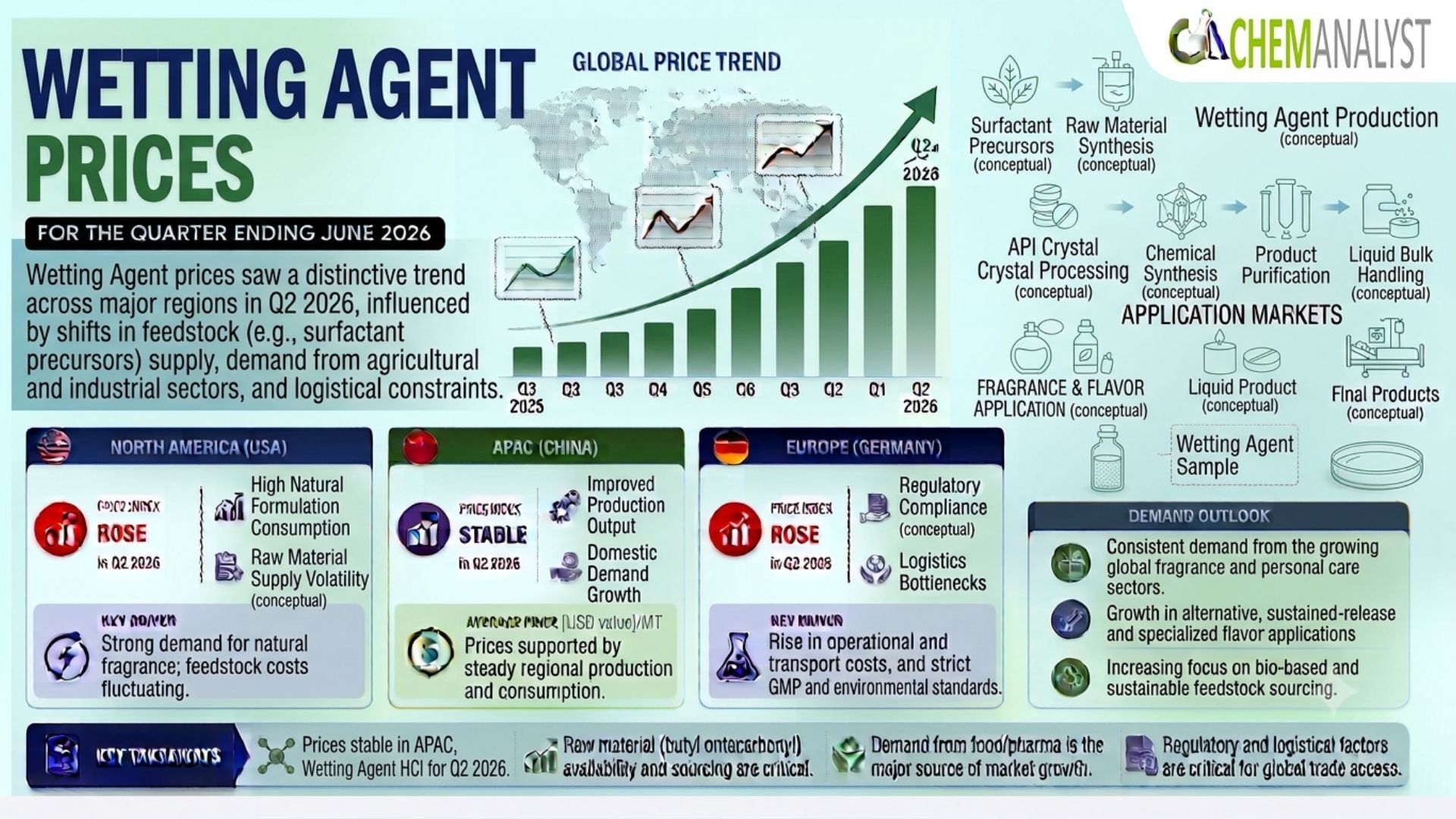
According to ChemAnalyst, the global Wetting Agent Prices market moved upward during the second quarter of 2026, with North America, APAC and Europe all experiencing firmer pricing conditions. The increase was primarily associated with elevated production costs, higher input expenses, energy costs and healthy demand from downstream industrial and consumer-facing applications.
Wetting agents are surface-active materials used to improve the spreading, penetration, dispersion and interaction of liquids with solid surfaces. They are utilized across a broad range of applications, including coatings, paints, adhesives, agrochemicals, textiles, detergents, inks, construction materials and various industrial formulations. Because of their diverse applications, changes in industrial activity and manufacturing costs can have a direct influence on Wetting Agent prices.
During Q2 2026, the United States recorded a quarter-over-quarter increase in the Wetting Agent Price Index, supported by robust consumer demand and elevated production costs. The US Producer Price Index (PPI) increased 5.5% year-over-year in June 2026, indicating a higher input-cost environment for manufacturers.
China also recorded a quarter-over-quarter increase in its Wetting Agent Price Index. Rising input costs, robust industrial demand, a 4.1% PPI increase in June 2026 and higher natural gas prices contributed to increased production expenses.
Germany followed the same general direction, with the Wetting Agent Price Index rising in Q2 2026 amid surging input costs and elevated energy expenses. Producer prices increased 2.2% year-over-year in May 2026, adding to the manufacturing-cost pressure.
Wetting Agent Prices in North America
In the United States, the Wetting Agent Price Index rose quarter-over-quarter in Q2 2026, reflecting the combined influence of elevated production costs and robust consumer demand.
The US market remained supported by healthy downstream activity. Wetting agents are incorporated into numerous products used by consumers and industrial customers, meaning changes in consumption and manufacturing activity can influence procurement requirements.
When downstream demand remains strong, producers can maintain higher capacity utilization and stronger order books. This provides a supportive environment for pricing, particularly when manufacturing expenses are also increasing.
A significant factor during Q2 2026 was the broader producer-cost environment. The US Producer Price Index increased by 5.5% year-over-year in June 2026. The increase indicated higher input costs across the manufacturing economy, which placed additional pressure on producers.
For Wetting Agent manufacturers, rising input costs can affect production economics through raw materials, energy, processing, transportation, packaging and other operating expenses. Producers may attempt to pass some of these additional costs through the supply chain to maintain margins.
The combination of stronger consumer demand and elevated production costs therefore supported higher Wetting Agent prices in the United States during Q2 2026.
From a procurement perspective, buyers may have faced firmer supplier quotations as manufacturers attempted to recover higher operating expenses. The market environment also encouraged buyers to monitor inventory positions more closely and evaluate procurement schedules according to expected consumption.
Get Real Time Online for Wetting Agent Prices: https://www.chemanalyst.com/Pricing-data/wetting-agent-2392
Wetting Agent Prices in APAC
The Asia-Pacific market also experienced an upward trend during Q2 2026, with China recording an increase in its Wetting Agent Price Index.
In China, the Wetting Agent Price Index rose quarter-over-quarter, driven by rising input costs and robust industrial demand. The combination of supply-side cost pressure and healthy demand created a supportive pricing environment.
China's strong industrial base makes manufacturing activity an important factor for the Wetting Agent market. Increased industrial production can stimulate demand from downstream sectors such as coatings, textiles, detergents, adhesives, agrochemicals and other formulation industries.
At the same time, producers faced higher manufacturing costs. China's PPI increased by 4.1% in June 2026, indicating a significant rise in producer-level costs.
Natural gas prices also contributed to the increase in production expenses. Natural gas can influence chemical manufacturing economics through energy consumption and related industrial processes. Higher energy expenses can therefore raise the cost of producing and processing chemical materials.
The combination of increasing input costs and higher natural gas prices placed upward pressure on Wetting Agent production costs during Q2 2026.
However, robust industrial demand provided producers with a favorable market environment in which cost increases could be more effectively passed through to buyers. The resulting increase in the Chinese Wetting Agent Price Index reflected this interaction between demand and production economics.
For buyers operating across APAC, China's pricing conditions remain relevant because the region is an important manufacturing and supply center for chemical products. Changes in domestic industrial activity and input costs can influence export quotations and regional procurement conditions.
Wetting Agent Prices in Europe
The European market also experienced an increase during Q2 2026. In Germany, the Wetting Agent Price Index rose during the quarter, driven by surging input costs and elevated energy expenses.
The German chemical industry remained exposed to higher production costs during the quarter. Energy represents a significant component of chemical manufacturing economics and elevated energy expenses can increase the overall cost of operating production facilities.
In addition to energy, higher input costs contributed to the upward movement in Wetting Agent production expenses. When raw materials and other industrial inputs become more expensive, producers may adjust selling prices to compensate for higher manufacturing costs.
Germany's producer-price environment also strengthened. Producer prices increased by 2.2% year-over-year in May 2026, indicating continued cost pressure at the producer level.
The combination of higher energy expenses, surging input costs and producer-price inflation contributed to a firmer market for Wetting Agents in Germany.
For European buyers, this environment can influence both spot procurement and longer-term purchasing arrangements. When manufacturers face persistent cost increases, suppliers may seek to revise contract prices or reduce the scope for discounts.
The German market therefore remained supported by cost-side factors during Q2 2026, with energy and input prices playing a central role in determining the direction of Wetting Agent prices.
Book A Demo for Wetting Agent Price: https://www.chemanalyst.com/ChemAnalyst/PricingForm?Product=Wetting%20Agent
Key Factors Influencing Wetting Agent Prices in Q2 2026
Several factors shaped the global Wetting Agent price trend during the second quarter of 2026.
Rising Input Costs
Higher input costs were a common factor across the United States, China and Germany. Increasing raw-material and intermediate expenses raised the cost base for manufacturers and encouraged cost pass-through.
Producer Price Inflation
Producer Price Index movements provided an indication of the broader manufacturing environment.
The US PPI increased 5.5% year-over-year in June 2026, while China's PPI rose 4.1% in June 2026. Germany recorded a 2.2% year-over-year increase in May 2026.
These increases indicate that manufacturers across the major regions continued to experience cost pressure.
Energy Costs
Energy was particularly important in China and Germany. Higher natural gas prices contributed to increased production costs in China, while elevated energy expenses supported the upward cost trend in Germany.
Chemical manufacturing can be energy intensive, making changes in fuel and utility costs an important consideration when assessing Wetting Agent prices.
Industrial Demand
Robust industrial demand in China supported the increase in the regional Wetting Agent Price Index. Strong industrial activity can increase consumption of wetting agents across coatings, adhesives, detergents, agrochemicals, textiles and other applications.
Consumer Demand
In the United States, robust consumer demand supported the market alongside higher production costs. Strong consumption can indirectly increase demand for Wetting Agents through downstream manufacturing activity.
Wetting Agent Price Trend Analysis for Q2 2026
The Q2 2026 market demonstrated a broad-based upward trend across the major regions.
In the United States, Wetting Agent prices increased quarter-over-quarter as robust consumer demand coincided with elevated manufacturing expenses. The 5.5% year-over-year PPI increase in June 2026 highlighted the higher cost environment faced by manufacturers.
In China, prices also rose quarter-over-quarter. Robust industrial demand supported purchasing activity, while increasing input costs and higher natural gas prices pushed production expenses higher. China's 4.1% PPI increase in June 2026 reinforced the upward cost environment.
In Germany, the Wetting Agent Price Index rose because of surging input costs and elevated energy expenses. The 2.2% year-over-year increase in producer prices in May 2026 reflected continued cost-side pressure.
Although each region experienced different demand conditions, the common driver was increasing production expenses. This created a generally firm market environment and reduced the likelihood of significant price declines during the quarter.
The Q2 2026 trend demonstrates that Wetting Agent prices are closely linked to both downstream demand and upstream manufacturing economics.
Example of Wetting Agent Price Dynamics
Consider a manufacturer of industrial coatings that requires Wetting Agents for its production process.
In the United States, the manufacturer could encounter higher supplier quotations because robust consumer demand supports downstream production while manufacturers face elevated input costs. The 5.5% PPI increase in June indicates that the broader producer-cost environment remained firm.
A similar buyer sourcing from China could experience cost pressure from higher input prices and natural gas expenses. At the same time, robust industrial demand could make suppliers less willing to reduce prices.
A European buyer sourcing from Germany could face higher procurement costs because of elevated energy expenses and increasing input prices. With German producer prices rising 2.2% year-over-year in May 2026, manufacturers were operating within a higher-cost environment.
This example illustrates how Wetting Agent procurement costs can rise even when the product itself has not experienced a sudden supply shortage. In many cases, higher prices result from cumulative increases in production, energy and input expenses.
Wetting Agent Production Cost Trend
The Wetting Agent Production Cost Trend remained upward across the major markets during Q2 2026.
In China, the increase was associated with rising input costs, a 4.1% PPI increase and higher natural gas prices. These factors increased the cost of maintaining chemical production and supported higher supplier quotations.
In the United States, the 5.5% year-over-year PPI increase in June highlighted broad producer-cost inflation. Higher input expenses combined with strong demand, allowing manufacturers to pass a portion of the additional costs through to customers.
Germany faced similar pressure, with a 2.2% year-over-year producer-price increase in May and elevated energy costs. These factors increased the overall expense of manufacturing Wetting Agents.
The common trend across the three regions suggests that cost management will remain important for producers and procurement teams during subsequent quarters.
Wetting Agent Prices Forecast
The outlook for Wetting Agent prices will depend on the future direction of production costs, energy prices, industrial activity and downstream demand.
In the United States, continued robust consumer demand could provide support to the market. If producer costs remain elevated, manufacturers may continue passing higher expenses through to buyers.
In China, industrial demand will remain a key factor. Continued strong industrial activity could maintain demand for Wetting Agents, while persistent input and natural gas cost pressure could keep production expenses elevated.
In Germany, energy and chemical input costs will remain important variables. If elevated energy expenses persist, production costs could continue to place upward pressure on market prices.
For buyers, monitoring producer-price indicators, energy markets, raw-material costs and downstream demand will be important when developing procurement strategies.
Procurement Outlook for Wetting Agents
The Q2 2026 market conditions highlight the importance of proactive procurement planning. Buyers should monitor production-cost indicators rather than focusing exclusively on spot-market quotations.
When input costs are rising, forward procurement may provide greater cost visibility, particularly for manufacturers with predictable consumption requirements. However, procurement decisions should also consider inventory carrying costs and expected downstream demand.
Buyers should also maintain awareness of regional cost differences. Production and logistics structures vary between North America, APAC and Europe, which can lead to different pricing outcomes even when global market conditions are similar.
Monitoring energy prices is particularly important because elevated natural gas and other energy costs can affect chemical manufacturing expenses. Similarly, producer-price indicators can provide an early indication of broader cost pressures.
Conclusion
The second quarter of 2026 witnessed a firm upward trend in the global Wetting Agent Prices market. In the United States, the Wetting Agent Price Index rose quarter-over-quarter, supported by elevated production costs and robust consumer demand. The US PPI increased 5.5% year-over-year in June 2026, highlighting the higher input-cost environment.
In China, the Wetting Agent Price Index also increased quarter-over-quarter. Robust industrial demand, rising input costs, higher natural gas prices and a 4.1% PPI increase in June 2026 contributed to the upward movement.
Germany likewise recorded an increase in the Wetting Agent Price Index. Surging input costs and elevated energy expenses pushed production costs higher, while producer prices increased 2.2% year-over-year in May 2026.
Overall, Q2 2026 demonstrated that Wetting Agent price trends were primarily shaped by increasing manufacturing costs and healthy downstream demand. Going forward, developments in raw-material prices, energy costs, producer-price inflation and industrial activity will remain critical in determining the direction of Wetting Agent prices, production costs and market trends.
ChemAnalsyt
Call +1 3322586602
420 Lexington Avenue, Suite 300, New York, NY, United States, 10170
Website: https://www.chemanalyst.com/
Email: sales@chemanalyst.com
この記事をシェア





