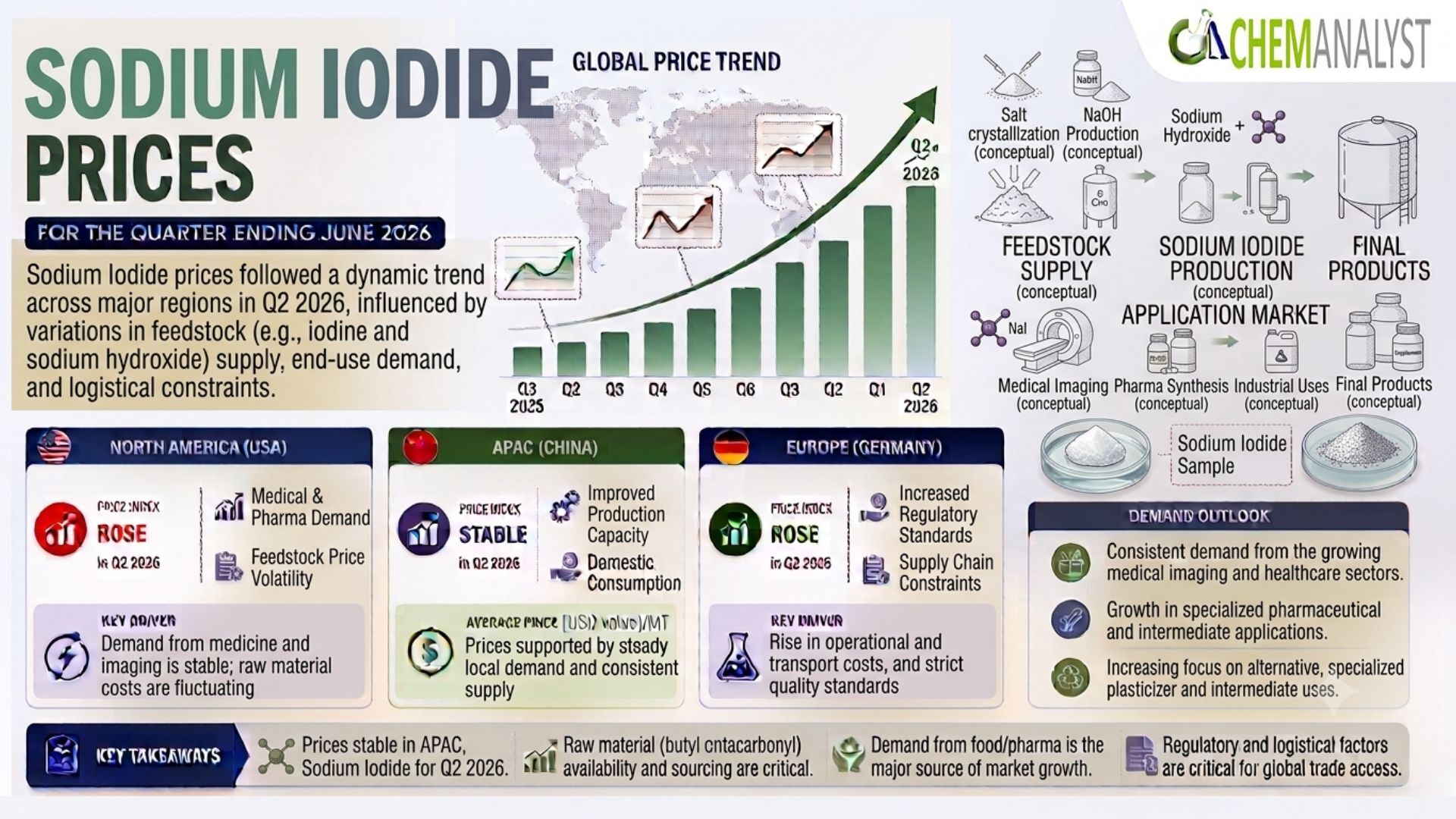
According to ChemAnalyst, the Sodium Iodide prices moved upward across the major assessed markets during the quarter ending June 2026. The APAC, North American and European markets all recorded increases in their respective Sodium Iodide Price Indexes, with rising production costs and broader producer inflation emerging as the principal factors supporting the market.
Sodium Iodide is an inorganic compound used in pharmaceutical manufacturing, chemical synthesis, analytical applications and other specialized industrial processes. Its high-purity grades are particularly relevant to industries where consistent chemical performance and stringent quality requirements are important. Consequently, changes in production economics can have a noticeable impact on procurement costs.
During Q2 2026, the global Sodium Iodide market experienced a predominantly cost-driven pricing environment. In APAC, higher production costs in June supported the upward price movement. In the United States, significant producer inflation strengthened the market, while Germany experienced continued production-cost pressure associated with higher industrial producer prices.
The simultaneous upward movement across the three assessed regions indicates that producer-side economics played a significant role in shaping Sodium Iodide prices during the quarter.
Get Real Time Online Sodium Iodide Prices: https://www.chemanalyst.com/Pricing-data/sodium-iodide-2369
Sodium Iodide Prices in APAC
In the APAC region, the Sodium Iodide Price Index rose quarter-over-quarter during Q2 2026, driven by increased production costs in June 2026.
The average Sodium Iodide price for the quarter was approximately USD 57069/MT FOB India.
The increase in production costs created upward pressure on Sodium Iodide prices. Chemical manufacturing costs can be affected by several components of the production chain, including raw materials, energy, utilities, labor, processing, packaging and transportation. When these expenses increase, manufacturers may seek to adjust selling prices to preserve margins.
India served as the reference market for the APAC assessment, with the average price reaching USD 57069/MT FOB India. The FOB basis reflects the price at the point of export before destination-specific freight, insurance and import costs are incorporated.
The Q2 2026 price increase suggests that production economics outweighed any potential downward pressure from procurement conditions. Buyers requiring Sodium Iodide for pharmaceutical and specialty applications may have faced higher offers as producers attempted to account for increased manufacturing expenses.
Production-cost developments toward the end of the quarter were particularly relevant. Cost increases in June can influence market expectations for subsequent purchasing cycles because suppliers may incorporate recent cost developments into new quotations.
The APAC market therefore entered the second half of 2026 with a firm pricing foundation, although future movements will depend on the persistence of production-cost pressure and the strength of downstream demand.
Sodium Iodide Prices in North America
In the United States, the Sodium Iodide Price Index rose during Q2 2026, driven by significant producer inflation in June 2026.
Sodium Iodide production costs increased during Q2 2026, reflecting a 5.5% year-over-year rise in producer prices.
The 5.5% increase indicates a notable rise in producer-level pricing conditions. For chemical manufacturers, higher producer prices can increase the cost of operating production facilities and sourcing necessary inputs.
Sodium Iodide is used in pharmaceutical and specialty chemical applications where consistent quality and reliable availability are important. Demand from these sectors can therefore provide suppliers with a relatively stable customer base.
When production costs rise while downstream procurement remains active, producers may have greater scope to pass increased expenses through to customers. This dynamic contributed to the upward movement in the US Sodium Iodide Price Index during Q2 2026.
The US market's price increase was therefore closely connected to the broader inflationary environment affecting producers. The 5.5% year-over-year increase in producer prices in June 2026 provided a significant cost signal for the market.
For buyers, the cost environment emphasizes the importance of monitoring supplier quotations and broader producer-price movements. If producer inflation remains elevated, procurement costs may remain firm during subsequent purchasing cycles.
Sodium Iodide Prices in Europe
In Germany, the Sodium Iodide Price Index rose quarter-over-quarter during Q2 2026, driven by sustained production-cost pressures.
Sodium Iodide production costs increased as producer prices for industrial products rose by 2.2% in May 2026.
Germany's market reflected the continued impact of higher industrial producer prices on chemical manufacturing economics. Producer prices provide an important indication of pricing pressure within the industrial sector and can influence the costs faced by chemical manufacturers.
The 2.2% increase in producer prices for industrial products in May 2026 added to the production-cost burden. Manufacturers may seek to compensate for these higher costs through adjustments to their selling prices, particularly when demand remains sufficiently stable.
Germany's pharmaceutical and specialty chemical sectors provide important downstream applications for Sodium Iodide. Regular demand from these industries can help support market prices when production costs increase.
The quarter-over-quarter rise in Germany's Sodium Iodide Price Index therefore reflected a cost-driven market environment. The increase was not necessarily dependent on a major change in demand; rather, sustained manufacturing-cost pressure provided the principal support.
Future price direction in Europe will depend on whether producer prices and industrial costs continue to rise. A moderation in producer inflation could reduce cost pressure, while continued increases may encourage further price adjustments.
Book A Demo for Sodium Iodide Price: https://www.chemanalyst.com/ChemAnalyst/PricingForm?Product=Sodium%20Iodide
Key Factors Influencing Sodium Iodide Prices in Q2 2026
Several factors contributed to the upward movement in Sodium Iodide prices during Q2 2026.
Production Costs
Production costs were a common driver across all assessed regions. APAC experienced increased production costs in June, while the United States and Germany were affected by broader producer inflation.
Higher manufacturing expenses can directly influence supplier pricing, particularly when cost increases are sustained over multiple months.
Producer Inflation
Producer inflation was particularly significant in North America. The United States recorded a 5.5% year-over-year increase in producer prices in June 2026.
Germany also experienced producer-level inflation, with industrial producer prices increasing 2.2% in May 2026. These developments created additional cost pressure for chemical manufacturers.
Raw Material and Input Costs
Sodium Iodide production depends on the availability and cost of relevant raw materials and industrial inputs. Any increase in upstream costs can affect manufacturing economics.
Even when downstream demand remains stable, increasing input expenses can encourage suppliers to raise offers to protect margins.
Downstream Pharmaceutical Demand
Pharmaceutical manufacturing represents an important application area for Sodium Iodide. Demand from pharmaceutical producers can provide a relatively stable foundation because manufacturers require consistent raw-material supplies to maintain production.
If pharmaceutical production remains stable, it can support procurement activity even in a higher-cost environment.
Specialty Chemical Applications
Sodium Iodide is also used in specialty chemical and analytical applications. Demand from these sectors contributes to the overall market balance and can influence procurement volumes.
Sodium Iodide Demand Outlook
The demand outlook for Sodium Iodide remains closely linked to pharmaceutical manufacturing, specialty chemical applications, analytical uses and other industries requiring high-purity inorganic chemicals.
Pharmaceutical demand is particularly important because Sodium Iodide can be utilized in specialized formulations and chemical processes. Continued pharmaceutical production can therefore support regular purchasing requirements.
Specialty chemical manufacturers also require reliable supplies to maintain production schedules. Changes in industrial activity can consequently influence demand and inventory decisions.
In APAC, demand conditions will need to be assessed alongside production costs. The average price of USD 57069/MT FOB India reflects a market where production economics were a major influence during Q2 2026.
In the United States and Germany, future demand will interact with producer inflation. If downstream procurement remains steady while production costs remain elevated, prices could remain supported.
Conversely, weaker pharmaceutical or specialty industrial activity could limit the ability of producers to pass additional costs through to buyers.
Sodium Iodide Supply Chain and Procurement Trends
Supply-chain management remained important during Q2 2026 as rising production costs influenced pricing across the major regions.
For buyers, procurement planning should account for both current prices and potential changes in manufacturing costs. When producer prices rise, suppliers may adjust quotations more frequently as they attempt to protect margins.
In APAC, India remained the reference point for pricing, with the average Sodium Iodide price reaching USD 57069/MT FOB India. Buyers sourcing from the region need to consider both FOB values and destination-specific logistics when calculating their final landed costs.
In North America and Europe, monitoring producer-price indicators can provide useful insight into potential future cost changes.
Inventory planning can also help buyers manage volatility. Maintaining adequate stock can reduce the risk of production interruptions during periods of rising prices, while excessive inventory can increase exposure if the market later weakens.
Regional Sodium Iodide Market Dynamics
The Q2 2026 Sodium Iodide market displayed a consistent upward direction across APAC, North America and Europe.
In APAC, the Sodium Iodide Price Index rose quarter-over-quarter as production costs increased in June 2026. The average price stood at approximately USD 57069/MT FOB India.
In the United States, the Sodium Iodide Price Index increased during Q2 2026 due to significant producer inflation. Production costs reflected a 5.5% year-over-year rise in producer prices.
In Germany, the Sodium Iodide Price Index also increased quarter-over-quarter. Sustained production-cost pressures were reinforced by a 2.2% increase in producer prices for industrial products in May 2026.
Although the three markets experienced different levels of cost pressure, the common direction was upward. This indicates that production economics played a more significant role than regional differences in determining Q2 2026 price movements.
Sodium Iodide Market Outlook for the Second Half of 2026
The Sodium Iodide market entered the second half of 2026 with a firm outlook. The direction of prices will depend on production costs, producer inflation, raw-material availability, downstream pharmaceutical demand and broader specialty chemical activity.
In APAC, continued production-cost pressure could support prices if manufacturers maintain higher offers. Any moderation in upstream expenses, however, could reduce the pace of price increases.
The United States will remain sensitive to producer inflation. The 5.5% year-over-year rise in producer prices in June 2026 represents a significant cost factor. If this inflationary pressure persists, Sodium Iodide prices may continue to face upward support.
Germany's outlook will similarly depend on industrial producer prices and energy and manufacturing expenses. The 2.2% year-over-year increase in industrial producer prices in May 2026 suggests that cost conditions remained firm during the quarter.
Downstream demand will ultimately determine how much of these cost increases can be passed through. Stable pharmaceutical and specialty chemical consumption would provide suppliers with stronger pricing power, while weaker demand could limit increases.
Conclusion
Sodium Iodide prices increased across the major assessed regions during the quarter ending June 2026, with production costs and producer inflation serving as the primary sources of upward pressure.
In APAC, the Sodium Iodide Price Index rose quarter-over-quarter, driven by increased production costs in June 2026. The average Sodium Iodide price was approximately USD 57069/MT FOB India.
In the United States, the Sodium Iodide Price Index increased during Q2 2026 as significant producer inflation affected the market. Production costs reflected a 5.5% year-over-year rise in producer prices.
In Germany, the Sodium Iodide Price Index rose quarter-over-quarter as sustained production-cost pressures affected the market. Producer prices for industrial products increased 2.2% in May 2026, contributing to higher manufacturing expenses.
Overall, Q2 2026 was characterized by broad-based cost pressure across the global Sodium Iodide market. Going forward, production costs, producer inflation, raw-material availability, pharmaceutical demand, specialty chemical consumption and inventory conditions will remain the key factors shaping Sodium Iodide Prices during the second half of 2026.
ChemAnalsyt
Call +1 3322586602
420 Lexington Avenue, Suite 300, New York, NY, United States, 10170
Website: https://www.chemanalyst.com/
Email: sales@chemanalyst.com
この記事をシェア





